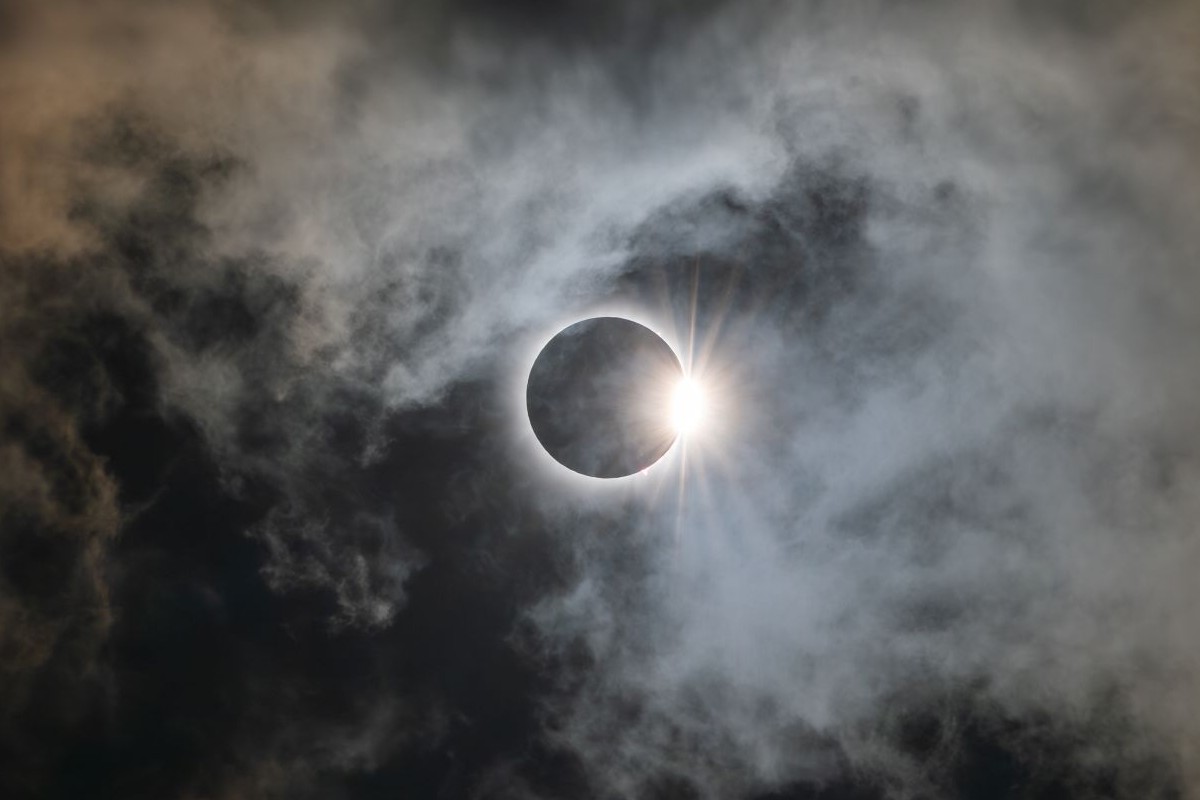
The council is urging people to watch with care, with a partial solar eclipse due to be visible today (Wednesday 12 August).
Many are expected to watch the eclipse from various vantage points such as the seafront and Brighton and Hove City Council said: “People gathering to watch the solar eclipse are reminded never to look directly at the sun.
“Looking at the sun without appropriate eclipse viewing equipment can cause serious and permanent eye damage.”
First contact is expected at about 6.17pm. The maximum extent of the eclipse of the Sun by the Moon is expected at about 7.12pm and the end of the eclipse is due at about 8.06pm.
The council said that sunglasses were not an adequate substitute for solar eclipse glasses and urged adults to supervise children and young people in their care.
Advice include
- use certified solar eclipse glasses that meet recognised safety standards
- supervise children carefully
- avoid using sunglasses as a substitute
- continue taking precautions against heat and sun exposure while waiting outdoors
The council added: “For more advice on how to watch the solar eclipse safely, and how to make your own projector project, visit the UKHSA (UK Health Security Agency) website.”
The UKHSA said: “It’s a rare and exciting event that many people will be keen to watch. But looking directly at the Sun without the right protection can cause permanent damage to your eyesight.
“There’s a better chance of clear skies (today) than you’d expect in autumn or winter. That said, you still need to take precautions even if it’s cloudy. Cloud cover does not make it safe to look at the Sun.
“Why is watching a solar eclipse risky? During an eclipse, the Sun appears dimmer than usual. This makes it easier to look at directly – and that’s precisely the problem.
“The reduced brightness can override the body’s natural reflex to look away, allowing intense sunlight to reach and damage the retina.
“This damage happens without causing any pain, so you may not realise harm is occurring until it’s too late.
“Following the 1999 total solar eclipse, the Royal College of Ophthalmologists reported around 70 cases of people experiencing vision problems after watching the eclipse. Around 40 per cent had looked at it for less than a minute.
“Ordinary sunglasses – no matter how dark – do not provide adequate protection for viewing a solar eclipse.
“They reduce glare, making it feel more comfortable to look at the Sun for longer, while still allowing harmful solar radiation to reach the retina. Never use regular sunglasses to look at the Sun during an eclipse.
“There are two safe approaches: specialist eclipse viewers or indirect viewing methods.
“If you want to use eclipse glasses or handheld solar viewers, make sure they are genuine eclipse glasses with specially designed filters that meet the international safety standard ISO 12312-2:2015(E).
“Genuine eclipse glasses are available from reputable retailers, including Royal Museums Greenwich. Be cautious of products sold online that may not meet this requirement.
“If you’re unsure whether a product is certified, don’t use it. Don’t use eclipse glasses if the lenses are scratched, torn or damaged.
“Alternatively, you can watch the eclipse indirectly without any specialist equipment at all. Safe options include
- a pinhole viewer which you can easily make at home
- viewing the Sun’s image projected through a colander or the gaps between tree leaves
- projecting the Sun’s image on to a sheet of paper using a simple pinhole projector
“Whichever method you choose, make sure you follow guidance carefully. The Royal Astronomical Society has published detailed, practical advice on all of these approaches.”
The society said: “There are a few ways you can go about making a ‘pinhole projector’ which will allow you to see the eclipse by projecting the Sun’s light, and the bite being taken out of it, on to another surface.”
- Two pieces of paper: make a small hole in one piece of paper and hold it above another piece of paper to see the shadow being cast on the Sun replicated in miniature
- Colander: Hold up a colander and look at its shadow
- Tree leaves: The gaps between leaves are natural pinhole projectors – simply look at the shadows cast by leaves on the ground
The Royal Observatory Greenwich is due to livestream the eclipse. To watch the livestream, click here.