A grandfather of 12 who died days after major surgery “would more likely have survived” if he had been offered and undertaken a less intrusive operation, a coroner has concluded.
Arthur Craig, 77, died on Wednesday 26 June 2024 at the Royal Sussex County Hospital, in Brighton, after he underwent investigative intestinal surgery on Friday 14 June.
Assistant coroner for West Sussex, Brighton and Hove, Gareth Jones, gave a narrative conclusion at the end of a two-day inquest in Horsham for Mr Craig, who was “adamant he did not want surgery”.
The inquest as told that Mr Craig asked his daughter Professor Catherine Craig following the surgery: “Was the surgery a mistake? Should I not have done it?”
Mr Jones found that surgeon Marc Lamah, who carried out the operation and spoke to Mr Craig beforehand about his bowel obstruction, did not mention the option of a defunctioning stoma and “he should have done”.
He added: “If offered he would have likely have taken it and his chances of survival would be significantly enhanced.”
During the inquest, Mr Lamah gave evidence that he told Mr Craig of all the options but it was not written down in the medical notes.
Mr Jones said: “Mr Craig and his family were not given the option of defunctioning stoma. (If) they had been given that option and he had taken it, he would more likely have survived.”
Instead, Mr Craig was faced with a more invasive Hartmann’s procedure, or “nothing at all”, the coroner said.
The inquest heard that the most invasive surgery, a subtotal colectomy, was ultimately carried out.
Mr Jones also said that Mr Lamah could and should have got a second opinion before undergoing the procedure on a man with a history of heart problems. Mr Lamah said that he had been unaware of the extent of those heart problems.
He said: “Bearing in mind heart issues, age and dislike of invasive surgeries, there was not adequate consideration of these issues.”
During the 24 hours after his surgery, Mr Craig was also not given IV fluids, which Mr Jones described as a “gross failure”.
It led to dehydration and kidney failure although these this were not the cause of his death.
Mr Jones said that the failure, however, was further compounded by being placed on a general ward after surgery instead of a high-dependency unit.
The coroner found that Mr Craig died of a perforation which was a recognised complication of the surgery that he ultimately underwent.
Differing opinions were heard in the inquest as to whether it was a perforation of his ulcer or the small bowel, and Mr Jones added: “I don’t think it’s possible to come down on one side or another.”
In May that year, Mr Craig’s condition was deteriorating and he ended up going to hospital, with tests showing that he had an ulcer.
A CT scan then showed a large mass, prompting surgery to be discussed.
The inquest was told thatMr Craig later agreed to have the surgery but his daughter said thatshe was not with him when he signed the consent form.
A patient safety incident investigation was carried out by University Hospitals Sussex NHS Foundation Trust focused on fluid balance issues but did not include concerns raised in an email by another surgeon documenting family concerns around consent.
In his evidence, Dr Stephen Drage, who was chief of surgery and critical care at the time at the trust, reiterated what was in the full report that “I am very sorry Mr Craig’s care fell below standards we expect.”
In a pen portrait read by Professor Craig, one of Mr Craig’s six daughters, she said that her father was born in Belfast and grew up on a farm in a small village and was someone who “loved nothing more than being on the farm”.
She said that he was “always a bit rebellious and never liked to conform”, had a great sense of humour and loved to tell stories.
The retired farmer later moved to Brighton and enjoyed living by the sea at the Brighton Marina village.
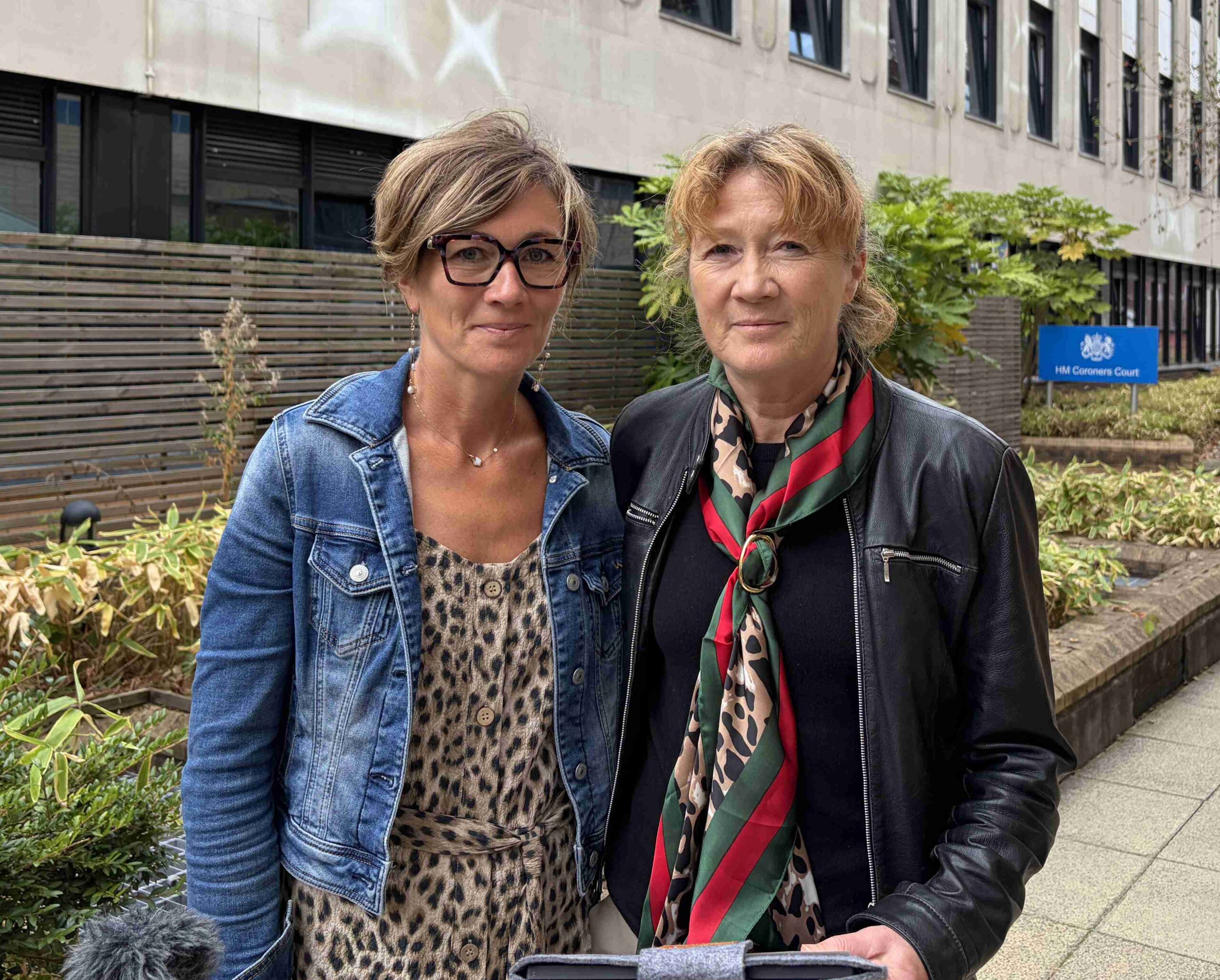
Reacting to the inquest findings, Professor Craig, supported by her sister Christine Craig, said: “During this inquest, our family has raised a series of grave concerns over the care and treatment my father received at the Royal Sussex County Hospital.
“Today, the coroner has confirmed many of our concerns in his findings.
“In particular, the failure to tell us about the right treatment options and risks, the failure to consider my father’s underlying health conditions and the gross failure to give my father proper fluids after he underwent major surgery.
“My father’s dying wish was to find out what happened to him in that hospital and I feel that today we got some answers.”
Solicitor Camilla Browne, of Leigh Day, who represented the family, said: “In the light of the coroner’s findings, I sincerely hope important lessons will be learned by staff at the Royal Sussex County Hospital to ensure no other family has to go through the trauma and distress that Mr Craig’s family have experienced.”