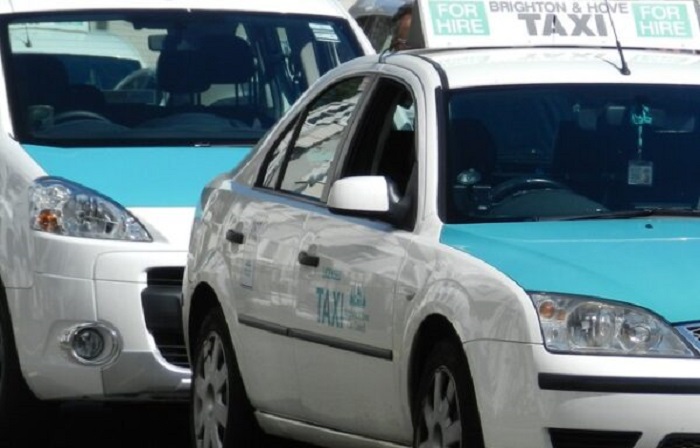
Brighton and Hove taxi drivers say that they have been left in dark about a fare review that affects how much they earn.
The last fare review was in March 2024 but, with increases in fuel prices, the cost of living and other running costs, cabbies asked the council to review fares in May this year.
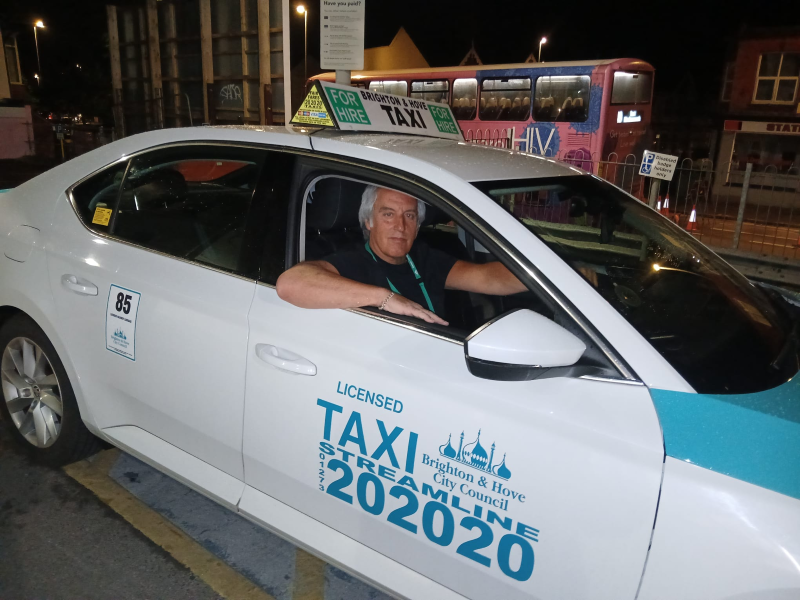
Andrew Peters, a taxi driver for more than 40 years and a local trade rep, said that the drivers were unhappy about the way they are being treated by the council and councillors over the recent fare review.
He said that the normal process had long been that local trade reps approached the council when a fare review was considered to be due.
Talks would then follow with a senior taxi licensing official and a new tariff of fares would be worked out. This year, the process started in April.
This would then be presented to a meeting of the Taxi Trade Forum at the town hall – and this year that happened at a meeting in May.
Councillors also attended the forum in May and the trade reps who were there voted to take the newly proposed fares forward to the next stage.
A meeting would then be held with the chair of the council’s Licensing Committee and the proposed fare increase would be put on the agenda for the next meeting of the Licensing Committee.
This was expected to be in June when a licensing official had been expected to present the proposal for councillors to discuss.
A vote would then be taken and the fare rise would normally be approved. The next stage would be to advertise the proposed fare increase to give the public a chance to lodge objections – as required in legislation.
But this process has been turned upside down because the council said that asking the Licensing Committee to set the proposed new fares would no longer be legal.
Mr Peters said that the trade was shocked to learn this about the longstanding process. Drivers and operators were told that the proposed increase would have to be approved by the council’s cabinet instead.
Even so, he said, the trade would have expected this to happen when the council’s cabinet met in June but the proposed fare review didn’t make it on to the agenda.
The proposal didn’t make it on to the agenda for the council’s cabinet meeting in July either and, with no meeting held in August, it was put on the agenda for the meeting on Thursday 17 September.
At that meeting, the new table of “hackney carriage” fares – or taxi fares – was supported by senior councillors.
But after that meeting, Councillor David McGregor announced on social media that, while the new fares had been approved, the council now had to carry out an “equalities impact assessment” before the fare rise could be implemented.
Mr Peters said that, at that time, in September, they were four months down the line from starting the process and astonishingly they were now seven months further on with no information as to when new fares would be implemented.
Additionally, emails sent to the council and the licensing team during that time, asking for updates, were effectively blanked.
Mr Peters that he checked with other licensing authorities who said that they also carried out an “equality impact assessment” for increases in taxi fares.
But Mr Peters found out that these were presented to councillors at meetings at the exact same time as proposals to put up fares.
He said: “We find it absolutely ridiculous that the council has disrupted our 2026 fare proposal that was started in April, removed this responsibility for what should be a straightforward process from the Licensing Committee that has been in place for the 40 years I have been in the trade and quite clearly in our view have got it all wrong compared to other licensing authorities.
“It is so obvious that if such an equality impact assessment (EIA) is required then it is the responsibility of the council to get the results of this in place at the exact same time as the new fares are presented at a council meeting.
“The council had plenty of time to do this for the EIA and the proposed new fares for the September cabinet meeting.”
Mr Peters said that council seemed to consider that “the income and the welfare of its local licensed taxi drivers to not be important enough to expedite the new fares”.
And, he said, “it is very clear that the council have no consideration for the meter dealers to arrange for new programs to be written, tested and installed in over 600 hackney carriages and over 300 private-hire vehicles who always adopt the same fares.
“Our local hackney fares are strictly controlled by the council. We have no facility to use ad hoc surge pricing like when it rains or if there is an event in the city where Uber will double or even triple its prices.
“I put the blame of this disruptive delay squarely on the council’s new cabinet system, with the council consequently dragging its feet.
“I personally feel so aggrieved at the way we have been treated with such total disrespect and utter disdain shown for the local Brighton and Hove taxi trade that I have now submitted two stage one complaints.
“I have also asked for an ‘impact assessment’ to be carried out to seek the consequences to the local taxi trade due to what has taken place.”









A lot of experienced Council Officers have left under the current administration, leaving more or less self-trained trained juniors often working from home with NO supervision and no appreciation of how anything works. The knowledge gap cracks are now showing in every department and rapidly turning into chasms. The best thing the council could do is release local taxi firms to set their own rates. They cannot retain this stranglehold over local businesses when they have no idea what they are doing any more. Moreover it gives out of town taxi firms and Uber an unfair advantage over local taxi firms, which is not equality under law.
All hackney carriage fares are governed by the Local Government Miscellaneous Act 1976. That gives local councils complete control over the local meters fares. In fact I would not want this any other way as this ensures that anyone getting a local hackney carriage taxis (the aqua and white ones) knows that the driver/taxi cannot locally charge more than is allowed.
Tracy
The licensing regime is set down in law so the council is in charge of setting taxi rates until that changes.
I’m sure the council would very much like not to have to involve itself in setting taxi fares but that would require a change in the law.
I’m sure you don’t want the council to break the law?
And duscuss
Personally, I’m more concerned about the quality of driver in taxis.
I took one the other day whilst my own vehicle was being serviced. He embodied the complete opposite of defensive, safe driving. Broke the speed limit significantly the whole way, was playing around with his phone app to line up his next job, nearly colliding with several vehicles because he was being distracted, weirdly changing between three sets of eyeglasses, as well as uttering less than three words to me – mainly to confirm payment via the app.
Then to top it off; it was really expensive for the distance I travelled.
That does sound concerning. If they are driving that poorly then you can give the details to Sussex Police. If you look up Operation Crackdown there is an online form for reporting dangerous driving.
There are many other taxi drivers in the city provide a valuable service. I used one just last week who was really good. The failure of the council to promptly carry out the fares review must be very stressful for them and their families who depend on their income.
A follow up thought worth checking with a corporate lawyer. If the Council are in breach of contract, have they lost their control/jurisdiction over the local taxi trade including the right to licence them? If so, local taxi firms are free to operate as they see fit, until such time as they want to re-enter a new contract with the council. Or don’t, as the case may be. The council have no right to crush local businesses through either greed or incompetence. It is time to fight back or go under. Breach of contract is the perfect opportunity and the council is in breach.
Tracy, this is public law not contract law. The Council have a fiduciary duty which means they have to complete certain processes and procedures. These are not negotiable but enshrined in legislation.
It is lamentable that the administration have seemingly acted in a less than efficient manner and that should be concerning for all concerned. I regularly use the excellent local taxi service and have friends who are affected by this shoddy affair. Their overheads have increased and impacted on their families. I note that any increase in Councillors income never seems to undergo such delays.