The Gibb report has been published this morning (Thursday 22 June). It blames the rail unions for many of the problems of the past year and a half on the railways.
It also criticises the Department for Transport (DfT) for not listening to Network Rail’s concerns about the capacity of the network serving Brighton and Hove.
And it said that the organisations operating the fragmented system had not always worked well together.
Here are excerpts from the report which is entitled Changes to improve the performance of the Southern network and train services, and restore passenger confidence – an independent report by Chris Gibb.
…
Every railway is a system and Southern is no different to any other in that respect.
However, the Southern system is simultaneously running at absolute capacity at peak times, and undergoing a period of dramatic and traumatic change.
- Introduction of revised working practices, in particular the extension of driver-only operation on Southern and the introduction of on-board supervisors on Southern and Thameslink
- Merger of three previously competing TOCs (train operating companies): Gatwick Express, Southern and Thameslink / Great Northern, creating the largest TOC in the UK
- Introduction of new class 700 and class 717 trains, with many elements of new technology, such as automatic train operation, and new depots at Three Bridges and Hornsey
- Regular transfer of trains between GTR and other operators
- Introduction between now and 2018 of the new Thameslink infrastructure and service, increasing services from 12 up to 24 trains per peak hour through central London, including transfer of routes between Southern, South Eastern Trains and Thameslink
- Major infrastructure enhancements at London Bridge / Blackfriars
On Southern all the elements of the system have been under strain: unreliable infrastructure, a timetable that is very tight and with overcrowded peak services, some key stations that are overcrowded, depots that are full and for historic reasons are in the wrong place and people that are involved in informal and formal industrial action.
The system cannot possibly work to passengers’ satisfaction with these components in this state.
How did the system get to this point ? I do not believe any single party have been the cause.
Many parties have, with the best of intentions, driven elements of change, all of which have come together at this time to cause the overall system to fail.
Some examples of this have been
- The Thameslink programme infrastructure enhancements, specified by DfT and led by Network Rail, which are rebuilding the London Bridge / Blackfriars infrastructure.
- The GTR franchise agreement, specified by DfT, bid for in an open competition and won by Govia, a joint venture between Go Ahead and Keolis, with the most efficient money proposition and an exceptionally high number of “committed obligations”, including one to extend driver only operation and introduce on-board supervisors.
- The procurement of new class 700 trains and associated maintenance agreement, specified by DfT, bid for in open competition and won by Siemens, with the most efficient money proposition.
- A policy of opposition to driver only operation, led by RMT and ASLEF, and supported through votes cast by their members.
- Insufficient numbers of people, particularly drivers at the start of the franchise, and significant changes to the GTR people leadership team after the amalgamation of the three constituent franchises.
- Submission of a demanding CP5 (control period 5) national infrastructure maintenance plan by Network Rail, and determination of a demanding CP5 money settlement by the Office for Rail and Road, with which to maintain an infrastructure in a poor or unknown condition, with limited access.
- Changes to the Network Rail organisation and a high turnover in people leadership roles on the route in the last five years.
- Expansion of its timetable on Network Rail infrastructure by London Overground, in a concession now operated by Arriva and specified by TfL.
- Rapid growth in passenger demand, resulting in overcrowded stations.
- A complicated timetable which is at the maximum capability of the system, using full stabling depots often remote from the employment locations of the people.
No single party has had responsibility for the overall system integrity, although all of the above parties have all been aware of how much strain the system has been under.
Some elements of the system have been considered largely as an afterthought, such as train maintenance depots and stations such as Victoria.
Sometimes funding availability has prioritised elements of the system, without considering the welfare of the overall system.
…
I have noted that the 2018 timetable incorporated in GTR’s franchise agreement by DfT was not fully supported by Network Rail during the franchising process, as too many trains were to be scheduled across Windmill Bridge Junction, Croydon.
The timetable for 2018 is currently being rewritten to resolve this but all the other key elements of the system will need to respond to this: trains, depots, people and infrastructure, even though most were agreed contractually on franchise award.
However, the franchise agreement envisages this, and gives the Secretary of State authority to change most elements of the franchise agreement.
Time is running out to do this by 2018 and urgent decisions and actions are needed if the 2018 system is to work and deliver against expectations.
…
Delays are often caused by a combination of factors and in a broken system it is also clear that delay attribution has been failing too, causing increased frustration as it is not clear what is wrong and how to fix it.
Every party can bring something to the system to make it work better.
A successful system is not simply about “command and control”, which is, in my view, a rather overused expression in today’s railway.
To me a successful system is one that has active people engagement at all levels and good leadership. Command and control has its place but to be effective the people need to understand their part in the system, have a say in how it develops and see authentic leadership from the managers.
This is difficult in a long-running industrial dispute, with relationships under strain and leaders focused on the day and the next day’s operation alone.
Media coverage of individual leaders on all sides and their perceived failings just adds to the difficulty.
…
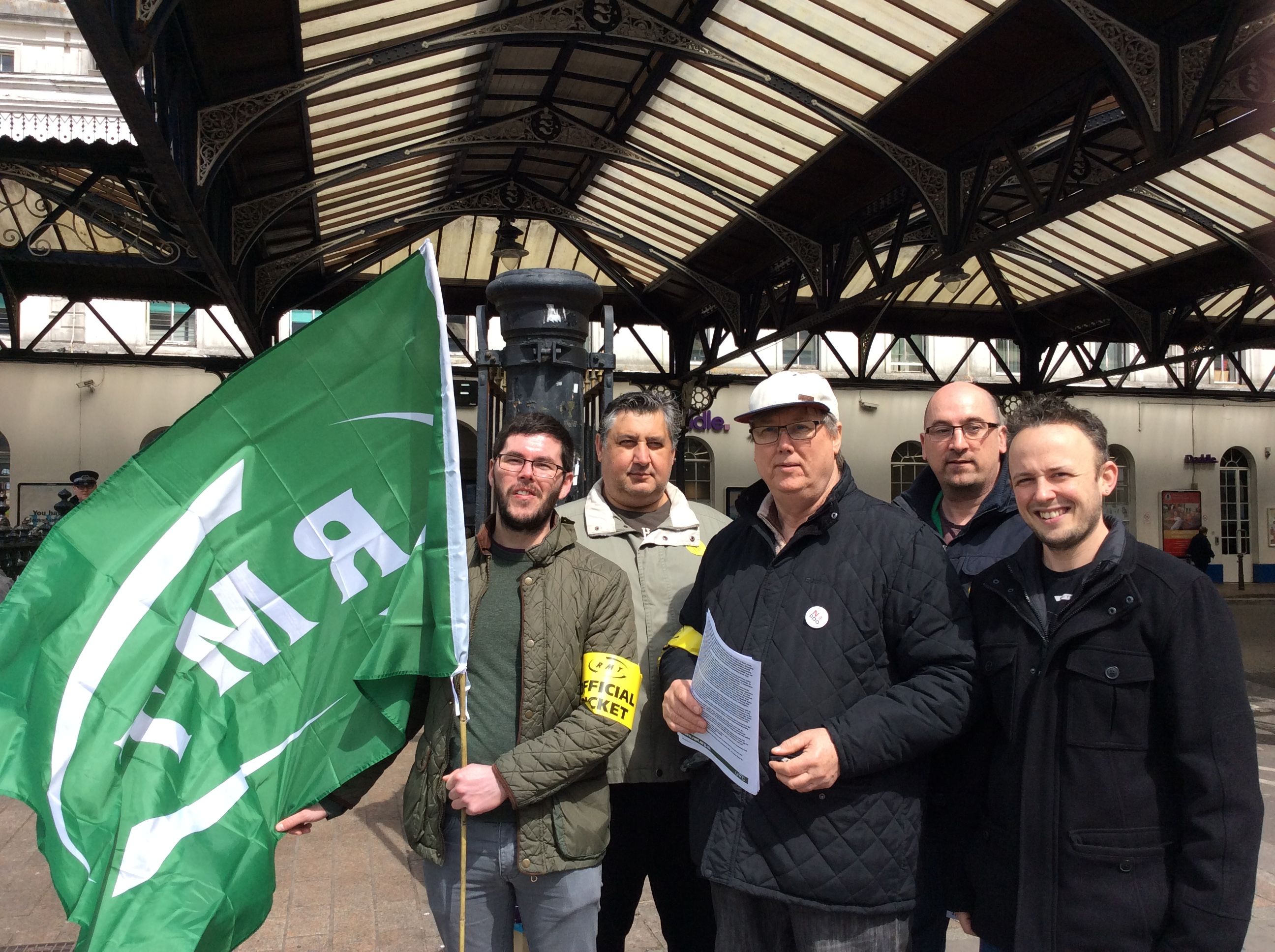
At the time of writing this the RMT and ASLEF leadership, supported currently by their members, the railway people in conductor and driver grades, are the primary cause for the system integrity to fail by taking strike action in their dispute over driver only operation, declining to work overtime and generally not supporting and undermining the system integrity.
Before this formal action, there were clearly unusually high levels of short-term sickness.
The action is obviously reducing the service to passengers but also the needs of every other party in the system.
If any other part of the system has a fault, the strike and overtime ban magnifies this many times.
No element of the system is perfect and it can all improve. But I am convinced by what I have seen that if the train crew were to work in the normal manner that they have in previous years, the output of the system, a safe and reliable rail service for passengers, would be delivered in an acceptable manner, which would be similar to other commuter rail services in the south east.
Their action is undermining the system and its value to the country that funds it through fares and taxes.
Whatever their motives, which are debatable, I do not support their action. They should influence changes to the system through engagement, such as improving customer service, the safe dispatch and operation of trains, and driver only operation.
They can therefore play their part in growing the system, continuing to provide long-term job security and safe and improved employment conditions for their members.
I believe they can achieve more for their current and future members in this way than opposing the change to working practices that the extension of driver only operation represents.
The role of overseeing the safety of the passengers and employees rests legally with the duty holder and employer, GTR, and regulation and oversight is the responsibility of the Office for Road and Rail.
Both bodies are legally obliged to consult with the trades unions on changes to working practices and the unions should fully participate in the consultation.
The fact that nobody is being made redundant or losing pay against their wishes, that there will be more GTR trains operating with two people on board and that safe driver only operation is already extensive in GTR, the UK and Europe, just serve to make this dispute more difficult to comprehend, especially for the passengers.
…
Without doubt the priority is to resolve the current Southern industrial relations issues. This is outside my remit.
Recovering from such a bitter dispute will take time for all involved, but I do believe that if the actions in this report are followed, or are already being implemented, then the system can recover fully in stages and deliver a good service by the end of 2018.