Review: The Lion King at the Lyceum Theatre, London
The Lyceum Theatre, 21 Wellington Street, London
School holidays are here again, and it’s a time to explore options for activities outside Brighton and Hove this month to mix things up a bit. This involved a trip to see the phenomenon, Disney’s The Lion King, on stage in central London. Disney’s The Lion King has been running at the Lyceum Theatre in London’s West End since it opened on October 19, 1999. There’s something quite special about walking into the theatre in Aldwych, London, for the first time. It’s an impressive venue – historic, ornate, and clearly built for scale. As of this year, the musical has been a resident of the theatre for over 26 years, making it one of the longest-running musicals in West End history.
This was my first visit to this theatre, and it is a beautiful space. The building itself is striking, with a sense of history that suits a long-running production like The Lion King. The current Lyceum Theatre is an amalgamation of styles and eras. The English Opera House, as the Lyceum was then known, burnt down in 1830, and construction of the new Theatre Royal Lyceum & English Opera House began in 1834; the only part of the original building left is the main portico-pillared entrance. The current iteration of the building is Grade II listed, and worth a visit in and of itself. The space itself adds to the experience before the show even begins, and on this occasion, it was packed out, with a full house ready to embrace what was about to unfold. There was an anticipatory atmosphere specifically for a production which has continually delivered over time.
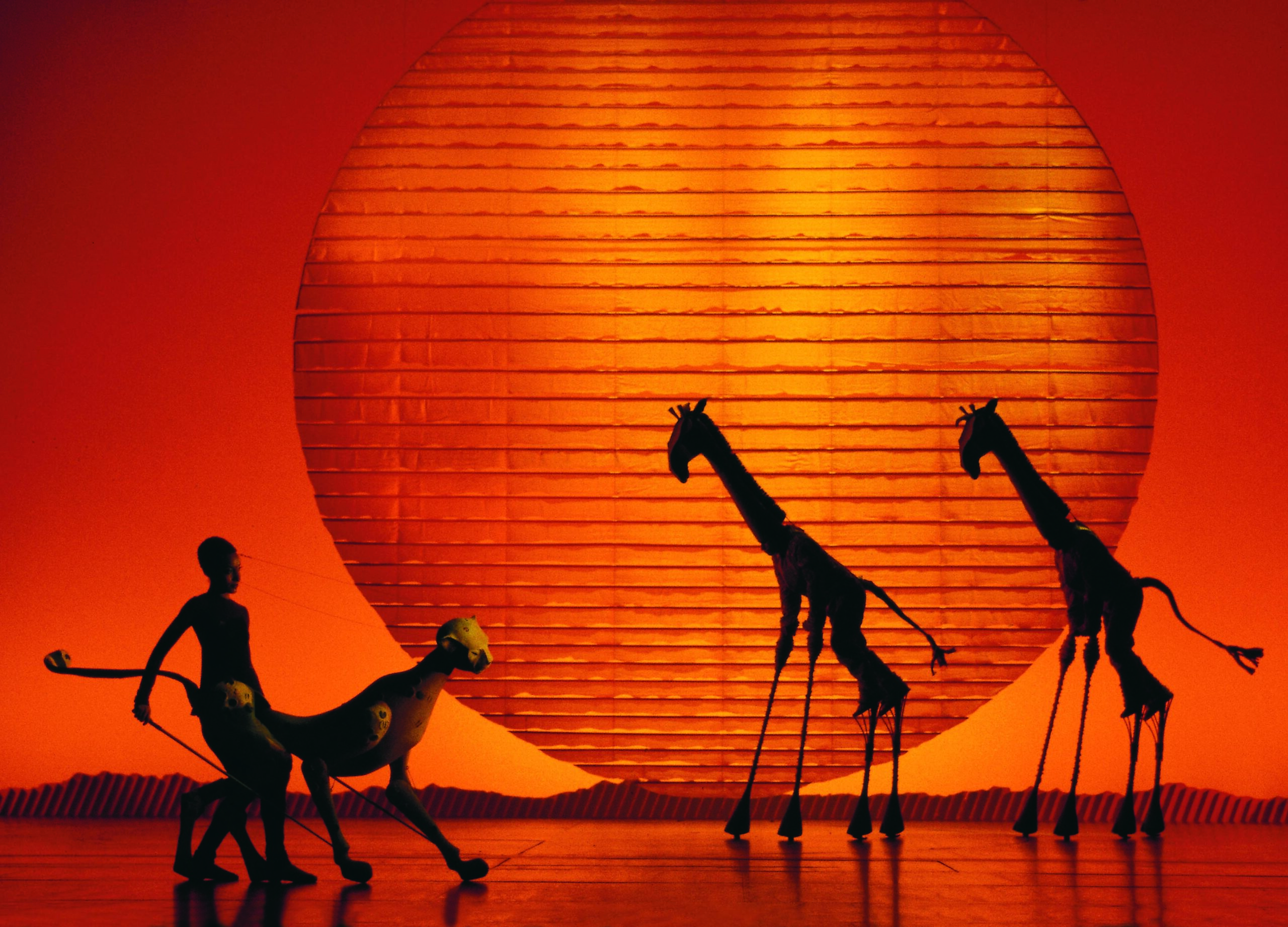
The Lion King does feel like a production that has earned its status; it is the king of musicals in central London. There is a reason this production continues to sell out after a quarter of a century. The staging is both confident and bold with striking sets that change often. It is very cleverly and stylishly delivered, with a real confidence in its visual and musical language. From the outset, it’s clear that this is not just a stage adaptation of a well-known film, but a fully realised theatrical work in its own right. The production uses moving sets, puppetry and choreography with precision, creating a clear visual language that captures attention throughout. The design draws on a wide range of cultural influences to evoke the African savanna without becoming cluttered or excessive.
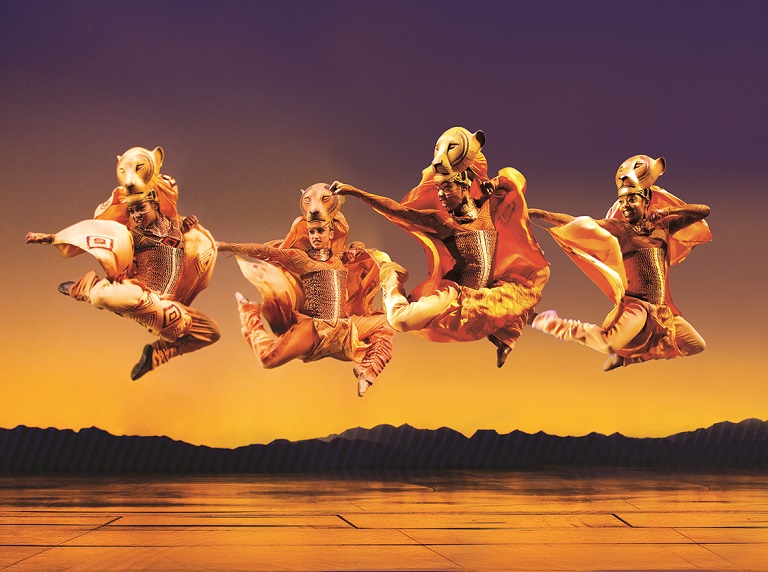
The creative vision behind the show, particularly under the direction of Julie Taymor, is evident in the way different forms of theatre are combined. There’s a beautiful integration of mechanica, masks, physical movement, song, and tradition. The puppetry work in particular deserve attention, being one of The Lion King’s defining features. The performers are fully committed to the physical demands of the roles, and the result is a consistent blend of human and animal movement that avoids gimmick. The craftsmanship is exceptional, and the way performers inhabit the animal forms is both stylised and expressive. It is not trying to be realistic in a conventional sense, but it achieves something more interesting – a kind of symbolic, almost ritualised storytelling that draws on a range of cultural influences.
The use of costume allows the performers to suggest character and form rather than imitate it directly. This is partly what gives the production its distinct identity. Costumes are striking throughout. There’s a clear sense of design intent in every detail, and the wardrobe department has done an incredible job of bringing together colour, texture, and movement in a way that supports the performance rather than distracting from it. Alongside this, the moving set design is extremely effective, allowing scenes to flow and shift with a sense of scale that matches the story’s scope.
The cast deliver strong performances across the board. The vocal performances across the cast are consistently impressive. There are some truly powerful voices within the company, and the level of skill on display is very high. Performers carry the music with clarity and control, and the ensemble work is particularly strong. Certain individual performances stand out. The young Simba and young Nala – including Cristiano Cuino and Lola Rose Etuazim – are especially impressive. For performers of that age to hold their own in a production of this scale is no small thing, and they do so with confidence and presence.
In the adult cast, the roles of Simba and Nala (currently played by Stephenson Ardern-Sordje and Merryl Ansah) are equally strong, continuing the emotional arc of the story with conviction. Without giving too much away, there are moments of genuine interaction between performers and audience, and a subtle interplay that extends into the auditorium itself. It gives the feeling that viewers are part of the experience rather than just observing it from a distance.
There’s also some excellent character work throughout the ensemble. Zazu, played by Gary Jordan, provides effective comic relief, while Scar, played by George Asprey, is convincingly realised as the antagonist. The dynamic between Scar and Simba is handled with dramatic tension, particularly in the earlier sections of the story. There are also moments of direct engagement with the audience, and elements that extend beyond the stage into the auditorium itself. These are handled joyfully and create a more participatory element for audiences. This gives each performance a shared, immediate quality without becoming intrusive.
The music remains central to the success of the show. The original songs by Elton John and Tim Rice are familiar, but the stage version builds on them with additional material and expanded arrangements. There is a strong influence of African musical traditions throughout, including the use of multiple languages such as Swahili, Xhosa and Zulu alongside English. This gives the score a broader, more lively texture. This is supported by the accompaniment of a live orchestra, conducted by Simone Manfredini, adds depth to the performance. On our visit, the sound filled the theatre without overwhelming it, and the range of instrumentation contributes to the layered feel of the score. Songs such as The Circle of Life remain effective, while newer additions like Shadowland and Endless Night strengthen the emotional arc. The theatre is built for sound to travel and the performers voices really fill this auditorium.
The choreography and physical movement are sympathetic to the story and developing animalistic mimicry to share the characters’ experiences throughout. There are opportunities for leading characters to break into more expressive sequences, but for the many animal performers – giraffes, antelope etc, there is a performative discipline in the ensemble work.
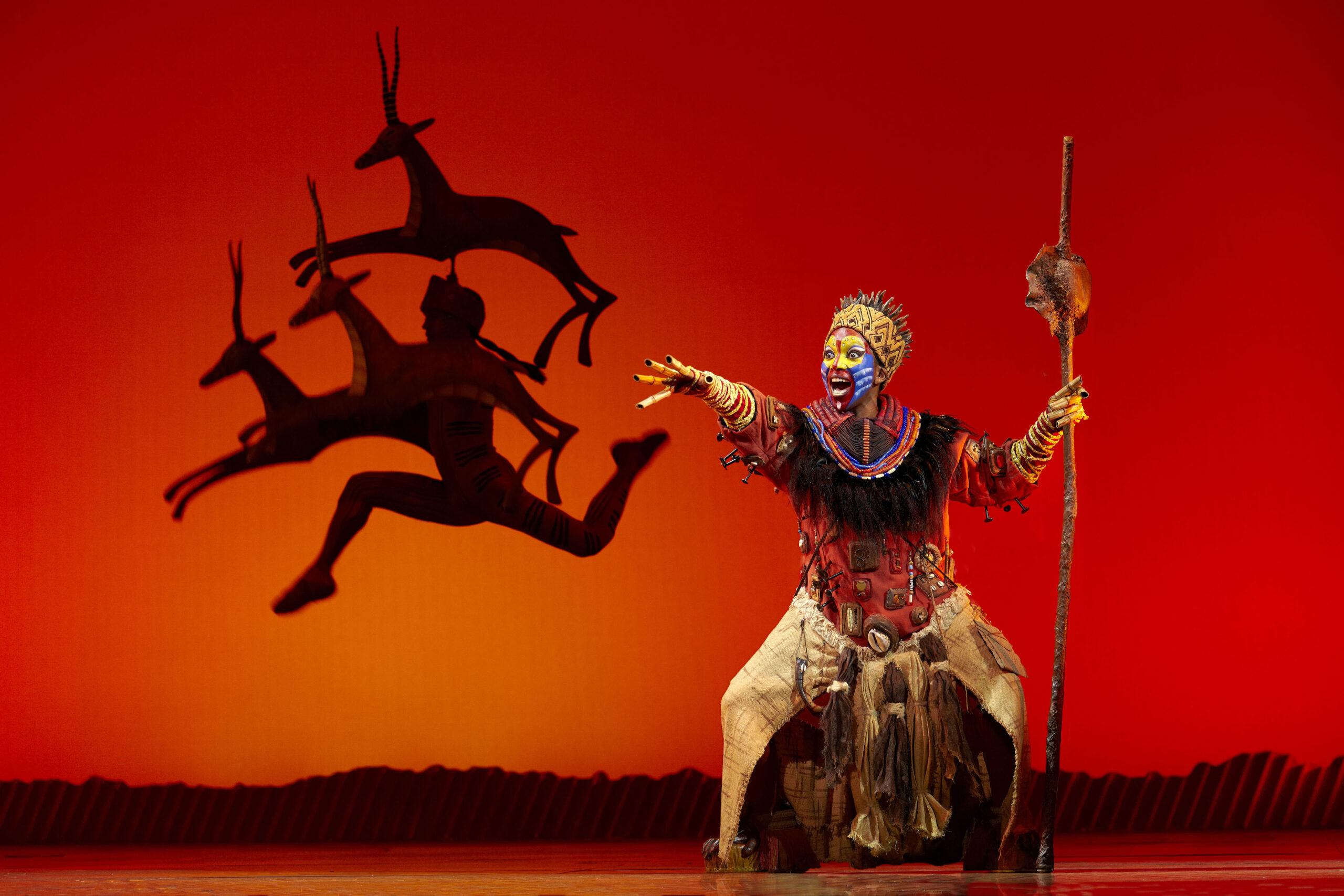
There’s also a strong sense of thematic structure running through the piece. Simba’s story – as the son of Mufasa, destined to become king and eventually return to reclaim his role – is told with clarity. Mufasa himself is portrayed as a figure of authority and legacy, while Rafiki, a baboon with shamanic qualities, serves as a guide and spiritual presence. His role draws on cultural references, including elements associated with South African traditions and healers.
There is a delightful emphasis on cultural grounding during the show, with the production incorporating references to South African traditions, both in its musical choices and approach to character and storytelling. The character Rafiki, for example, is presented with elements drawn from spiritual and ritual practice, utilising the Xhosa language in song to entrance young audiences. The show doesn’t simply use African aesthetics as decoration, but incorporates these into the fabric of the storytelling. That includes the music, language, movement, and design, all of which contribute to the sense that the audience is being immersed in a particular cultural and geographical world. There are references to tradition, ritual, storytelling, and performance styles that go beyond Western musical theatre conventions. This gives the production a broader resonance, even as it remains accessible to a wide audience.
The show also includes moments of humour that are well-timed and well-delivered. These lighter sections, featuring the Hakuna Matata duo Timon the meerkat played by Alan McHale and Pumbaa, a warthog (Pierre Van Heerden), dancing the Charleston, include an array of comic sequences and ensemble numbers. These are performed with a sense of timing that prevents the production from becoming overly serious or static.
The technical and creative credits behind the production are extensive, and rightly so. The work of designers, choreographers, musicians and performers all contribute to a production that feels carefully constructed and well-maintained. The choreography by Garth Fagan, the costume and puppet design led by Julie Taymor and Michael Curry, and the broader creative team all play a role in maintaining the consistency and quality of the show.
This is a production which continues to justify its reputation. It’s visually striking, musically rich, and performed with a level of skill that makes it easy to see why it remains so popular. More importantly, it still feels like theatre – alive, responsive, and capable of drawing an audience into its world. The experience was genuinely enjoyable from start to finish. The combination of impressive performance, strong design, and thoughtful cultural integration makes this a show that I would happily return to. It’s not just a spectacle, but a well-crafted piece of theatre that continues to hold its place in the West End with confidence. It is worth noting the range of the audience. While the show is clearly suitable for families, there were many adults present without children. It works as both a family production and a piece of theatre appreciated for its craft and scale.
The technical standard across all departments is excellent. The costume and puppet design, the choreography, the musical direction and the lighting all contribute to a production that is well-maintained and carefully managed. There is a consistency here that reflects both the original creative team and the ongoing upkeep of the show. Overall, this is production is visually strong, musically rich and performed to a high standard. More importantly, it holds together as a coherent piece of theatre rather than a simple adaptation of a well-known film.
For those in Brighton thinking about making the trip, this is entirely doable. A journey into central London and a short walk from stations like Blackfriars or Waterloo puts one right into the heart of the West End. It’s a straightforward trip, and productions like this are exactly the sort of thing that justify the effort.
Details
Venue: The Lyceum Theatre, 21 Wellington Street, London, WC2E 7RQ
Tickets: Tickets from £38.95 upwards.
Magical Mondays offers you the chance to purchase seats for participating Disney Shows for £29.50. Every Monday at noon, a number of tickets for that week’s performances will be available for £29.50, through the Disney Tickets website.
Timings: Tuesday to Saturday at 7:30pm. Wednesday, Saturday & Sunday at 2:30pm
The performance lasts approximately 2 hours and 30 minutes including an interval.
Accessible: The Lyceum Theatre is fully accessible to disabled, deaf and visually impaired guests.
Guide Dogs are welcome in an auditorium or can alternatively be left in the care of the theatre staff. If you intend to being a guide dog, please advise at the time of booking. If you have any specific requirements or questions please call 0333 009 5399 or email lyceumbo@atgentertainment.com
Find more arts and culture reviews at Brighton & Hove News – Follow @BHCitywhatson and @bhcitynews on Instagram.
Covering everything from fringe theatre to major tours across Brighton & Hove – tag us if you’re going!
#WhatsOnBrighton #BrightonandHoveNews #Brighton #BrightonTheatre #BrightonArts #BrightonHoveNews