
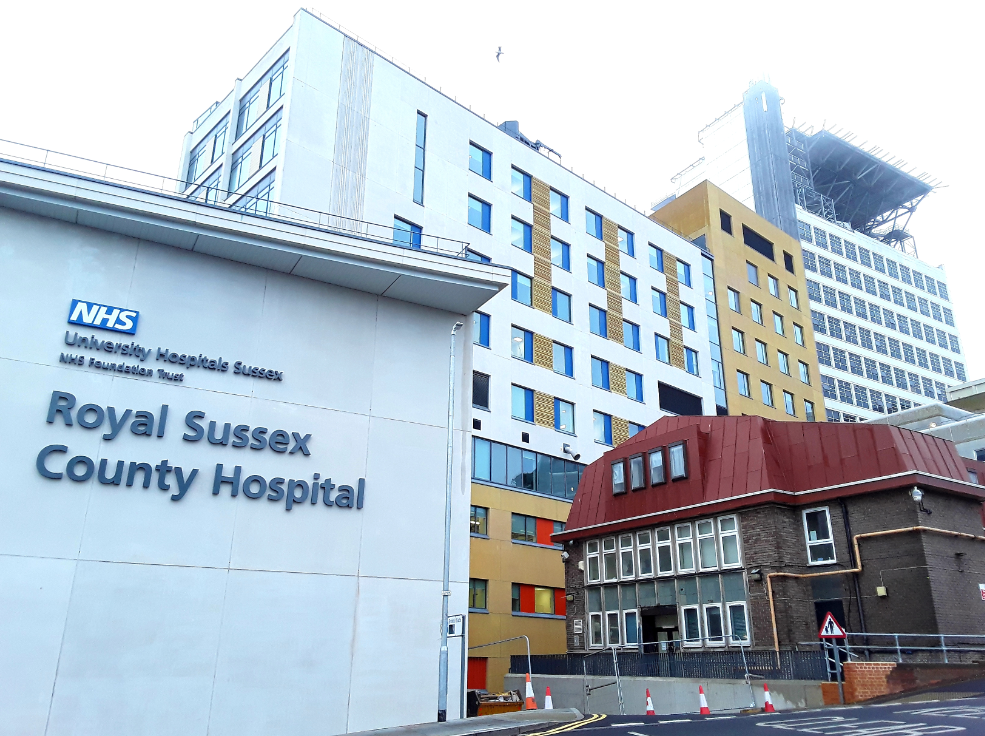
NHS bosses have declared a “critical incident” at the Royal Sussex County Hospital, in Brighton, in response to a soaring number of patients seeking treatment for flu and respiratory conditions.
University Hospitals Sussex, which runs the Royal Sussex, urged those with colds and flu or diarrhoea and vomiting not to come to the hospital unless urgent.
It is understood that the spike in patients has been linked more to respiratory problems rather than other seasonal conditions such as winter vomiting bugs.
According to the NHS Incident Response Plan: “The NHS needs to plan for, respond to and recover from a wide range of incidents, emergencies or disruptive challenges that could impact on health or patient care.
“These range from extreme weather conditions, an infectious disease outbreak to a major transport accident, a cyber security incident or a terrorist act.”
The plan said; “A critical incident is any localised incident where the level of disruption results in the organisation temporarily or permanently losing its ability to deliver critical services or where
patients and staff may be at risk of harm.
“It could also be down to the environment potentially being unsafe, requiring special measures and support from other agencies to restore normal operating functions.
“A critical incident is principally an internal escalation response to increased system pressures / disruption to services.”
The trust runs several hospitals and its website said: “We are busy. Our accident and emergency (A&E) departments are extremely busy and you may have to wait up to four hours or longer to be seen.
“Patients who are critically ill or injured may be seen before you – even if they arrived after you.
“If your condition isn’t life-threatening, you may be able to get help faster elsewhere.
“Please only attend A&E with a maximum of one other person supporting you and only if absolutely necessary.”
The trust website said that an A&E department (also known as emergency department or casualty) deals with genuine life-threatening emergencies such as
- loss of consciousness
- acute confused state and fits that are not stopping
- chest pain
- breathing difficulties
- severe bleeding that cannot be stopped
- severe allergic reactions
- severe burns or scalds
- stroke
- major trauma and accidents such as a road traffic accident