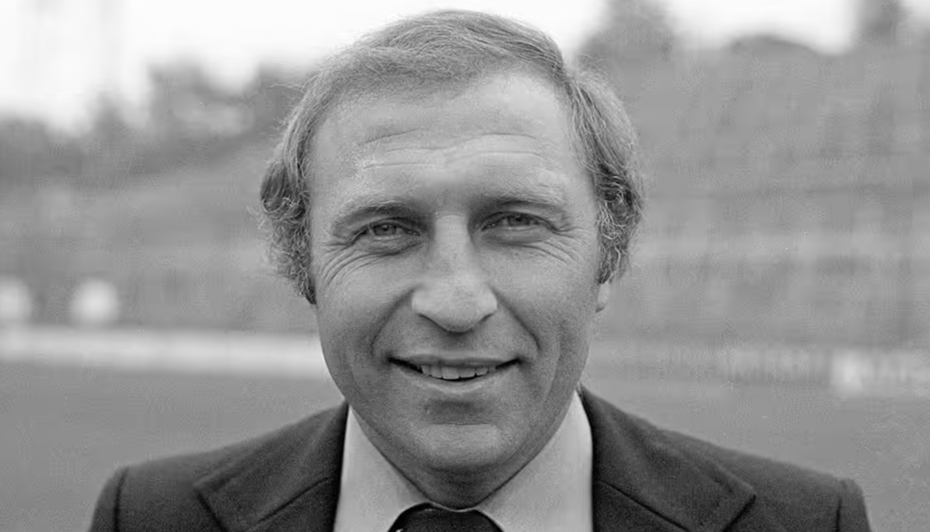
The former Brighton and Hove Albion manager Mike Bailey has died at the age of 84.
Bailey was in charge for 18 months from June 1981 and led the Seagulls to what was then their highest top-flight finish – 13th in the old First Division – in the 1981-82 season.
He built the side that went all the way to Wembley for the FA Cup final – and the replay – under his successor Jimmy Melia in May 1983.
Michael Alfred Bailey, born Friday 27 February 1942, died yesterday (Monday 17 August), He had been suffering from dementia.
Albion said: “Everybody at Brighton and Hove Albion is saddened to hear of the passing of our former manager, Mike Bailey, at the age of 84.
“Bailey led Albion to a 13th-place finish in the old First Division in 1981-82 which, at the time, was the highest position the club had ever finished.
“He is perhaps better remembered for a playing career that started at Charlton Athletic in 1958.
“During eight years at the Valley, he made 151 league appearances and also served as club captain.
“The midfielder also won two England caps – against the United States and Wales – before moving to Wolverhampton Wanderers in March 1966.
“Bailey again became a crowd favourite, helping Wolves win promotion to the First Division in 1966-67 and playing a key role in their resurgence under Bill McGarry.
“A UEFA Cup final appearance in 1972 against Tottenham Hotspur was followed by League Cup glory at Wembley in 1974, where he captained the side to a 2-1 victory over Manchester City.
“In total, he made 361 league appearances for the Molineux club before seeing out his playing career with brief spells at Minnesota Kicks and Hereford United.
“His management career took off back at Charlton where he guided the Addicks to promotion from the Third Division in 1980-81 – his first full season in charge.
“This alerted Albion chairman Mike Bamber – with the Seagulls having parted company with Alan Mullery – and, as the standout candidate, Bailey took the reins on 9 June 1981.”
Shortly after he arrived at the Goldstone, he said: “Our aim is to provide Brighton with a better football team and one that can consolidate its position in the First Division, rather than struggle, such as in the last two seasons.”
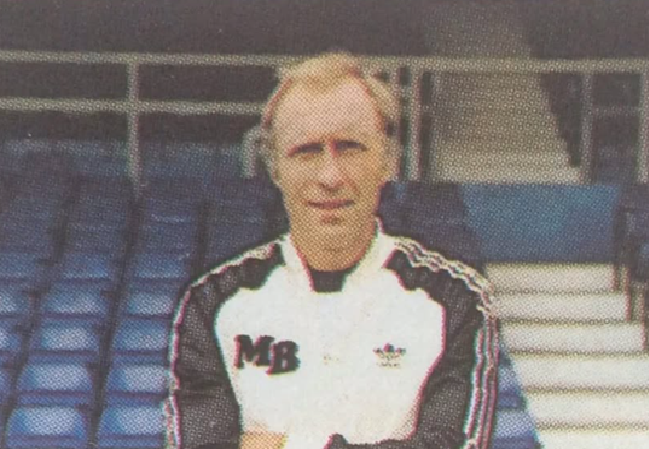
Bailey was true to his word but it came at a cost. Mullery’s team had been known for their front-foot, attacking brand of football but Bailey’s side were more cautious and more solid at the back.
At first, it seemed to work – and by early March 1982, Albion were eighth in the table after a memorable 1-0 win at European champions Liverpool.
There were even murmurings of qualifying for Europe on the Goldstone terraces.
But, after the Anfield triumph, Brighton won just two of their next 14 games to finish in 13th position – still some feat for a side that had only played three seasons of top-flight football.
Next season, the indifferent results continued and crowds dwindled further, with only 10,008 watching what turned out to be Bailey’s final home game on Saturday 27 November 1982, a 2-0 defeat to Notts County.
Bailey left a week later after a 2-0 defeat at Coventry City, having managed Albion 67 times, winning 20, drawing 18 and losing 29 of his matches in charge.
He went on to manage the Greek side OFI and non-league Leatherhead but his time with the Seagulls will always be remembered for that highest-ever league placing.
It stood for some 40 years until Graham Potter’s side finished ninth in the Premier League in 2021-22.
Wolverhampton Wanderers said: “As Wolves enjoyed a revival in the English game in the late 1960s and 1970s, Bailey was the club’s leader on the pitch, with the midfielder enjoying an incredible Old Gold career spanning 11 years, 436 games and 25 goals.
“During that popular Wolves stint, Bailey was known by those on the Molineux terraces for his love of a tackle, creative passing and eye for the occasional spectacular strike but, more than all that, his leadership.”
Charlton Athletic said that, in his eight years at the Valley, “he became a firm fans’ favourite, captaining the club on his way to 169 appearances in all competitions, scoring 22 goals”.
The club added: “Among the finest players to have represented Charlton, his legacy will also be cemented as just one of nine managers to have led the Addicks’ men’s team to promotion.”