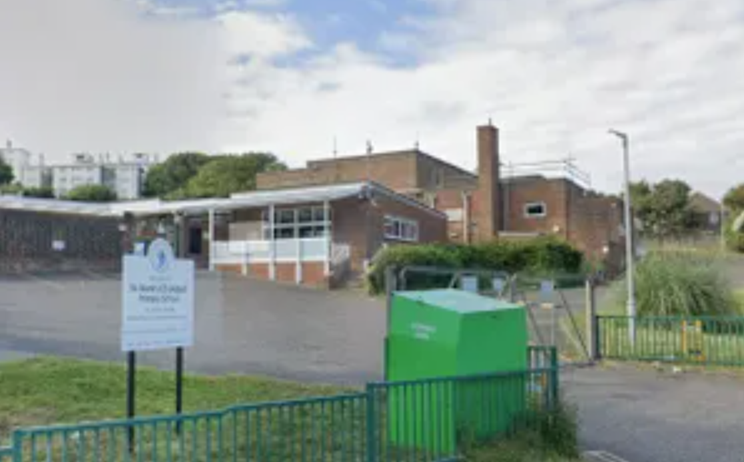
An executive head teacher at a troubled Brighton primary school will be supported by an interim executive board (IEB), the council said today (Tuesday 10 November).
The move follows the appointment of interim head Michelle Lord who took over from Claire Roberts at St Mark’s Church of England Primary School, Manor Road, Brighton, in the summer.
Brighton and Hove City Council said that it planned to appoint an IEB – a step so serious that it requires approval from the government’s Education Secretary Lucy Powell.
It will be only the second time that an IEB has been appointed locally. On the previous occasion, the board replaced the governors at Middle Street Primary School, in Middle Street, Brighton.
St Mark’s has struggled to fill places at the school and funding is per pupil which has led to the school going into the red.
The school is expected to have a deficit of more than £240,000 at the end of the current financial year at the end of next March.
Only five primary schools were expected to have a bigger financial deficit including Middle Street which closed in August.
St Mark’s had a budget of just under £1 million in the past financial year and started the 2025-26 financial year with a deficit of £120,000. It ended the year more than £330,000 in the red.
Middle Street had almost identical financial problems – but these were exacerbated by concerns about leadership and governance and a loss of confidence among parents, leaving the school with a growing number of empty places.
The council said that the changes under way at St Mark’s were intended to help get the school back on track.
A few years ago, Ofsted said that the school required improvement but, shortly before the previous head Jane Fendley left, the watchdog’s most recent report found that St Mark’s was good with outstanding features.
The council said: “Additional support measures will be introduced at St Mark’s Church of England Primary School to strengthen leadership and governance and ensure the school can provide the best possible education for children.
“Recent changes introduced at St Mark’s, such as mixed-age classes and a smaller intake, are helping St Mark’s adapt to changing pupil numbers and move towards a more sustainable future.
“In June 2025, Michelle Lord, an experienced head teacher, was seconded to lead the school as executive head, alongside additional support from the council and the Diocese of Chichester.
“Since then, St Mark’s has seen improvements in attendance and behaviour and Brighton and Hove City Council is working closely with leadership to ensure this continues.
“Throughout this work, the focus remains on children, families and the quality of education pupils receive.
“An interim executive board (IEB) will be introduced at St Mark’s to guide the school through the next stage of improvement.
“This is a temporary governing body made up of experienced education leaders who can provide additional support, oversight and expertise during a period of change.
“Parents and carers will be invited to meet the new chair and members of the IEB in the coming weeks, with further details to be shared shortly.”
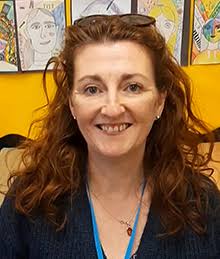
Mrs Lord is the head teacher of St Paul’s Church of England Primary School, in St Nicholas Road, Brighton.
The Labour deputy leader of the council, Jacob Taylor, said: “St Mark’s is an important part of the community and we’re focused on doing everything we can to help the school continue its improvement journey.
“We recognise the challenges the school has faced which is exactly why additional support has been put in place.”
Councillor Taylor added: “The IEB brings together a broad range of experience and expertise and will work alongside the school’s leadership, the council and diocese.
“The board’s role will be to strengthen the improvement and sustainability work which is already under way at St Mark’s Primary School, giving the school greater capacity, support and oversight as it moves forward.
“Ultimately, these measures all have the same purpose: ensuring children at St Mark’s receive the best possible education and building a sustainable future for the school and the community it serves.”
The school has not published the minutes of any of its governing body meetings since July last year, shortly before Claire Roberts took over from Jane Fendley.
The minutes from Monday 7 July 2025 said that the school had asked the council to “license” its financial deficit, effectively putting in” place a repayment plan because the council is liable to foot the bill for any overspend.
The minutes said: “Governors were informed that the school’s licensed deficit application to (the council) had been rejected (and) that this was included in a strongly worded letter from (the council).
“The reasons given for this decision were that the school’s budget recovery plan was based too heavily on predicted pupil numbers and getting grants to support income / spending.
“The letter insisted that the school engaged with the SRMA (Schools Resource Manager Adviser) process. Governors were informed that the process was led by business managers from other schools …
“Engaging with the process would give the school external validation regarding budget planning.
“The letter also suggested that the school should look at mixed age classes as a possible solution, even though this had been rejected by the (council) when the (governors) had suggested this earlier this academic year.
“Are pupil numbers increasing? The school suggested that whole school pupil numbers seem to be holding – that there were 154 pupils on roll at the October census, compared with 163 now.
“Governors supported a push-back against the (council’s) request for a new budget plan to be submitted.”
The head teacher’s report at the same meeting highlighted poor attendance – and the minutes said: “It was agreed that this was going to be difficult to address.
“Governors were reminded that this had been picked up by Ofsted … how complicated the issues were but how much the school was already doing to support pupils and their families.”
Attendance and punctuality appear to be a continuing problem, particularly among the youngest children, with just over four in five Reception children attending school, according to the latest figures.
And when children do attend school, too many of them turn up late, staff and parents were told.