REVIEW: Once Upon a Time in Sokoto at Brighton Dome
Tue 17 – Sat 21 Nov 2026
Some theatre entertains, some theatre challenges, and occasionally a production comes along that does both while leaving you with an entirely different understanding of the world. The play Once Upon a Time in Sokoto, written by the talented Nigerian poet and playwright Inua Ellams, is an extraordinary piece of theatre: ambitious, intellectually stimulating, frequently hilarious and utterly absorbing.
Presented at Brighton Dome this week as part of the new Touring Together initiative, this is political theatre at its very best. An epic exploration of the history of northern Nigeria, it takes the audience on a journey through the rise and fall of the Sokoto Caliphate. I looked this up and it tells me “a 19th-century Sunni Muslim state in West Africa founded by scholar Usman dan Fodio during the Fulani jihad starting in 1804. It spanned parts of present-day Nigeria, Niger, Cameroon, and Burkina Faso, the impact of British colonial expansion and the complex forces that contributed to the creation of modern Nigeria”.
Beginning in the nineteenth century, the play explores a sophisticated society with established systems of governance, scholarship, trade and education. It challenges the familiar colonial narrative of Africa as a place waiting to be civilised, revealing instead a world of intellectual achievement, commercial networks and political organisation.
The history is fascinating told through four actors sharing multiple characters, explaining the importance of cowrie shells as currency and how British economic intervention, including the flooding of local markets with imported shells from another colony, that of Australia, contributed to inflation and the destabilisation of existing economic systems. The play traces the devastating British conquest of the Sokoto Caliphate in 1903, examining the destruction of established political structures and the imposition of new systems of administration and education.
One particularly compelling thread concerns language and the politics of literacy. The transition from Arabic and Ajami writing traditions towards Roman-script Hausa, known as Boko, becomes part of a wider story about colonial power, education and cultural identity. It is a reminder that the control of language and knowledge can be just as politically significant as the control of territory. Hence the latter-day Boko Haram movement albeit a corruption of the initial fightback against western imperialism.
The production also shines a light on the powerful position of women in pre-colonial societies, including their influence and political authority, alongside the importance of Islamic scholarship, learning and trade. Indigo, textiles and the movement of goods become part of a much wider picture of a connected and culturally rich society.
What makes Ellams’ writing so impressive is the way he takes this enormous amount of historical material and turns it into gripping, accessible theatre without ever talking down to his audience. The storytelling is clever, layered and often mischievous, with unexpected moments of sharp, wry humour that regularly have the audience laughing out loud.
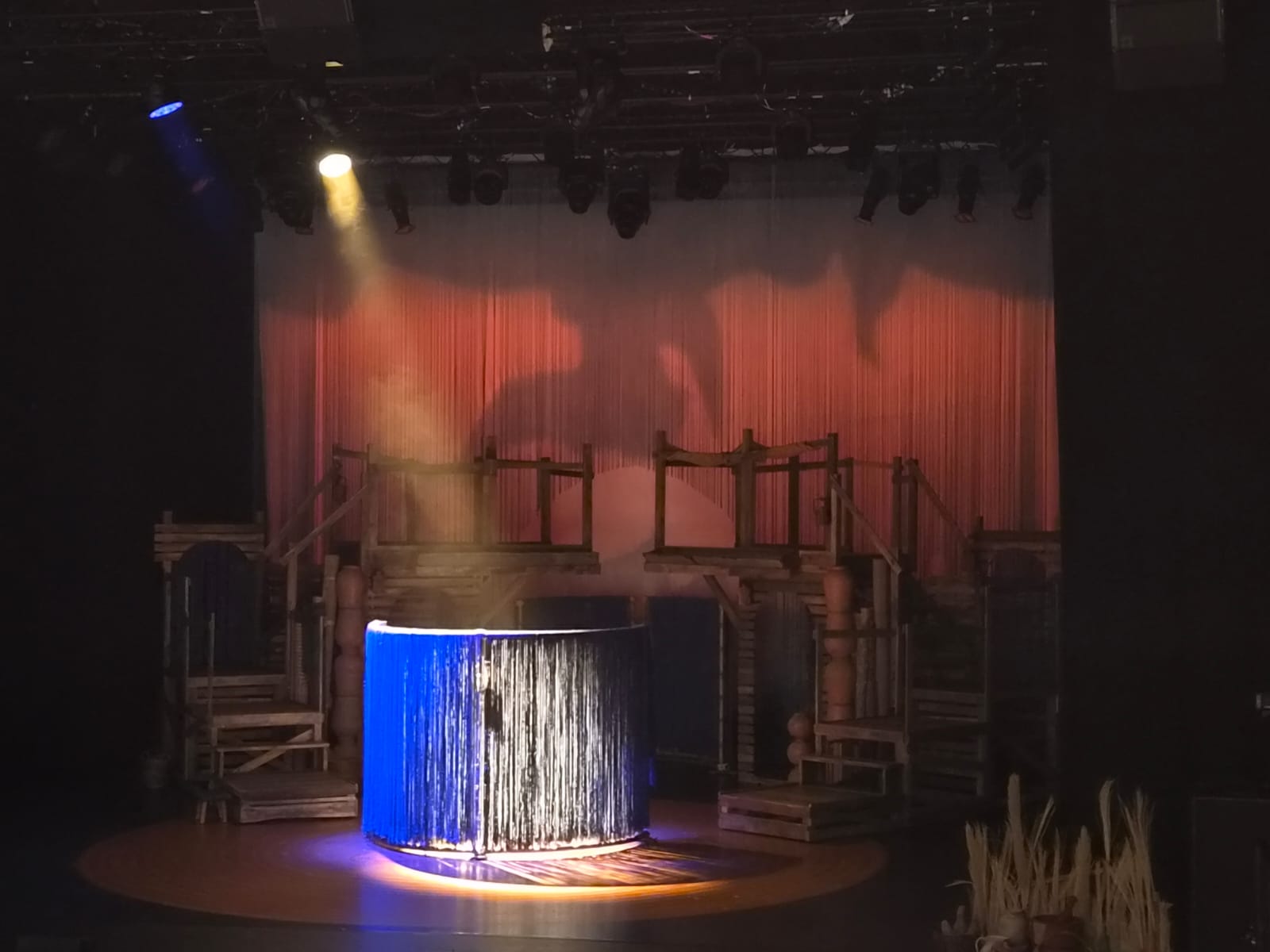
There is also a fascinating exploration of storytelling itself. The production invites the audience to participate, encouraging us to consider how stories are told, remembered and passed between generations. Audience interaction is woven into the performance, making us active participants in the unfolding narrative rather than simply observers. The set is cleverly created to address the passing of the years, and function as a boudoir, a marketplace, a compound, battlements and more.
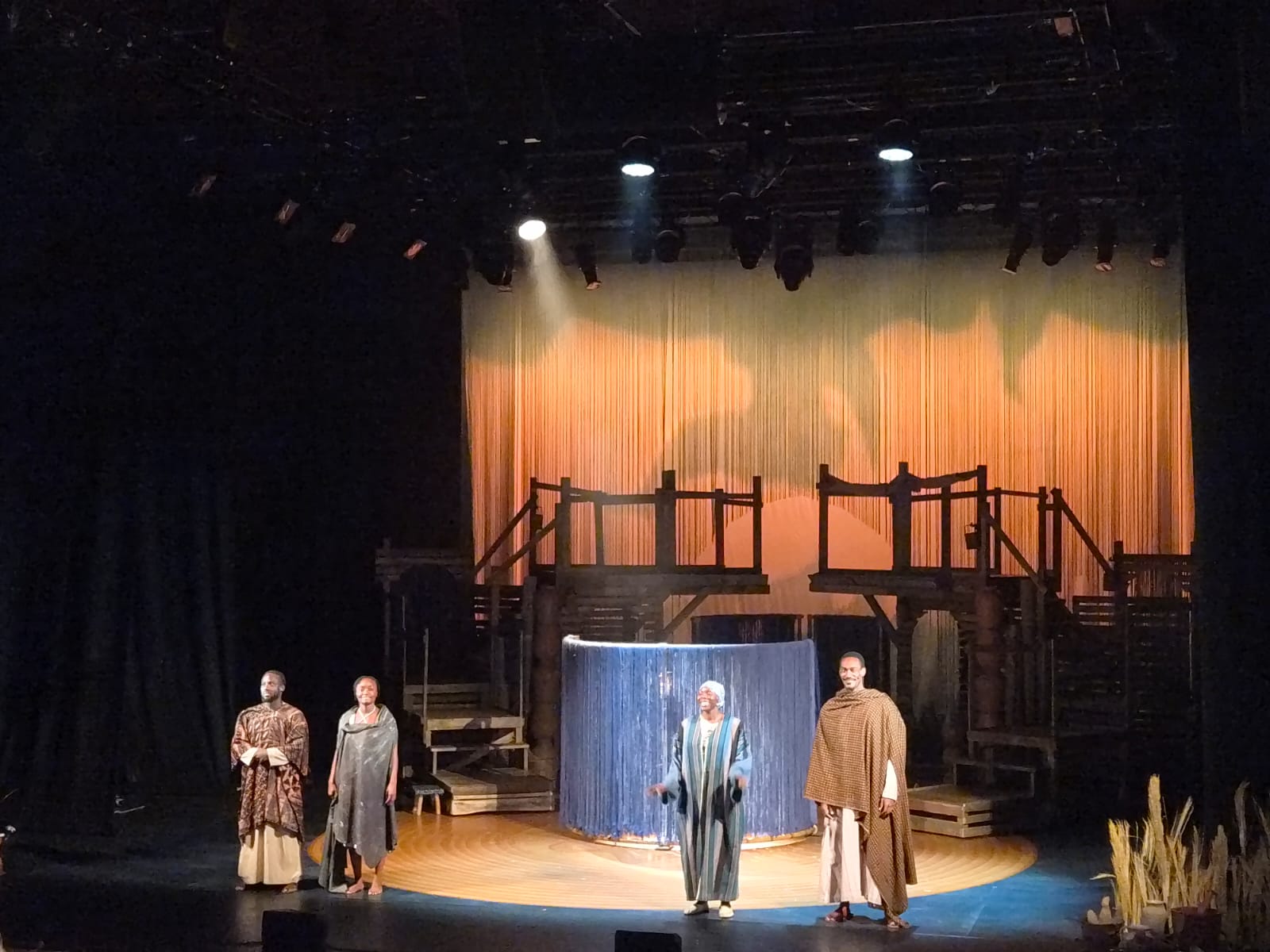
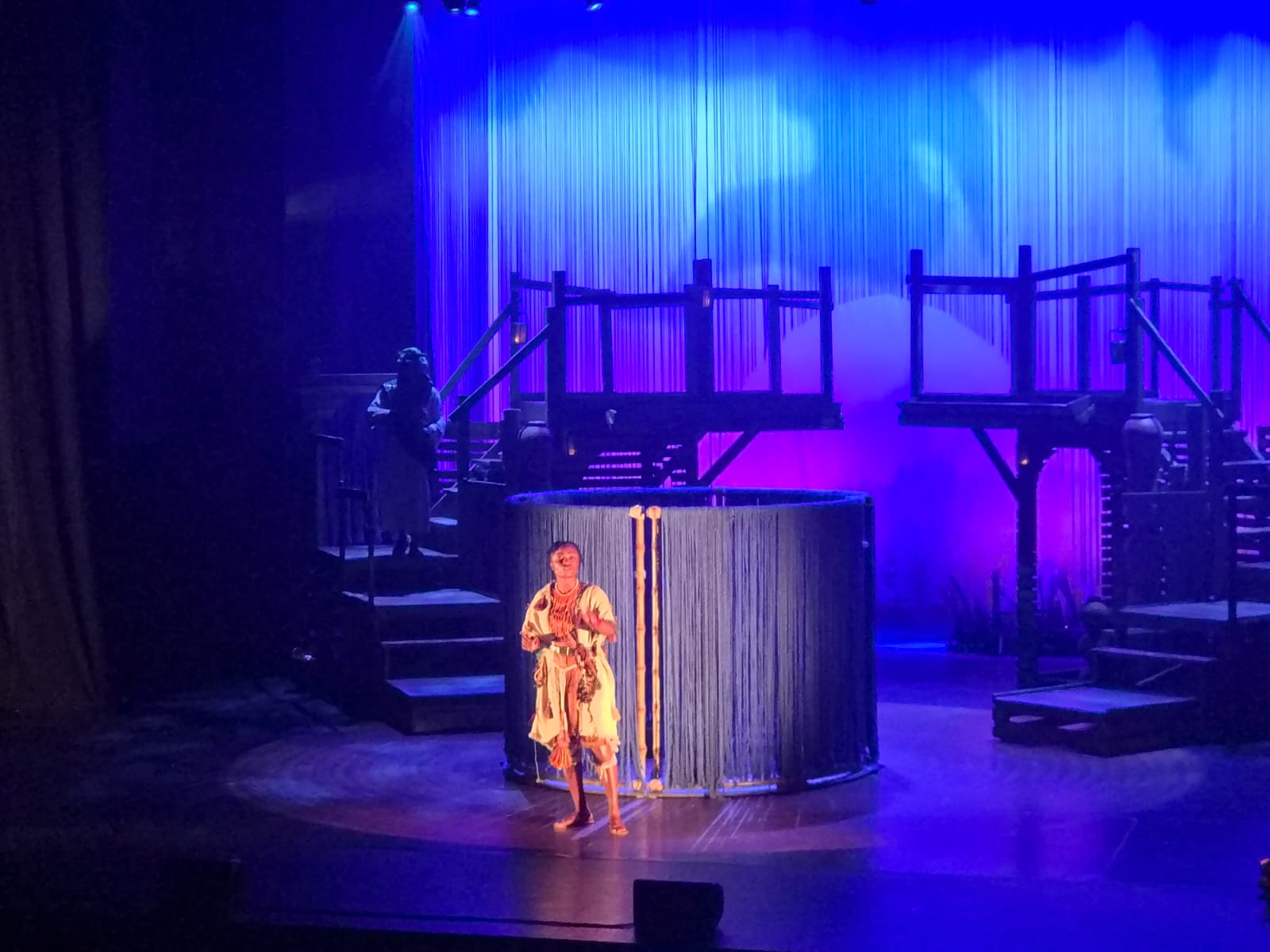
The theatrical craftsmanship is exceptional. Four actors play multiple characters with astonishing ease, moving between personalities and situations with remarkable precision. The sheer quantity of dialogue and historical detail they have to master is impressive, yet the performances never feel laboured. They are playful, quirky, engaging and magisterial at points.
The set is deceptively simple but extraordinarily versatile. With clever use of lighting, movement and staging, it transforms into marketplaces, battlements, domestic spaces and places of celebration. The costumes are wonderful, adding colour, character and visual richness to the production. There is an infectious energy to the performances, with the actors clearly relishing the material.
The play also makes some striking connections with wider histories of colonialism, racial politics and the creation of national identities. References to apartheid and the literary legacy of Nigerian writer Chinua Achebe “Things Fall Apart” mentioned in the play, add further layers to a production that is constantly asking us to think about who gets to tell history, whose knowledge is valued and what happens when political boundaries are imposed upon existing societies.
Although the historical narrative takes us through the British conquest of the Caliphate and the subsequent colonial transformation of the region, its implications extend into the twentieth century and beyond. The creation of Nigeria as a nation-state brought together different peoples, histories and political traditions within boundaries shaped by colonial rule. The tensions inherent in that process help us understand the divisions and conflicts that would follow, including the devastating civil war.
At around two hours and forty-five minutes, including an interval, this is a substantial evening of theatre. It demands concentration and takes its audience through an extraordinary amount of history, but it never loses its momentum. Oh, but I learnt so much! There is so much to absorb that you could easily spend the journey home discussing what you have learned.
The audience response was emphatic, with a standing ovation at the end. It felt thoroughly deserved. There was also something particularly interesting about the audience itself: a noticeably mixed, cosmopolitan and engaged crowd, with a real sense of shared curiosity and investment in the subject matter.
Brighton has been enjoying an exciting run of ambitious theatre, with new companies and different voices bringing fresh perspectives to the city’s stages. Once Upon a Time in Sokoto is a particularly outstanding example. Touring Together, bringing together independent producers China Plate and Fuel with a network of regional venues, is an important initiative that supports ambitious new writing and ensures that exceptional work reaches audiences beyond London.
This production is a reminder of just how powerful theatre can be. It can entertain, educate, challenge assumptions, recover overlooked histories and encourage us to look at the present differently. I came away having learned an enormous amount, but also feeling genuinely inspired by the intelligence, imagination and sheer theatrical skill on display.
Inua Ellams and the entire company have created something quite special. This is not simply a history lesson dressed up as theatre. It is a vibrant, funny, politically astute and beautifully realised production that trusts its audience to engage with complexity.
An exceptional evening, and one of the most rewarding theatrical experiences to come to Brighton this year. You’ve got two more shows in Brighton so go see it!
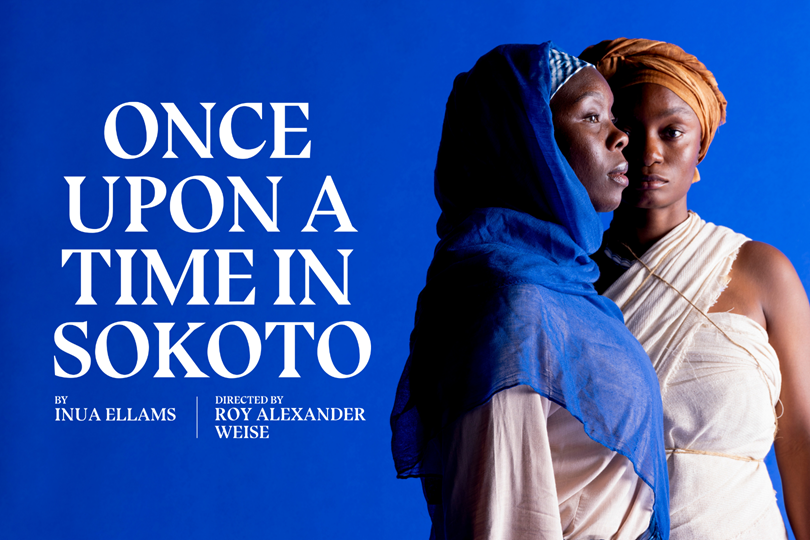
Once Upon a Time in Sokoto is written by Inua Ellams and directed by Roy Alexander Weise.
Further information and booking details are available from Brighton Dome.
Details
Once Upon a Time in Sokoto – Brighton Dome. The Brighton run takes place at Brighton Dome until Saturday 21 November 2026.
Dates: Tuesday 17 to Saturday 21 November 2026. Tue 17, Wed 18, Fri 20* Nov, 7.30pm
Thu 19 Nov, 6pm + post show talk. Sat 21 Nov, 2pm & 7.30pm. Running time: 2hrs 25min, including interval.
Venue: This event is taking place at Brighton Dome – Corn Exchange.
Under 30s, Concessions & Student Groups £14.50.
Thu–Sat, 7.30pm £22, £27
Under 30s, Concessions & Student Groups £17
Brighton Dome & Brighton Festival Members receive £2 off full-price tickets.
Recommended for ages 14+
Find more arts and culture reviews at Brighton and Hove News – Follow @BHCitywhatson and @bhcitynews on Instagram.
Covering everything from fringe theatre to major tours across Brighton and Hove – tag us if you’re going