
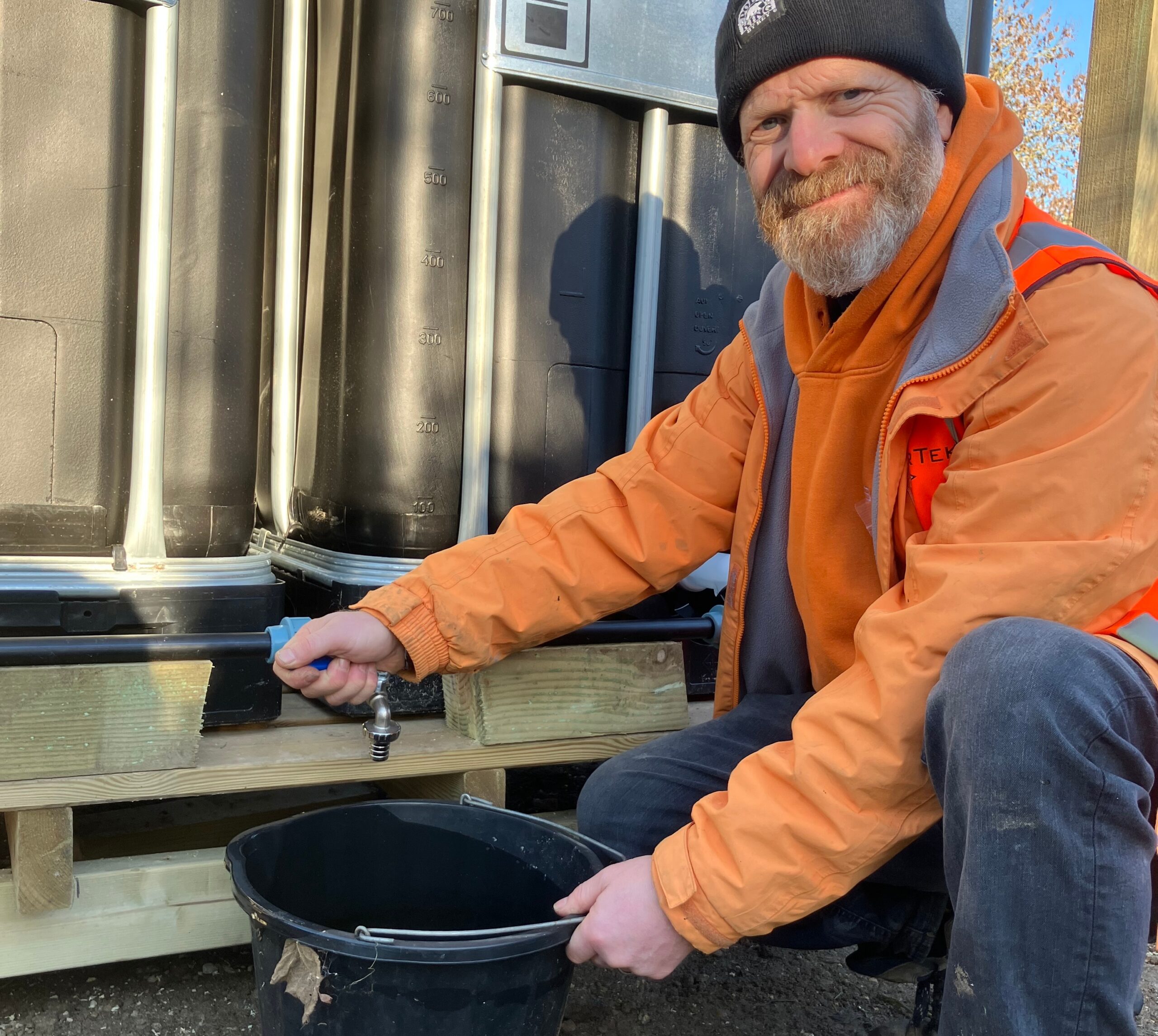
A pilot project to install rainwater harvesting stations on three allotment sites in Brighton and Hove has just been completed.
The rainwater stations at Falmer, Tenantry Down and Lower Roedale allotments each hold and filter up to 2,000 litres of rainwater in 2 tanks. They are available for residents to use on their allotments instead of using mains water, or, in the case of Falmer, where there is no piped water at all.
Using rainwater instead of taking it from the mains supply will help to conserve the city’s drinking water and reduce the cost of supplying water to the sites.
It will also help allotments to keep going in the summer. Plants need the most water in hot, dry and windy weather, which is usually when water companies are least able to meet demand.
Allotments improve the resilience of food growing across the city and create spaces that support mental and physical health. Brighton & Hove’s plot holders work together, volunteering their own time and expertise on communal ventures that help local food banks and provide educational opportunities.
The city’s residents have also been taking part in biodiversity studies led by the Bite-Size Biodiversity project team at the University of Sussex.
Their research highlights the rich variety of crops and pollinator habitats found on allotments, underlining their importance for climate resilience and sustainable food systems.
Councillor Alan Robins, cabinet member for recreation, said: “Allotments are more than places to grow food – they are thriving places of community, wellbeing and biodiversity.
“Initiatives like this rainwater harvesting pilot support allotment holders to adapt to changing weather patterns and garden more sustainably while reducing pressure on the mains water supply.”
Rainwater often has a lower pH than mains water, so it is better for plants than tap water.
The minerals that are sometimes found in mains water, especially in hard water areas such as Brighton and Hove, can raise the pH of root zones, which can affect the availability of nutrients for the plants.
The new rainwater tanks have a metal corrugated roof and guttering to capture as much water as possible. They are also designed specifically to prevent the build-up of algae and to keep the water from freezing in cold weather.
The council will monitor reduction in water use from the mains and the effect on water bills to the allotments.
If the pilot is successful, the council will look to secure funding to expand the project to more sites in the city.
The rainwater harvesters were designed and installed by Startek Lighting, based in Hove, and funded by Southern Water’s Business Partnership Fund and the council.
Kayleigh Sharman, Southern Water water efficiency manager, said: “Water is one of our most precious resources. The Southern Water Business Partnership Fund is an innovative scheme aiming to promote water efficiency in our region and find new ways to save water.”







Wow ! I never knew that plants needed watering more in hot dry weather!
They also allow bypassing hosepipe bans, which can be very handy during droughts.
Most allotment holders have been doing this for years with homemade equipment, now we need a company to install some bigger basins? 🤣
Lovely simple idea – I often feel guilty at the amount we have to put onto plots on Summer days. Be great if they can roll it out to other sites
This really is just a vanity project using water company and council finance to say look at us were saving water costs. Hardly going to go far two IBC tanks on sites with dozens of allotments needing water for plants. It requires one per allotment plot not one for them all. I have as much ability to harvest rainwater from my shed and gereenhouse on my plot, it nearly met our needs last season. Southern water waste no end of water with ancient unreplaced water mains, spend the money on them not vanity projects.
I agree that this is a good idea and in the right direction, but 2000 litres is a drop in the bucket for allotments. I have built up that capacity for my own garden which is by no means large but it lasts up to about 3 weeks in the growing season when there is no rain. Maybe it’ a small trial run and larger containers will be considered if it works!
I believe the article refers to it as a pilot scheme?