Review: Hercules at the Theatre Royal Drury Lane, London
Disney’s Hercules has been in situ in London’s West End for a year now and brings with it confidence and scale in its production, something perfect for a school holiday visit with the family. The show draws loosely on the Greek myth of Hercules, the son of Zeus. The show toured in America and Europe until settling in at the Theatre Royal, and it remains here until September 2026. This London production feels like the point where the show has settled into its commercial identity.
At its core, the musical is based on the 1997 Disney film, itself inspired by the mythological figure of Hercules. The story follows a young demigod who is stripped of his immortality and raised on Earth as a mortal, albeit one with superhuman strength for reasons set out in the first part of this musical. That contradiction, power without belonging and trying to reclaim Hercules’ place in the world, drives the narrative. When Hercules learns the truth of his origins, he sets out on a path to become a hero and return to Mount Olympus albeit whilst somewhat distracted by Medusa, other perils and pitfalls and a love affair. It is a classic coming-of-age structure, framed in myth but fundamentally about identity and self-worth.
The adaptation leans into the film’s tone rather than attempting to reinterpret the myth in a serious way. That is a sensible choice, but it also sets limits, and this show prioritises familiarity and accessibility over depth or risk. It is a musical and not a Greek tragedy. It works for a broad audience, but it does mean the material plays safe rather than challenging expectations.
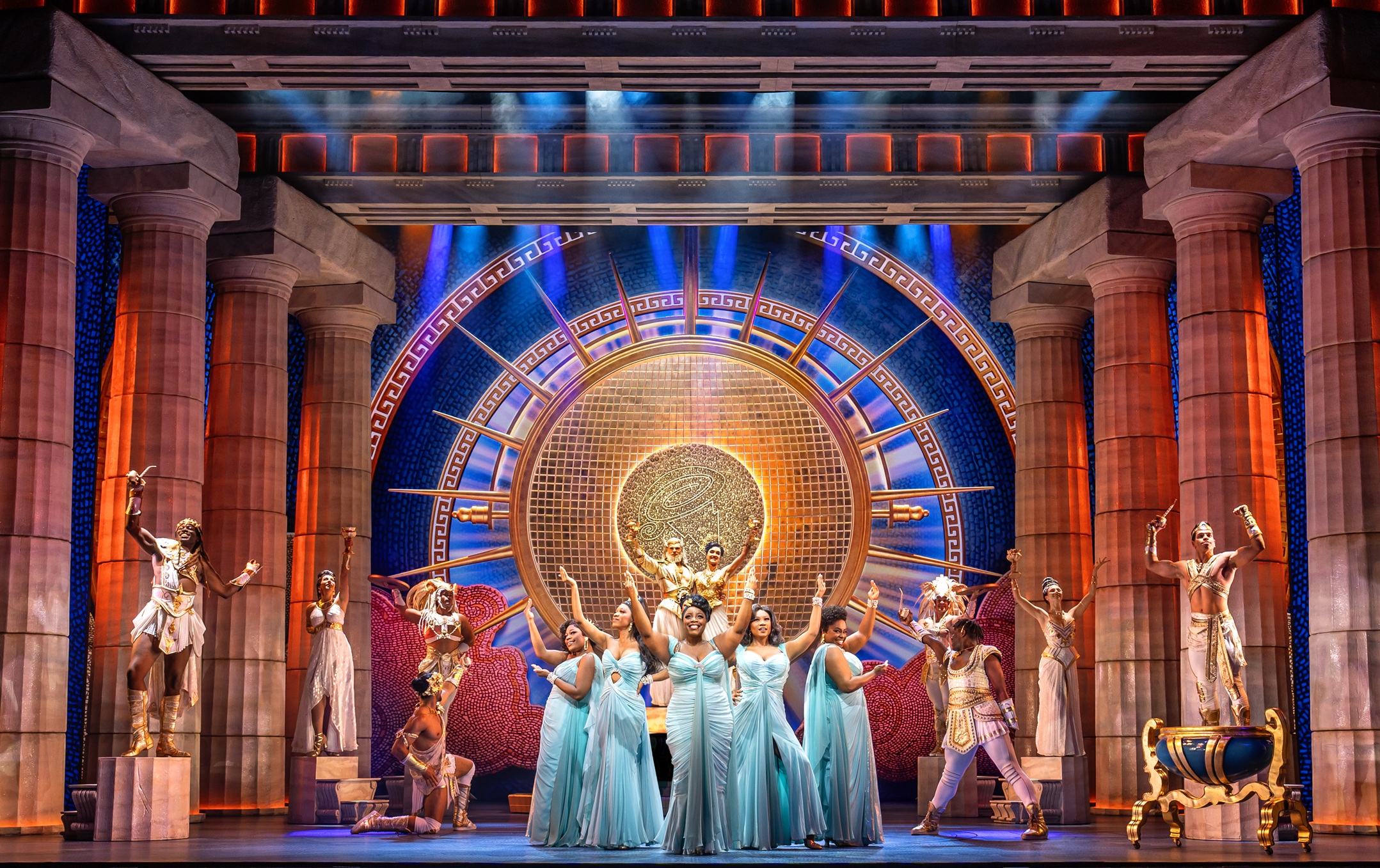
The strongest element of the production are The Muses. Candace Furbert (Thalia), Sharlene Hector (Clio), Brianna Ogunbawo (Melpomene), Robyn Rose-Li (Terpsichore), and Leslie Beehann (Calliope) bring real presence and cohesion with their stunning voices and stage presence. Their performances draw on gospel traditions, and that musical style gives the production its clearest identity – like a Motown spectacular forming a solid backdrop to the production. The opening numbers establish tone immediately, with energy, vocal precision, and a theatrical authority that lifts the entire show.
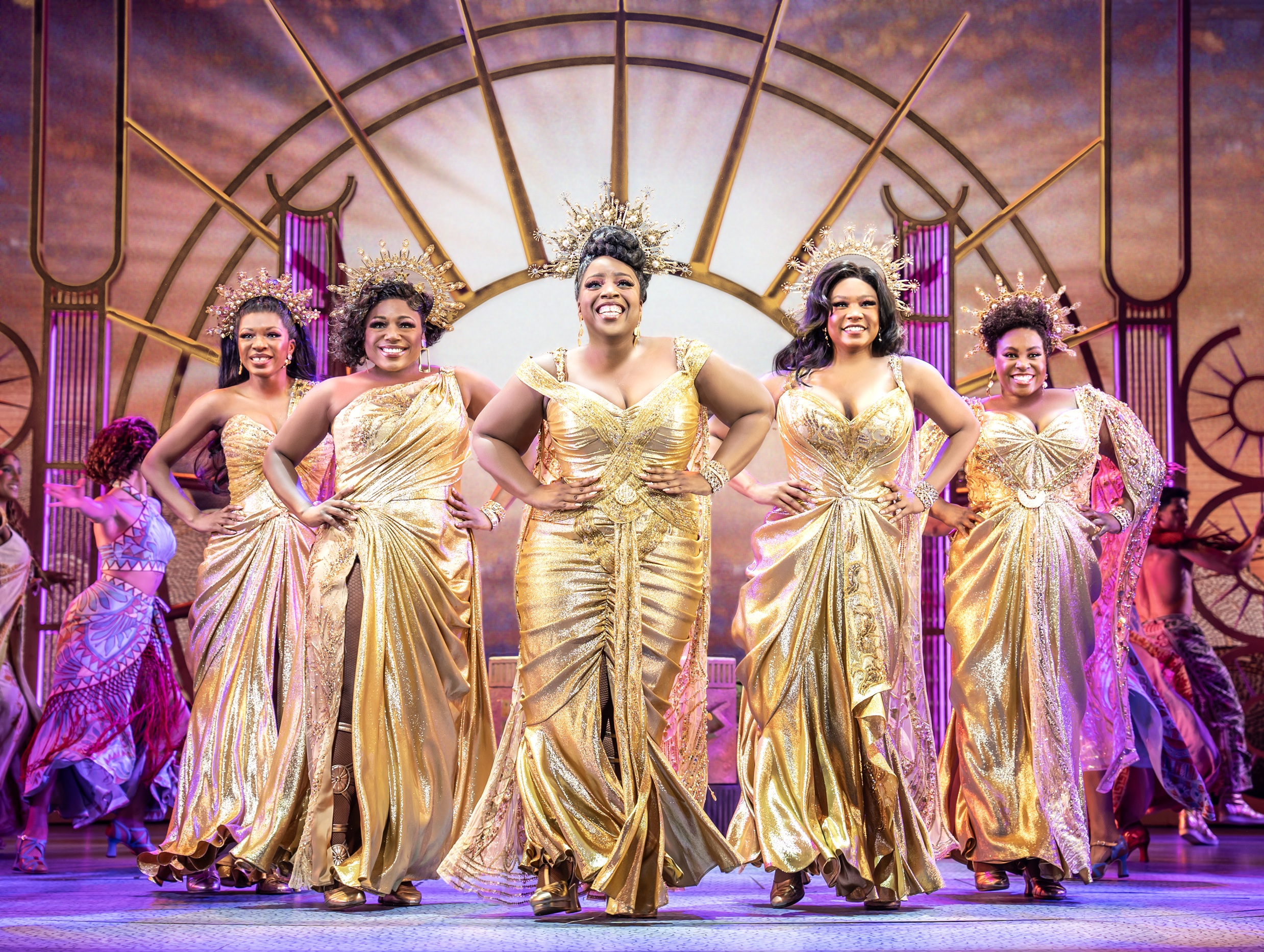
Their numbers—particularly Zero to Hero and Go the Distance—are delivered with clarity and confidence. This is where the production feels most alive. The ensemble performers work around them also reinforcing that momentum, and there is a consistent musical strength running through the show. The cast is another major strength. The ensemble, in particular, is tight and well-drilled, giving the show a strong backbone. There is a collective energy that keeps the momentum going, and the performers clearly understand how to work together as a unit rather than as isolated individuals.
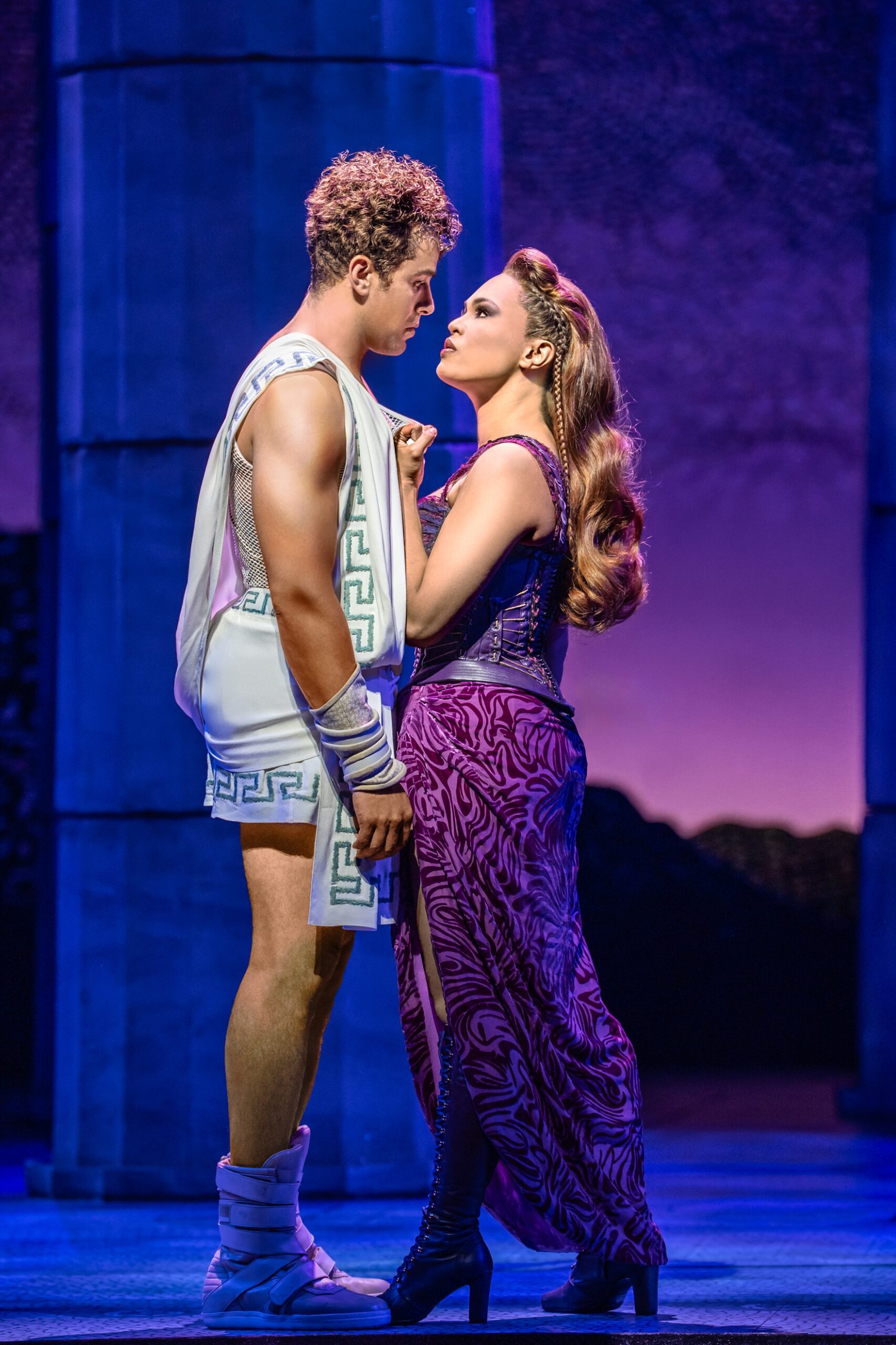
Director and choreographer Casey Nicholaw keeps the pace brisk. The show moves quickly between scenes, with a consistently impressive set design throughout. Luke Brady as the titular character Hercules, provides a solid central performance in an energetic role. Hercules’ central journey—moving from outsider to hero—has a clear narrative structure. He carries the physical demands convincingly and maintains a likeable, grounded presence. The role itself is written as a figure of sincerity rather than complexity, and Brady leans into that, allowing the character’s internal conflict to come through without overplaying it. Mae Ann Jorolan’s Meg offers a sharper edge as a nuanced character with links to Hades. The character resists sentimentality, and Jorolan plays her with enough restraint to keep the dynamic credible with a will-they-wont-they approach.
Trevor Dion Nicholas as Phil brings the majority of the humour, and the role is pitched accordingly. He delivers with strong comic timing at his bar, and throughout the show. He stands out for his wit and wordplay. The character is delivered with a sharp sense of timing and a level of comic intelligence that lifts the material. His performance works on multiple levels. On one hand, it’s accessible and clearly aimed at younger audience members. On the other, some more layered jokes and references sit underneath, including moments like the “call VI, VI, VI” gag (a play on Roman numerals for 999). That kind of layered humour doesn’t always land with everyone, but when it does, it gives the show an extra dimension that feels more thoughtful than you might expect from a Disney musical.
Stephen Carlile’s Hades is similarly stylised—broad, controlled, and very much in the mode of theatrical villainy in a pure pantomime ‘baddy’ way. Hades also contributes badinage in his delivery which gives the performance extra points for cartoon criminality. That dual-level humour runs throughout the production. There’s a clear attempt to balance family-friendly comedy with more subtle references that adults can pick up on. It doesn’t always feel sophisticated, but it does feel intentional, and it’s part of what keeps the show engaging across a wide audience.
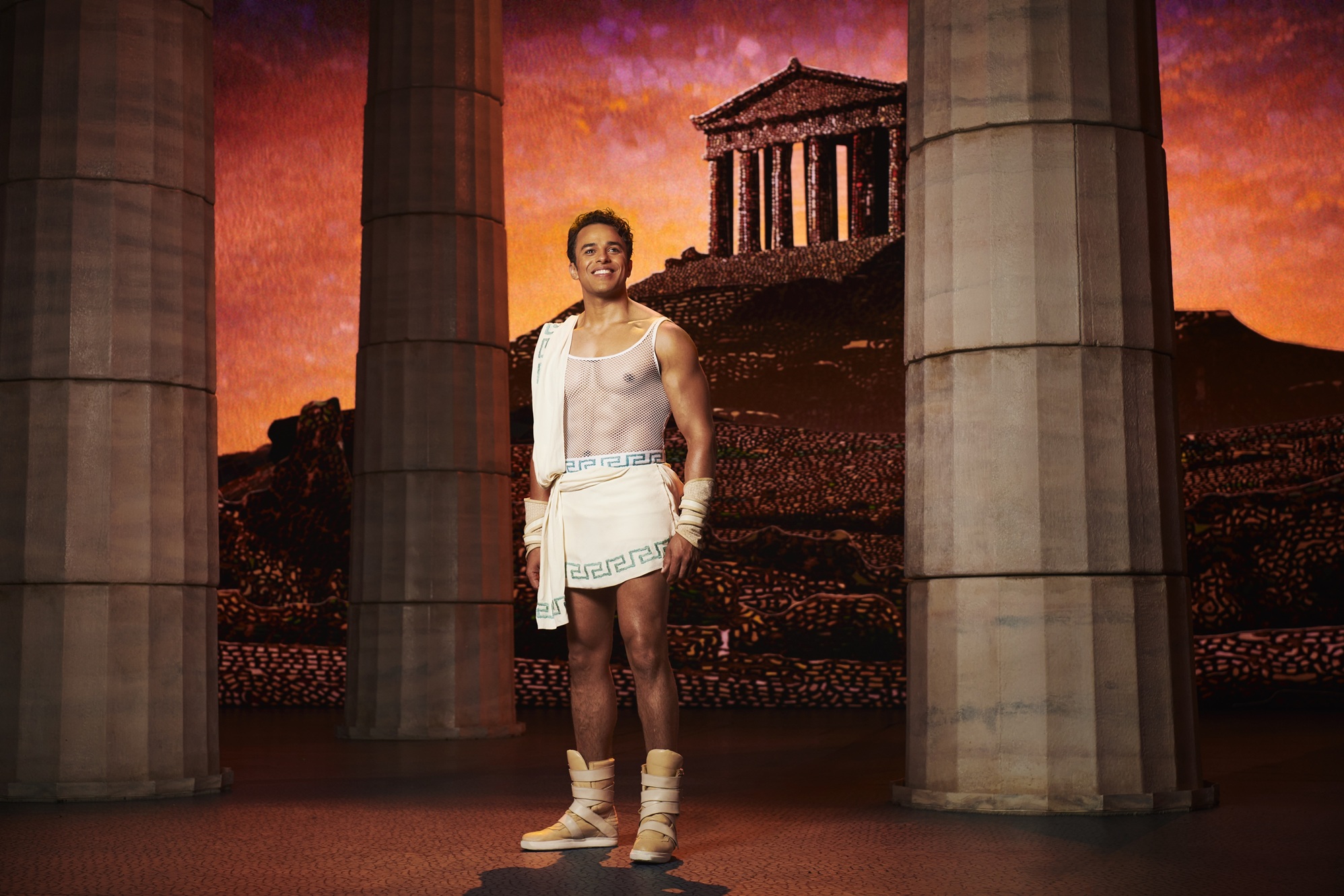
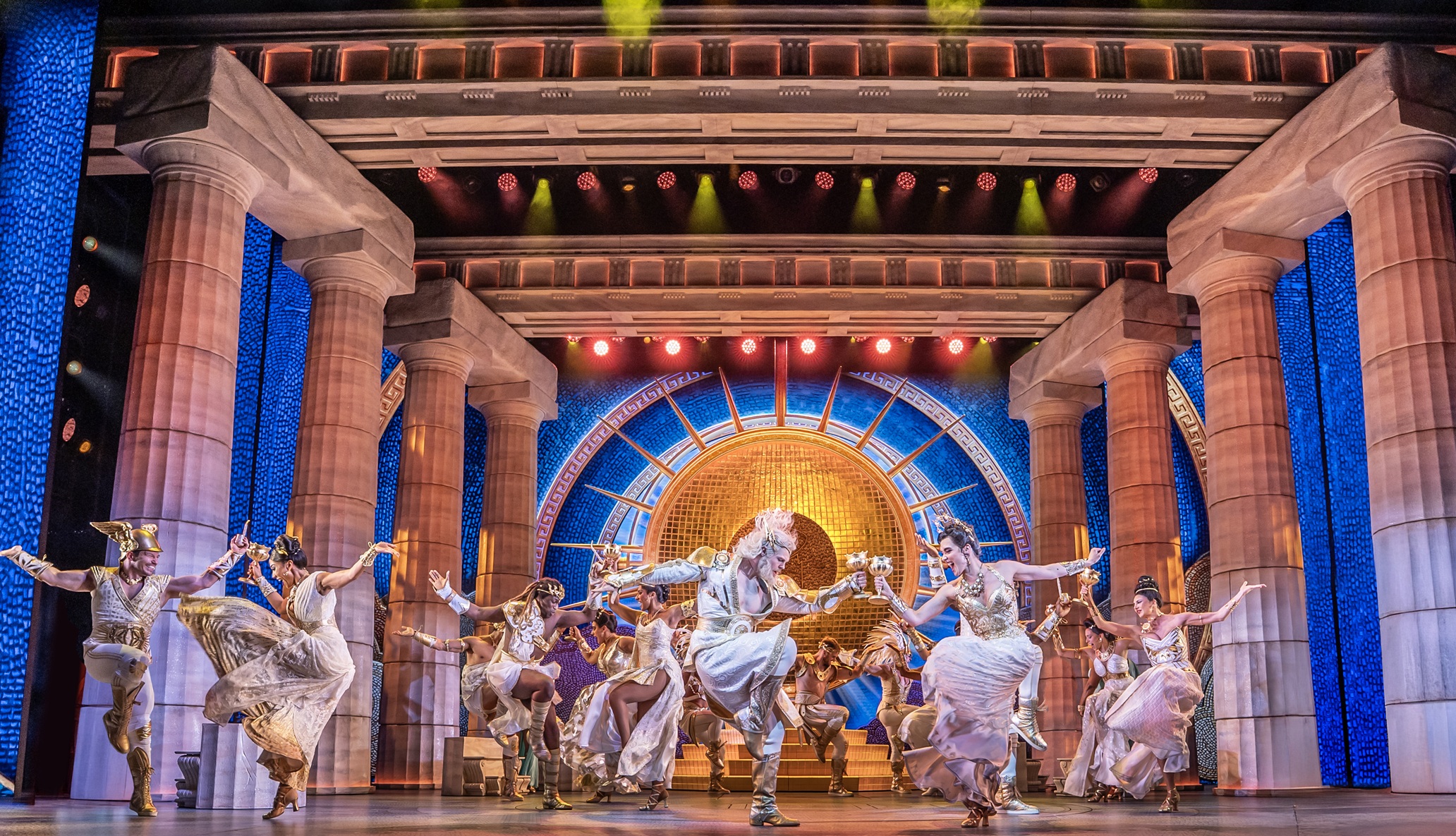
The production values are where the show really lands. The sets are outstanding—large-scale, detailed, and genuinely eye-catching in a way that adds to the overall pull of the show. There is a clarity and confidence to the design that makes the world feel expansive and immersive without overcomplicating things. Combined with the costumes, which are equally strong, the visual side of the production is consistently impressive. It’s the sort of staging that holds your attention even in quieter moments.
This visual strength isn’t just decorative; it actively supports the pace and tone of the show. The staging helps to keep everything moving and reinforces the sense that you’re watching something big, polished, and intentionally crowd-pleasing. Visually, the production is ambitious. The design work—particularly the use of video and large-scale staging—aims to create a sense of spectacle that matches the mythological setting. No expense spared here to create a sense of Mount Olympus, the god-like family of Hercules, the descent into Hades, it is a huge production and eye-popping in its scale. This works well, especially in ensemble sequences where the scale feels justified. There is a raft of visual effects which create delight in the auditorium at unexpected points.
Costume design leans into bold theatricality, with tunics and stylised classical references that keep the world visually consistent with a splendiferous amount of eye-catching gold outfits that really lift the piece. The choreography, co-created with Tanisha Scott, is sharp and energetic, particularly in group numbers, where the precision of the ensemble helps maintain clarity even in complex sequences.
Musically, the score by Alan Menken, with lyrics by David Zippel, remains a key strength. It is familiar from the film, but it translates well to the stage. The addition of gospel influences gives the music a different texture, and the live orchestration supports that effectively. There is a polish to the sound that reflects the scale of the production. There is clear engagement throughout, with visible enjoyment in the musical numbers and humour. It is, fundamentally, a family-friendly production, and it delivers on that brief without complication.
In practical terms, this is also a show that works well for audiences travelling in. For those coming from Brighton, the location at Drury Lane is straightforward to reach, and the venue itself is accessible and well-suited to large-scale musical theatre. The ticket pricing, starting from around £29.50 with group and education rates available, keeps it within reach for a wider audience than many West End productions.
The extension of the run until 5 September 2026 suggests sustained commercial success. It’s not yet clear where the production is heading next, but in its current West End form, it stands as a confident, polished, and crowd-pleasing show. If you want a well-produced, high-energy musical that delivers exactly what it promises, it does that without hesitation. This West End production of Hercules at the Theatre Royal Drury Lane is a striking piece of commercial theatre that understands exactly what it is trying to deliver: a high-energy, visually bold, family-friendly evening that prioritises entertainment over depth. It focuses on delivering a polished, entertaining evening with strong musical performances and broad appeal. It succeeds on those terms. For a large-scale commercial musical aimed at a wide audience, it achieves what it sets out to do—and does so with consistency and skill.
Details
Venue: Theatre Royal Drury Lane, Catherine St, London WC2B 5JF
Tickets: Tickets from £29.50 upwards.
Timings: 2hr 10min. Incl. 1 interval.
Accessible: There are captioned performances, quiet performances and other accessible support. Find out more here.
Find more arts and culture reviews at Brighton & Hove News – Follow @BHCitywhatson and @bhcitynews on Instagram.
Covering everything from fringe theatre to major tours across Brighton & Hove – tag us if you’re going!
#WhatsOnBrighton #BrightonandHoveNews #Brighton #BrightonTheatre #BrightonArts #BrightonHoveNews