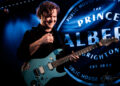
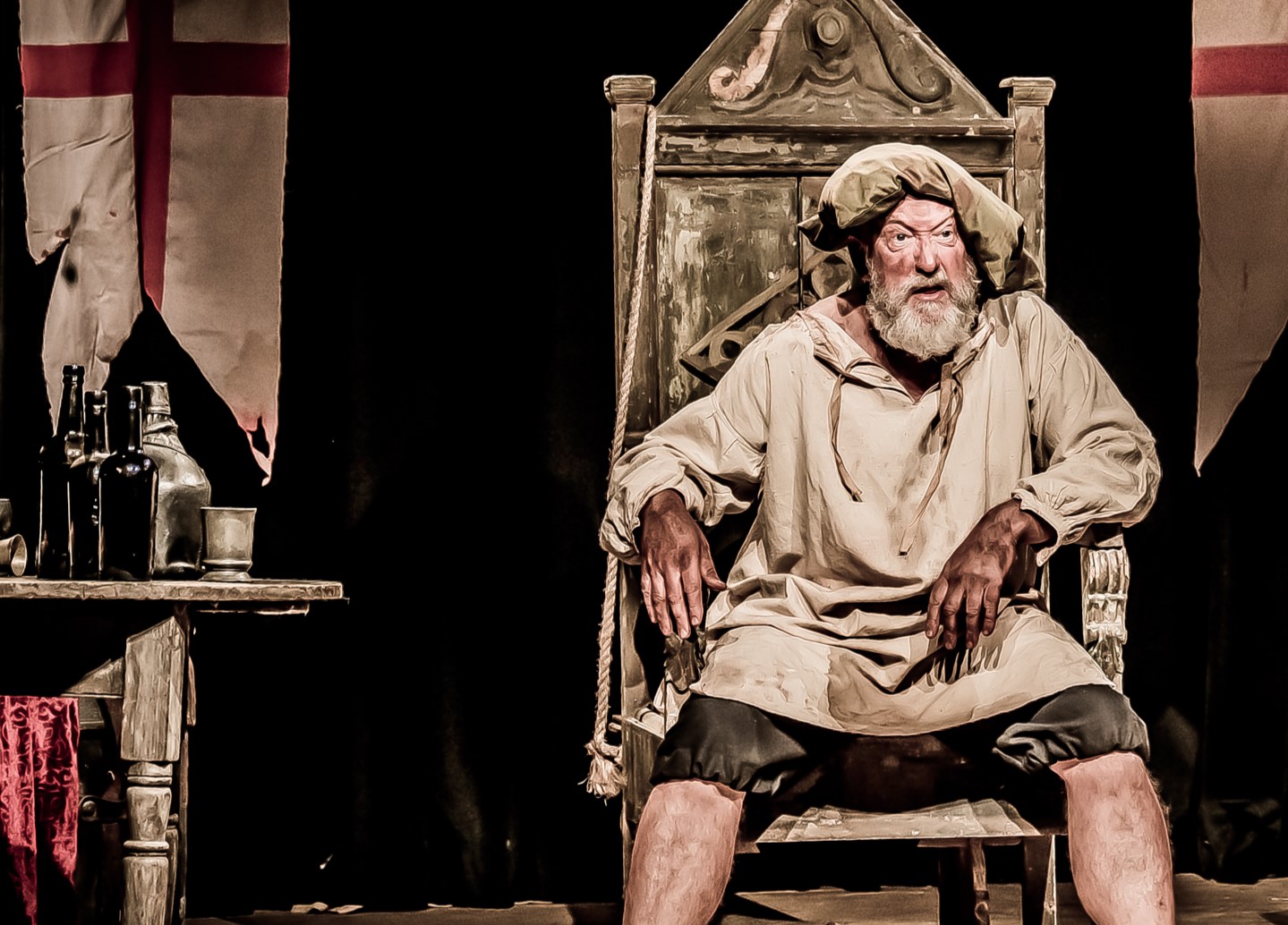
One of Shakespeare’s finest comic creations, Sir John Falstaff, has been given a play of his own, with actor Mike Stoneham as the fat-witted knight capably carrying the show.
The two-act monologue, called simply Falstaff, is presented as a series of reminiscences, with Stoneham inhabiting the part of the disreputable old rogue.
Tonight (Saturday 4 April), for one night only, or one knight only, he held court at the Lantern Theatre, in Brighton.
The theatre may not have been anywhere near as rowdy as Falstaff’s usual haunt – the Boar’s Head in East Cheap – and it’s far from being the biggest venue in Brighton.
But we few, we happy few, were treated to a one-man tour de force.
Falstaff’s “best bits” flowed from his roused remembrances – and for all the touches of bawdiness, the bard was far bawdier.
The knight of the garter – or somewhere thereabouts – offered a hint of flatulence as a self-proclaimed master of arts. Well, something like that.
There were vainglorious tales of brave deeds, too, and courage and good fortune – or Falstaffian bluster, braggadocio and bravado. And genuine history mingled with myth.
But you don’t need to know your onions to enjoy this Falstaff.
Those familiar with the St Crispin’s Day speech or the basic story of Agincourt will perhaps derive more pleasure from this telling than those who don’t.
It’s no matter though. Falstaff may be rooted in a handful of Shakespeare plays but this bluff figure’s ripping yarns stand up in their own right.
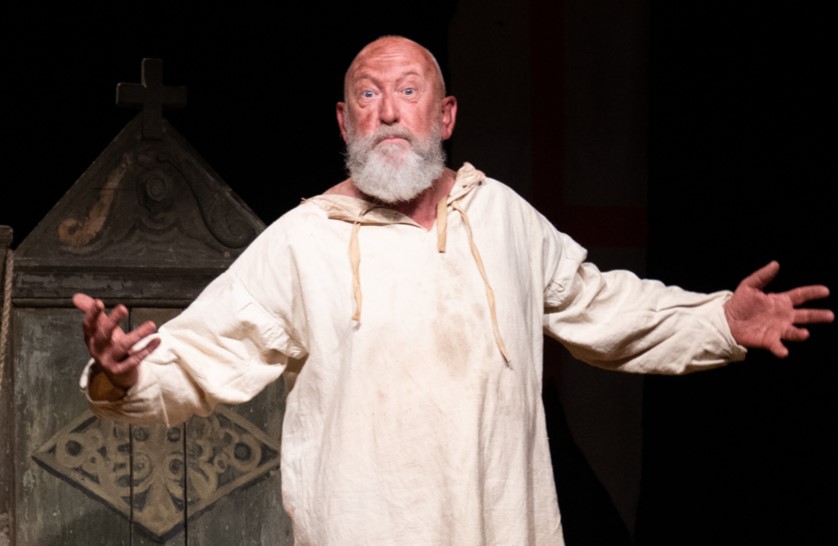
No one need hold their manhood cheap and anyone could be forgiven for wondering whether Falstaff was a forebear of George MacDonald Fraser’s Flashman, reflective in his cups.
In Henry IV Part 2, the carouser’s old friend Hal, the Prince of Wales, newly crowned king, turns his back on Falstaff, saying: “I know thee not, old man. Fall to thy prayers.”
This Falstaff has gentled his condition and Stoneham does him proud. He’s worth the acquaintance.