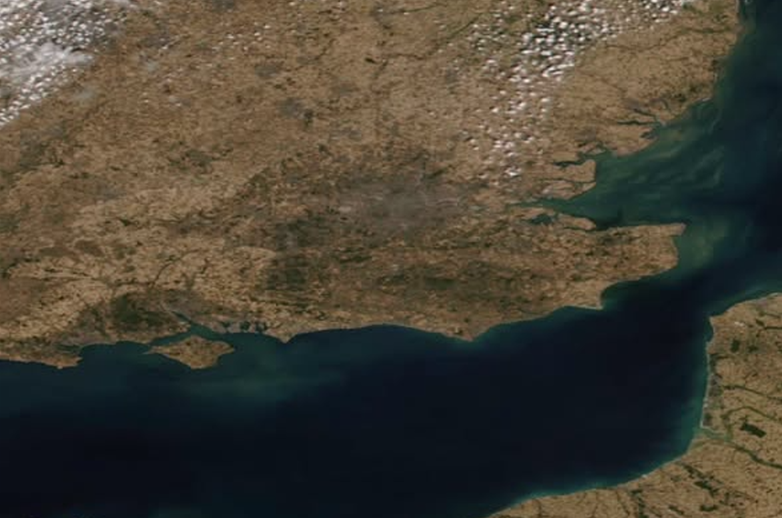
Brighton and Hove and the whole of the rest of Sussex are now officially suffering from drought conditions, the Environment Agency said today (Monday 10 August).
The government agency said: “Almost three-quarters of England is now in drought as conditions worsen following a dry start to August.
“The National Drought Group has warned all regions of the country are experiencing pressure on their water resources – with increasing impacts across agriculture, public supplies, navigation and the environment.
“The East Midlands, Lincolnshire and Northamptonshire, Kent and East Sussex, and Solent and the South Downs became the latest to move into drought status today.
“Along with the areas announced last week, most of the country (71.3 per cent) is now experiencing a flash drought – which develops very quickly brought about by a combination of very low rainfall and higher temperatures.
“This takes the total to 45 million people in a drought area. Over 27 million people are now living under restrictions on water use.
“The changes follow the driest July in 190 years and just 5 per cent of expected rainfall this month to date.
“There are warnings of more dry weather and another heatwave on the way, with temperatures tipped to reach the mid-30s in some places.”
The Environment Agency’s strategic drought lead, Tony Grayling, who chairs the National Drought Group, said: “Drought conditions are worsening and will continue to do so until we see significant and sustained rainfall.
“We know the hot and dry weather is taking a real toll of farming and there will be long-lasting impacts on our environment.
“We want everyone to stay safe and hydrated over the summer but we need everyone’s help in using a little less water to make sure our current water reserves last.
“Every drop we can save is a drop more for your local farmers, local wildlife and local rivers.”
Water Minister Emma Hardy has told water companies to do more to cut leaks which increase in the hot weather as pipes move in dry soils.
And the Environment Agency added: “Small steps to reduce water consumption – such as turning off taps when brushing teeth or fixing a leaking toilet – can also really add up to conserve dwindling supplies until the next period of sustained rainfall.
“Rivers, reservoirs and groundwaters continue to decline and water temperatures are also rising, leading to more fish rescues, while the continued hot and dry conditions are increasing the risk of wildfires.
“Our climate is changing and the current drought now means there have been three in the past five years – 2022, 2025 and now 2026.
“England is not alone in facing drought. Mainland Europe is also struggling with heatwaves and dry weather while extremely low water levels on the Rhine and the Danube are disrupting energy generation, freight and river transport.
“Rainfall totals for July, ranged from 1 per cent of the expected average for south east England to 26 per cent in north west England.
“Some parts of Hampshire, the Isle of Wight and West Sussex have not had a rain day for 59 days.
“Reservoir levels have fallen to 69 per cent – 11.6 per cent lower than to be expected for this time of year.
“England reservoir storage fell 16 per cent during July, the greatest reduction in raw storage in July for at least 30 years.
“Farmers have reported their earliest harvests in 20 years, with reduced yields.
“Livestock farmers are beginning to feed winter forage stocks earlier than normal due to poor grass growth. The lack of adequate feed is expected to result in decreased milk volumes.”
South East Water and Southern Water are among the water companies to have brought in hosepipe bans or other restrictions on how water is used in some or all of their area. Southern’s hosepipe ban covers only the Isle of Wight and Hampshire so far.
The Environment Agency added: “This year, there have been 34 days with temperatures that have reached 30C (86F) or above somewhere in England, including 13 consecutive days in July.
“Dry weather depletes our water while the hot conditions mean we use more of it.
“While temperatures cooled last week, and there were occasional showers, a high-pressure system means there is an increased risk of more hot and dry weather in August.
“Another heatwave has been predicted for this week while the UKHSA currently has more heat alerts in place.”
The Met Office head of environment and energy, Sarah Davies, said: “July 2026 was one of the most remarkable months in the UK’s climate record.
“England and Wales both recorded their driest and sunniest July on record, together with periods of exceptionally high temperatures.
“These conditions have significantly increased pressure on water resources in some parts of the country and contributed to the ongoing drought concerns.
“Looking ahead, forecasts for the remainder of August and into September suggest a good deal of dry weather is expected, mixed with some unsettled spells.
“While some areas may see useful rainfall at times, there is currently no strong signal for a sustained period of widespread rainfall, with below-average rainfall more likely than above-average for the period as a whole.
“The Met Office will continue to work closely with partners through the National Drought Group, providing forecasts and climate intelligence to support planning and decision-making as conditions evolve.”