A 77-year-old man, who died days after surgery, asked his daughter whether having the operation was a mistake as his condition deteriorated, an inquest was told today (Wednesday 26 August).
Arthur Craig died on Wednesday 26 June 2024 at the Royal Sussex County Hospital, in Brighton, after he underwent investigative intestinal surgery on Friday 14 June.
His daughter, Professor Catherine Craig, told West Sussex, Brighton and Hove Coroner’s Court, in Horsham, that her father had not initially wanted surgery.
When she saw him in the days afterwards, he asked her: “Was the surgery a mistake? Should I not have done it?”
She added: “He knew something wasn’t right.”
The grandfather-of-12 was admitted to hospital after a fall and tests initially found an ulcer, the inquest was told.
There were plans to discharge him despite his family’s concerns that he was still unwell.
A CT scan then showed a large mass, prompting surgery to be discussed.
Professor Craig told the inquest that her father originally said: “No, I’m not doing that. I would prefer to come home and be buried with my parents.”
He later agreed to have the surgery but his daughter said that she was not with him when he signed the consent form.
Mr Craig had asked for his daughter to be involved in his decision-making over surgery, the family’s lawyer said during the hearing.
After the surgery, Professor Craig said that consultant colorectal surgeon Marc Lamah, who carried out the operation, told her it was “more extensive surgery” and that “he is not out of the woods yet”.
On Friday 21 June, she said that her understanding had been that something had gone wrong with the surgery, adding: “My father said: ‘I just want to die.’”
In evidence to the inquest, Mr Lamah said that he had told Mr Craig that surgery could involve removing the tumour or bypassing it – and he was confident that he had capacity to consent.
He said: “He had all his options. He agreed to them. That is my firm opinion and judgment.”
Mr Lamah added: “Mr Craig had given his consent to have the operation to remove the tumour if possible.”
He said: “I will explain again why I removed the tumour. I formed an opinion I could do it safely.
“I was confident I was able to give Mr Craig a good chance of surviving the operation … and a fair chance of a cure.
“There is no doubt in my mind that if you can remove the tumour, you will give the patient a much better quality of life.”
He said that if he had just given him a stoma and not removed the tumour, he would have probably succumbed to it a few weeks later.
He believed that the reason for Mr Craig’s decline after surgery was more likely to be from a perforation to his ulcer rather than an injury to the small bowel.
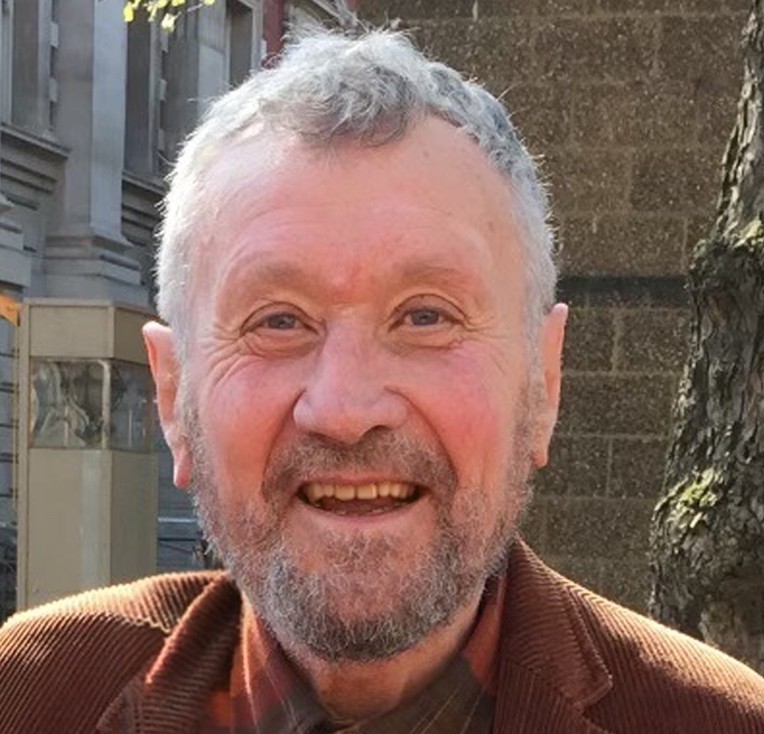
In a pen portrait read by Professor Craig, one of Mr Craig’s six daughters, she described her father, born in Belfast, as growing up on a farm in a small village and someone who “loved nothing more than being on the farm”.
She said that he was “always a bit rebellious and never liked to conform”, with a great sense of humour and he loved to tell stories.
He later moved to Brighton and enjoyed living by the sea in the Brighton Marina village.
She said: “A day does not go by I do not think of him or wish I could speak to him one last time.
“We all miss him terribly.”
The inquest continues.