There is a worrying trend developing at Brighton and Hove City Council. Individually, each example can be explained away. Put them together and a more troubling picture emerges: the democratic space in which councillors can question, challenge and scrutinise appears to be getting smaller.
My latest experience is a good example. I submitted four written questions for the next full council meeting. They were hardly political grandstanding.
They concerned a proposed parking scheme, a blocked drain contributing to flooding, the loss of TrackMark accreditation at Withdean Stadium and a difficult pedestrian crossing.
I was told I could submit only two.
To be fair, Democratic Services had included the two-question limit in the deadline email sent to councillors. I had missed it in the small print. But the more important point remains: the limit is described as an “informal agreement” rather than a restriction contained in the Council Procedure Rules themselves.
That raises a perfectly reasonable question. Why should an elected councillor be prevented from obtaining written answers to legitimate ward questions because of an informal restriction?
There is no shortage of evidence that this is part of a wider problem. Brighton and Hove News reported in May that opposition councillors said they were being “left in the dark” and struggling to access basic information since Labour replaced the committee system with a cabinet model.
The concern is fundamental: councillors cannot scrutinise decisions effectively if they do not have timely access to the information behind them.
We saw that again with the Licensing Committee. Regular reports covering matters such as taxi enforcement and licensing reviews had disappeared from the committee’s business.
Opposition councillors challenged the lack of information and, encouragingly, the council subsequently reversed course and agreed that reports would return.
There have also been concerns about questioning at meetings of the full council. Last year, Brighton and Hove News reported a row after 18 councillor questions were submitted but only 10 were reached during the 30-minute session.
Two of those answered came from Labour councillors. Labour rejected the suggestion that this stifled opposition and quite properly argued that every councillor has the right to represent their residents. I agree. But that principle needs to be applied consistently.
My concern deepened at the recent Planning Committee considering the BHASVIC sports pitch. As the councillor for the ward in which the application sits, my already limited speaking time was reduced because it had to be shared with councillors from a neighbouring ward.
I have no problem whatsoever with neighbouring ward councillors speaking. The issue is that their participation was achieved by reducing the time available to the councillor representing the application ward.
The overall result was particularly uncomfortable because voices associated with opposition to the application had considerably more speaking time than I did as the local ward councillor supporting it.
And concerns about the narrowing of debate are not confined to opposition councillors. Former Labour councillor Milla Gauge recently left the Labour group saying that she had repeatedly been told not to pursue concerns brought to her.
Whatever anyone thinks about the contentious issues involved in that dispute, an administration should take seriously a councillor saying that she felt unable to raise matters she believed important.
The common thread here is not some grand conspiracy. It is something more mundane, and perhaps more dangerous to healthy local democracy.
A cap here. An informal agreement there. Less information reaching a committee. Restricted access to papers. A shortened speaking slot. Thirty minutes of questions running out before councillors are heard.
Each can be defended administratively. But cumulatively they matter.
This matters particularly because Brighton and Hove now operates a cabinet system. Power is deliberately concentrated in a smaller number of decision-makers. That makes effective scrutiny by opposition councillors, independents and Labour backbenchers more important, not less.
A large political majority should be confident enough to welcome challenge.
Councillors can sometimes be awkward. We ask questions officers or administrations would rather not answer. We pursue apparently small issues – a drain, a crossing, a parking scheme – because to the resident affected they are not small at all. That is our job.
Brighton and Hove does not need less debate because debate can be inconvenient. It needs a culture in which councillors of every political colour are encouraged to question, scrutinise and challenge.
The test should be simple: unless there is a sound constitutional, legal or practical reason why an elected councillor cannot ask a question or speak for their residents, let them speak.
Democracy can be noisy and inconvenient. It is supposed to be.
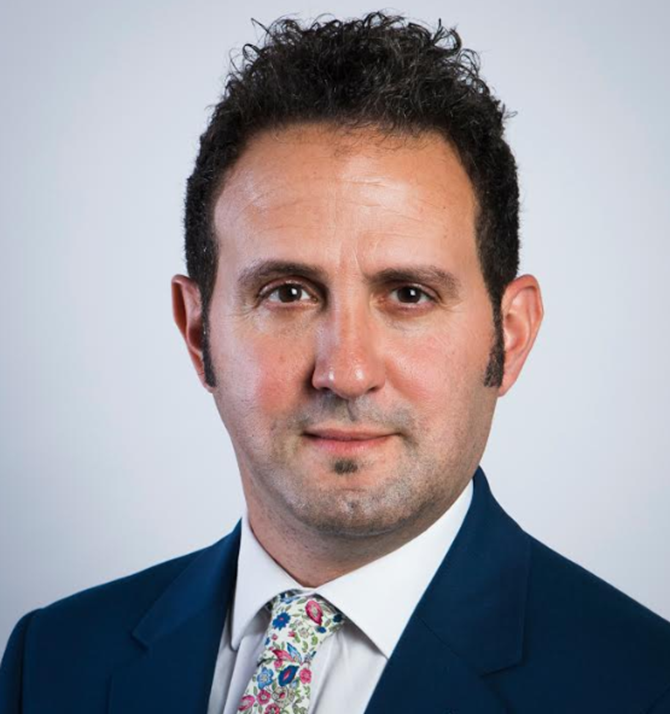
Professor Samer Bagaeen is an Independent councillor for Westdene and Hove Park on Brighton and Hove City.







“The test should be simple: unless there is a sound constitutional, legal or practical reason why an elected councillor cannot ask a question or speak for their residents, let them speak.”
The answer is simple: The practical reason is that if every councillor asked four questions in an unlimited amount of time overall, alongside responses, that’s over twenty-one hours. Plus, as the good councillor is surely aware, he can submit as many written submissions as he likes.
He can only put in 2 written questions. I’ve been told this is due to a lack of officer time.
And questions can be asked outside of council as well? Cllr Bagaeen talks of dealing the local issues, which is quintessentially doing just that, in my experience. I do think a free-for-all would lead to excessive fillibusting, and having a limit does encourage a better quality of question, although not always the case.
…I wonder if this is example of the need of better working relationships between parties? At the end of the day, all councillors are trying to do the best for Brighton.
We already have excessive filibustering in Council meetings. Simple to solve. The Mayor or Chair gets five minutes introduction time max, unless it’s the Mayor Making Ceremony/they are retiring from the role and councillors in which case they are allowed to waffle away and puff themselves up, and council officers get five minutes max to respond to public questions and deputations. That then frees up time for serious debates on serious issues, rather than councillors and officers being allowed to grandstand or waffle on and on about triviata. We don’t need a pro mo from Sankey on how she’s had a wall of graffiti cleaned or whatever small thing it is which she should be doing anyway and “this Labour Council are delivering for the city” every time she stands up to speak, ffs! She even grandstands/claims credit for things which she has had zero input in, aka the new women’s AMEX stadium proposal.
You know that already happens, right?
Agree with the point of this article strongly!
For Green Councillors, we have been asked to do 2 questions per Councillor in our group so we get 22 total currently due to 11 Green Group members. If someone doesn’t ask their alloted 2 then another person can ask one. This gives us a bit more flexibility but we have been told if we don’t follow this informal rule then it’ll be made a constitutional amendment.
They can’t just change the Constitution to suit themselves/their Labour agenda or it becomes meaningless as a Constitution. A Constitution is not a piece of elastic. It is supposed to be a solid foundational document which the electorate votes to ratify if and when changes are needed.
Of course constitutions can be changed and amended. What a bizarre thing to say. Where do you think “claiming the 5th” comes from?
Well said Councillor Bagaeen. What kind of a democracy is this where some elected Councillors are treated less favourably than others and denied information which they need to serve their electorate?
You are entitled to Equality under Law. This council also purports to be inclusive.
There should a Misconduct in Public Office charge for any council official denying you what you should lawfully be entitled to.
Professor Bagaeen, how refreshing.
One may not always agree with every councillor – indeed, democracy was never intended to be neat, convenient or conducted only by those who agree with one another. Councillors of every political persuasion are elected to ask questions, challenge decisions and, occasionally, make themselves thoroughly inconvenient on behalf of the people who put them there.
Of course there must be some order. Even Lady Bracknell would hesitate before endorsing a 21-hour council meeting. But there is a considerable difference between good housekeeping and gradually making scrutiny so administratively inconvenient that nobody bothers to undertake it.
And on this I find myself unexpectedly agreeing with our ubiquitous Benjamin™: better working relationships across political divides would be no bad thing. One might even go further – a little more generosity towards those with whom we disagree would improve public life enormously.
A confident administration should not fear questions. A confident opposition should not manufacture outrage where none exists. A confident council might even see some merit in scrutiny committees being chaired across the political divide, rather than regarding every chair as another prize of office. And all councillors might occasionally remember that the person sitting opposite is not the enemy, but simply someone whose political principles differ from their own, while sharing the same ambition to serve this city well.
How wonderfully old-fashioned.
Yours, in cheerful defence of a little well-mannered challenge,
Lady Augusta Bracknell