
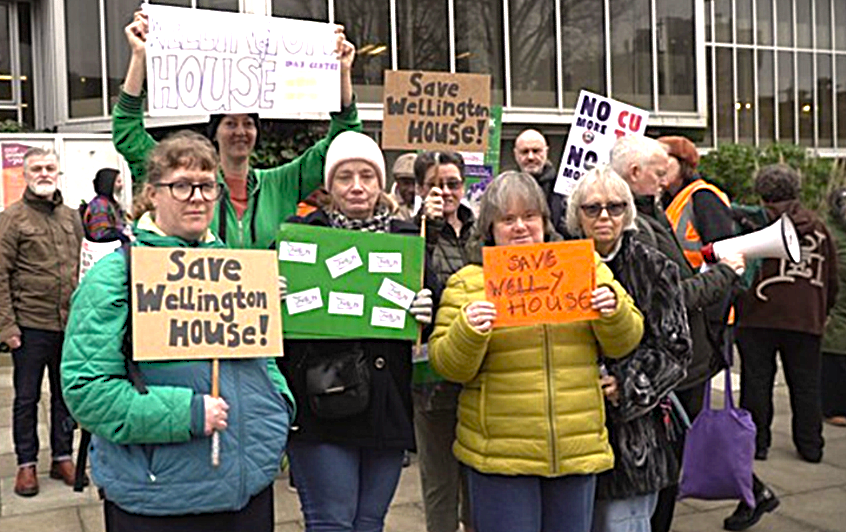
A day centre threatened with closure has been a success story for the council with those using it and their families said to feel “overwhelmingly positive” about Wellington House.
But senior Labour councillors want to close the service and sell the building, breaking up a group of the most vulnerable adults in Brighton and Hove in an effort to save £400,000 a year.
A report to a Brighton and Hove City Council committee said that the sums weren’t adding up, with savings forecast to be less than £340,000 a year.
And families said that it was impossible to put a price on the friendships and social connections built up among the 21 vulnerable adults at Wellington House and the staff who care for them.
The savings might not materialise at all, a union warned, if even just one carer felt no longer able to care for an adult who currently attended the day centre.
Conservative and Green councillors contrasted the Labour council’s drive to privatise the day centre with the views of new Labour Prime Minister Andy Burnham.
Mr Burnham is a strong critic of private-sector care and has said that he would like to set up a National Care Service along the lines of the National Health Service.
Tory councillor Alistair McNair was baffled why Labour was so keen to privatise Wellington House when the party was otherwise so keen to nationalise services or “bring them in-house”.
Councillor Alistair McNair said that the council had been willing to spend millions of pounds extra bringing housing repairs in-house yet the closure of Wellington House was unlikely even to save £340,000.
The Conservative leader said that the building was described in a report as “no longer fit for purpose”. He asked whether the decline was “managed” given how few people were referred there.
He said: “It usually takes years for a building to deteriorate to the point when it’s not fit for purpose.
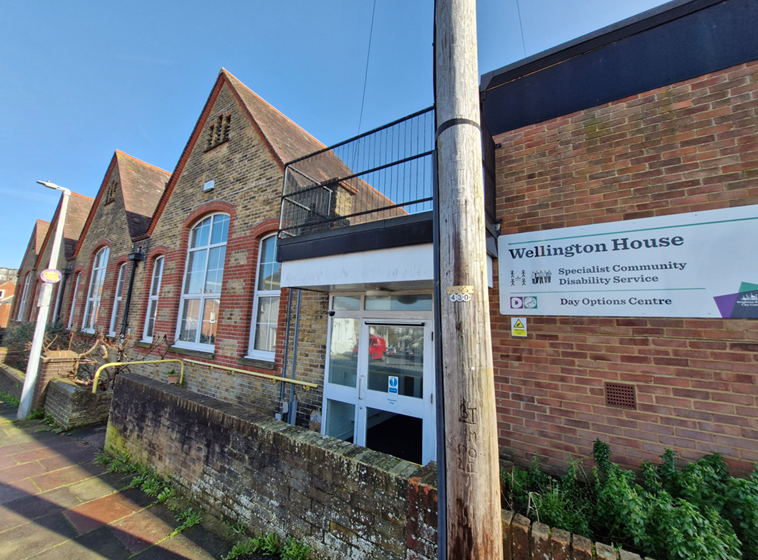
“Why has it been allowed to deteriorate (and) over how many years? When was the decision make to close Wellington House? Was it at (the budget council meeting in February) or was it two or three years ago?”
The council advertised contracts worth £12.8 million to provide the service on Monday 12 January this year.
This was more than a month before the council set its budget in February and more than three months before the start of the formal consultation on plans to close the service in April.
Labour councillor Mitchie Alexander, the council’s cabinet member for adult social care, said that quite a bit of money had been spent on the building but it was old, with leaks and damp patches.
The council’s director of adult social care Steve Hook said that maintenance was continuing because it was essential that the building remained safe.
The report to councillors said that the day centre’s overall running costs were £803,000 a year.
Mr Hook said that the bill for repairs and maintenance totalled £74,000 in 2023-24, £84,500 in 2024-25 and £96,500 in 2025-26.
Councillors discussed the proposed closure for almost four hours at a special meeting of the council’s People Overview and Scrutiny Committee at Hove Town Hall last Friday (4 September).
One of those observing the meeting said that similar arguments had been deployed when the council proposed closing Hove Library.
Labour councillors had cited the expense of running an old building and said that it needed urgent repairs that would cost more than £750,000. Public opinion prevailed and the library remained open.
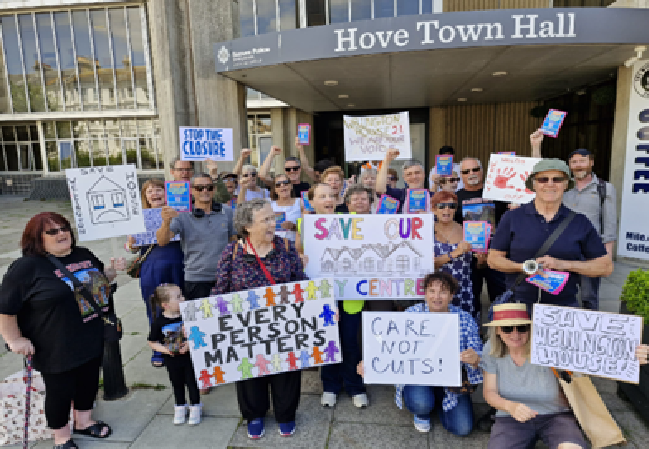
Green councillor Ellen McLeay also contrasted Labour’s criticisms of privatisation and private-sector provision elsewhere with its enthusiasm to ditch the publicly provided day centre.
Councillor McLeay said: “Private providers have leaner running costs so that is one way of looking at it – and maybe there are some savings.
“But that is what was said about privatising trains and water companies and that doesn’t always end up working out so great.”
She said that the council was trying to bring temporary and emergency housing in-house because, according to the Labour leadership, reliance on the private sector had resulted in multimillion-pound overspends.
Councillor McLeay also said that the report to the People Overview and Scrutiny Committee did not reflect the “overwhelming” opposition to the proposals – but emphasised that the consultation was not a referendum.
She said: “This is a really difficult decision. I’m sure it doesn’t sit well with any of you.”
Labour councillor Amanda Evans asked about contingency plans in case the transition process failed because that would require the council to step in.
Councillor Evans said: “Anyone who can provide ‘appropriate care’ that will work for that person with their incredibly complex needs will have the authority over a barrel, saying, ‘yeah, we can fix this, that will be half a million per person please.
“We won’t have anything to fall back on, as it were.”
Mr Hook said that, of the 21 people being “reallocated”, eight had more complex needs and the planning around their support would need to be “robust and thorough”.
The committee voted to ask the council’s cabinet to recommend that everyone using the day centre at Wellington House had their annual needs assessment completed within six months.
They called for the most vulnerable users to be identified in a timely manner and for their assessments to be completed as a priority.
Councillor Alexander apologised to families for the anxiety that the process had caused, saying: “Change often brings about anxiety and none of us want to see the anxiety felt by the families, carers and staff at the moment.
“I do personally apologise that our recommendation to the cabinet – as stated in the report – will no doubt heighten the emotions felt.”
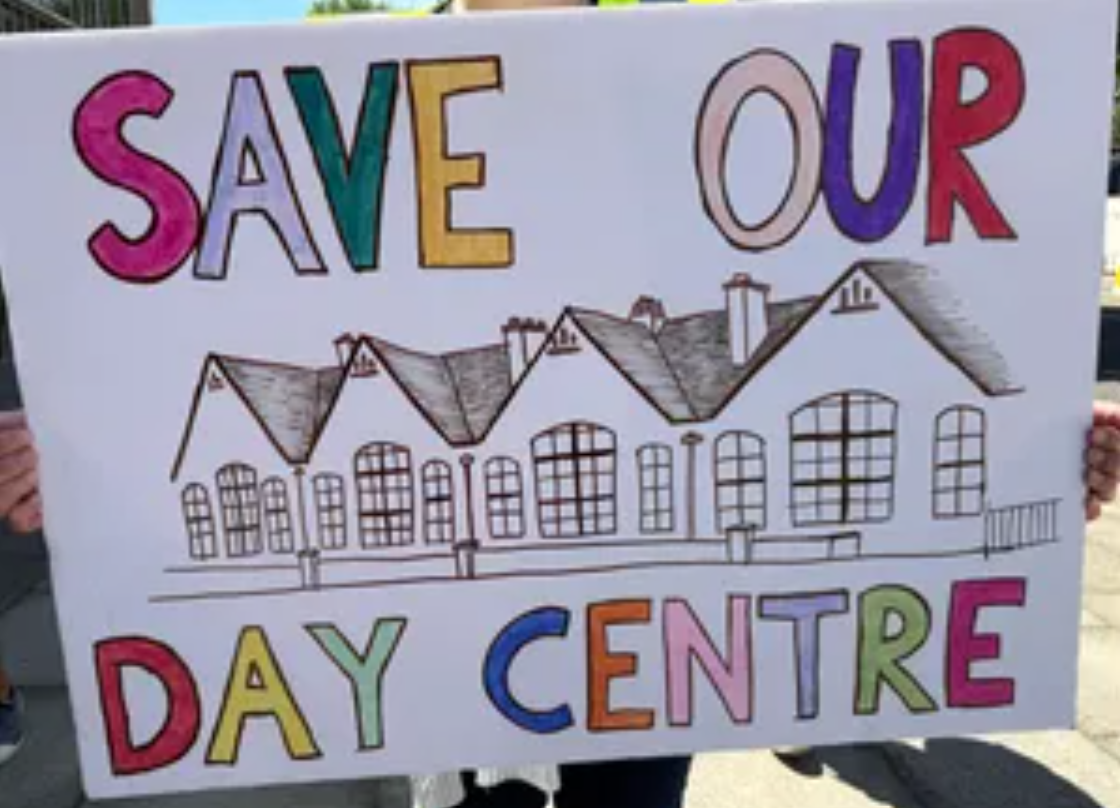
She told the committee that the closure of Wellington House would be a “carefully managed transition process” with each individual’s needs, preferences and friendships given consideration.
Councillor Alexander said that the proposals were not about reducing the opportunities for adults with learning disabilities in the city. Instead, they were about providing alternative services.
The recommendation to move those cared for at Wellington House to new providers and close the day centre followed a 12-week consultation from April to July.
The families of all 21 people who use the day centre responded to the consultation and the council received 62 other responses.
A final decision is due to be made by the council’s cabinet on Thursday 17 September but a public notice last month said that the council had already awarded a series of contracts to nine providers.
The council notice said that it had awarded five-year contracts worth £12.8 million for day services from last Tuesday (1 September) to the end of August 2031. Providers could be given a three-year contract extension to 2034.
Spread over eight years, the annual cost would be £1.6 million a year, twice the current £803,000-a-year cost. Over five years, it would be £2.56 million a year – or more than £100,000 each for the 21 adults who currently use Wellington House, three times the current annual cost.
The contracts are “spot purchase” – the same type that Labour blamed for the spiralling overspends on temporary and emergency housing.
They have been awarded to nine providers
- Achieve Together Limited
- Down Syndrome Development Trust
- The Grace Eyre Foundation
- Independent Lives (Disability)
- Rocket Artists Studios Community Interest Company
- Salutem LD Bidco IV Limited
- Surrey Choices Limited
- Team Domenica
- Headway Sussex Limited
The committee was told that, before the new contracts were awarded, six organisations were providing day support to 134 of the 155 adults in need of such services in Brighton and Hove.
Councillors were also told that Wellington House cost the council £244 per person per day whereas the costs at alternative providers ranged from £60 to £199 a day, reflecting different needs.
The Green and Conservative members of the committee called on the cabinet not to proceed with the recommendation to close Wellington House.
They called for a comprehensive assessment of the need for learning disability day services, not least with the Labour government at Westminster committed to making changes to adult social care.
On Friday, Labour councillors in Brighton and Hove voted to reject their plea.
There were also calls for the contractors to pay the real living wage, in line with council pay, plus pensions and holidays for day centre workers, but they were told that the council could not set wages for third-party providers.
The cabinet is due to decide whether to close the day centre at a meeting at Hove Town Hall at 10.30am on Thursday 17 September. The meeting is scheduled to be webcast.








So it’s Senior Labour Councillors who want to close Wellington House – Cllrs Sankey and Taylor, then? Haven’t they closed enough city schools to flog off the premises already? These two should be made to resign. All they are doing is asset stripping the city at incalculable human cost in some kind of insane scorched earth policy and then having the cheek to say they are ‘delivering for the city’. This is not normal council behaviour. Forensic auditors needed.
You’ve had this explained to you multiple times, being personally incredulous isn’t evidence of wrongdoing.
PAN numbers being reduced across the board are justified by low fertility rates. We simply aren’t having children, and empty buildings waste money.
It is very normal behaviour.
So you are admitting this Council has plenty of empty schools and grounds to sell off? Why the heck is it targeting Wellington House then – much needed and much used? B
Breaking Labour’s promise of ten years ago that Wellington House would remain to serve the city when Labour closed down Belgrade Day Centre in Portslade in 2016!
That isn’t a revelation, as you’ve been told you this, by multiple people, every single time you make this same comment. Quite something, honestly. ASC and Education are two separate funding pots. That point has been made to you multiple times as well.
Probably save more money getting rid of some higher paid staff. BHCC are well known to have muliple people doing the same job. But they wont do that will they, because that would affect them.
The issue here seems to be that the consultation has effectively come after the decision, and a change is being made that will affect some of the most vulnerable people in our city. The £400k saving was written into the 2026/27 budget on 26 February. But it goes further than that, the council advertised the replacement contracts on 12 January, over a month before the budget vote, and more than three months before the consultation even opened in April. It’s hard to reconcile ‘no decision has been made’ with a procurement process already under way.
The report to Cabinet lists six alternatives to closure, from keeping and investing in Wellington House, to transferring to another provider, to a smaller specialist provision, but does no substantive analysis on any of them. There is no costed investment figure, no estimate of income or demand, just the same two justifications repeated around falling attendance and building costs.
On attendance specifically, the report doesn’t test whether the fall was structural or partly self-inflicted. Unison alleged families wanting to attend were turned away. If that’s even partly true, several of the ‘not viable’ verdicts rest on a problem the council may have had a hand in creating.
It is just really disappointing.
No, that logic doesn’t work, the procurement process informs the options available for decision. But then, you’re seemingly then criticising doing the opposite of that in your second paragraph. So it’s a bit of a confused statement to make.
I agree with your last though, there’s no way to tell; we’d both be speculating. You could argue it both ways too. ASC has a much larger problem of ballooning nationwide which is only going to get worse, following demographic data, as more people get older, and with less young people to support the unsustainable triple lock…
…no easy answers there.
That’s not quite right, you can cost options and test the market without launching a formal procurement, and I’d expect the report to have costed all six alternatives alongside closure. It doesn’t. No financial assessment, no investment figure, no demand modelling, nothing. Only the closure option gets a worked table.
There wouldn’t be need for any speculation if there was a transparent and thorough assessment from the Council. But maybe they didn’t think that effort was worth it given the decision had effectively been taken back in February at the Budget meeting?
But likewise, a procurement process also does this as well, and realistically prevents duplication of having to do it informally then formally. You might be right about the budget, Nat. This was definitely approached with an efficiency lens. Taking that perspective, the technicals make more sense.
The contract were awarded on the 28th of July. The scrutiny committee and the council voted is a farce.
https://www.find-tender.service.gov.uk/Notice/073295-2026#contract_0
This is the same ‘decision before due process’ approach that led Reform to threaten legal action over local government reorganisation. Labour look as though they think they’re above the law. I can’t bear Reform but if Labour vote this through, they’ve lost my vote.
Exactly Simon. Labour are in complete breach of all democratic processes in this.
We should also demand a public Referendum before the LGR corpse is re-animated as this proposal affects us all and the towns, villages and cities in which we live. Profoundly. Not in a trivial sense. Residents could easily end up with no say at all in what goes on where they live.
PS; Impressed you’ve managed to stick with Labour this long. They lost me at Tony Blair and his lies about WMD.
Regular reminder that devolution has been in both the relevant right and left wing parties manifestos for over a decade.
In the consultation papers given to the scrutiny committee it says : “the vast majority of respondents oppose the closure of Wellington House…
Yet the council intend to go ahead anyway”
It was obviously more important to siphon off £5million of local tax payers’ money into buggering up the traffic coming in and out of Valley Gardens, which doesn’t work for anyone. It even has a dangerous left turn for cyclists opposite St James’ Street. Now one of the designers has the cheek to run as a Green Councillor candidate in Queens Park by-election.
One does begin to crave a little consistency.
We are repeatedly reminded – sometimes rather sternly by our more prolific correspondents – that a consultation is not a referendum. Quite so. One has never suggested otherwise.
But neither, surely, should a consultation be theatre.
If residents are asked for their views, particularly on something affecting some of the most vulnerable people in our city, there must remain a genuine possibility that those views – together with the evidence – can influence the eventual decision.
Here we learn that replacement services were put out to procurement in January, the saving was incorporated into the February budget, the consultation did not begin until April, the opposition was overwhelming, contracts have now been awarded – and the Cabinet is apparently not making its decision until 17 September.
Perhaps I am terribly old-fashioned, but the order of events does rather matter.
And consistency matters too. We cannot celebrate bringing services in-house on Monday, condemn the supposed failings of private provision on Tuesday, and then discover by Wednesday that privatisation is perfectly agreeable when it happens to suit the Council’s preferred course.
Nor should public opinion be treated as enormously important when it supports a decision and merely “not a referendum” when it does not.
There may ultimately be a sound case for change at Wellington House. Difficult decisions do have to be made, and responsible government sometimes requires unpopular ones. But that makes transparency, evidence and genuine consultation more important, not less.
The people affected deserve to know that the decision followed the process – rather than wondering whether the process followed the decision.
Lady B
Quite so, my dearest Lady Bracknell.
One really must admire the elegance with which you have identified the rather large elephant in the biscuit tin.
The difficulty, surely, is not merely that the Council has reached a conclusion with which people disagree. It is the rather more awkward question of when the conclusion was, in practical terms, still capable of being changed.
The chronology is becoming distinctly difficult to swallow.
The replacement provision was put out to procurement in January. The £400,000 saving was built into the February budget. The consultation then ran from April to July. And, most remarkably, the replacement contracts appear to have been awarded on 1 September – before scrutiny on 4 September and before Cabinet is due to make the final decision on 17 September.
One is therefore left wondering what precisely the consultation was still able to influence by the time the public had finished providing its views. A consultation ought to be an opportunity to alter the recipe, not merely an occasion to sprinkle a little public participation over a cake that has already been baked.
And there is another rather substantial crumb on the carpet.
We have now seen the Council employ what might reasonably be described as a double dose of urgency elsewhere: an executive decision taken under special urgency, followed by urgent scrutiny of that decision. I would certainly not suggest that urgency is inherently improper – sometimes matters genuinely cannot wait. But repeated use of urgency can have the unfortunate effect of compressing the very opportunities for public involvement and proper scrutiny which democratic processes are supposed to provide.
Indeed, the Council’s own legal advice on consultation says that it should take place while a proposal remains at a formative stage, with sufficient information and time for people to respond, and that the responses must then be conscientiously taken into account.
Which rather brings us back to your excellent observation, Lady Bracknell: what, precisely, was still on the table?
There may yet be a perfectly respectable case for changing Wellington House. But if so, one would hope the Council could demonstrate it through evidence, risk assessment and a transparent decision-making process – rather than presenting residents with something resembling a fait accompli wrapped in consultation paper.
And then there is the small matter of the alleged saving itself. The scrutiny papers put the annualised saving at approximately £336,563, not £400,000. Eight of the 21 people using Wellington House have complex needs, and there has already been concern expressed about the possibility of expensive spot purchasing should suitable provision not be readily available.
If even a few placements become exceptionally expensive, that saving could evaporate rather faster than a custard cream in a toddler’s hand.
So yes: consistency, transparency and genuinely formative consultation would seem to be the minimum ingredients here.
Otherwise, one risks the rather unfortunate impression that the public was invited into the kitchen only after the biscuits had already been taken out of the oven.
Yours
Viscount Biscuit