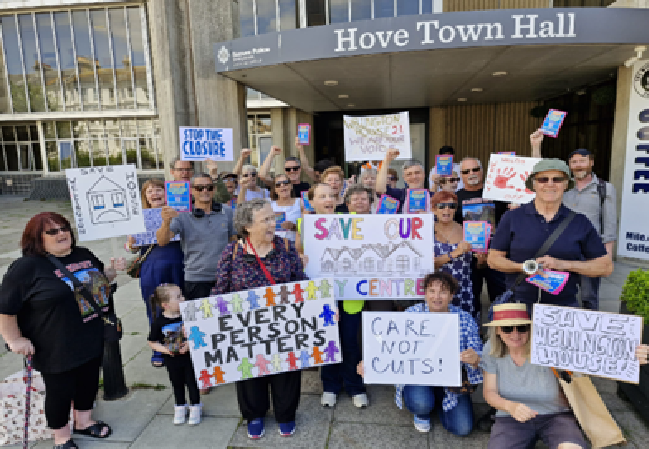
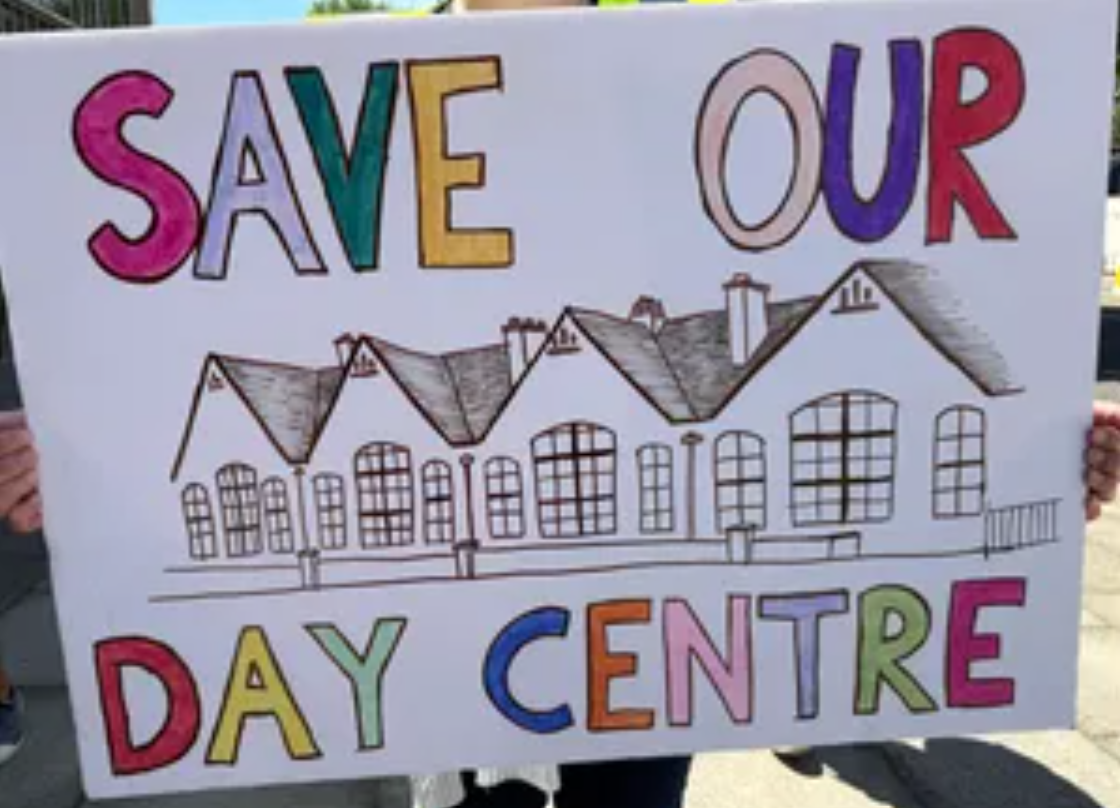
If the council closes the Wellington House day centre, in Brighton, it would be “a serious strategic mistake”, according to the chair of governors at a council-run special school.
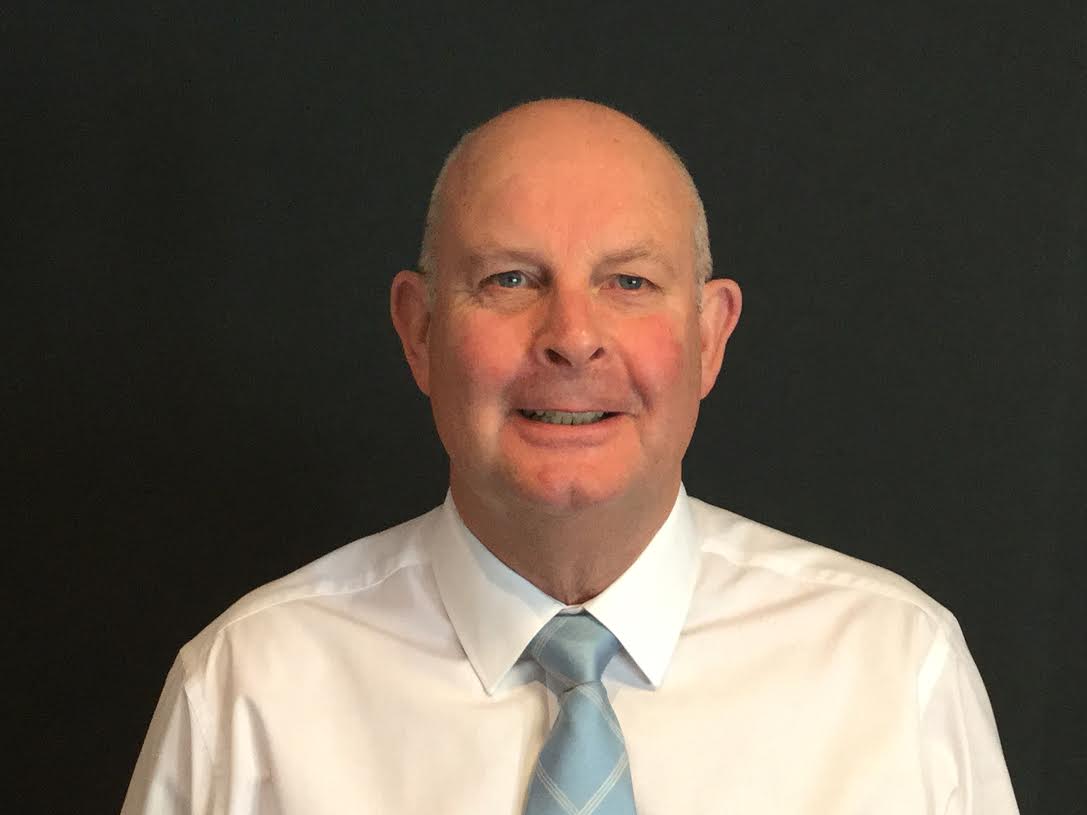
David Plant said that the proposed closure would be “removing essential specialist capacity at precisely the time when the evidence from our school indicates that need is increasing”.
Mr Plant, who chairs the board of governors at Hill Park School and is the father of a pupil at the highly regarded school, spelt out a series of concerns.
In a document published by the council, he recognised the challenging financial situation facing Brighton and Hove City Council but said that the proposal had not been credibly assessed.
His criticism echoed the findings of the Care Quality Commission (CQC) about “gaps in provision” by the council and its lack of understanding about what services were likely to be needed.
Mr Plant said: “We believe that the proposed closure of Wellington House would be a serious strategic mistake, removing essential specialist capacity at precisely the time when the evidence from our school indicates that need is increasing.
“Please treat this as a formal representation opposing the proposed closure of Wellington House Day Centre and asking the council not to proceed on the basis of the evidence currently available.
“Wellington House is the city’s last council-run day centre specifically serving adults with learning disabilities.
“Its closure would remove an important part of the council’s direct provision and, in particular, a potential safety net for adults whose complex needs cannot readily or reliably be met through ordinary community activities, charities or independent providers.
“To my knowledge, neither Hill Park’s governing body nor its senior leadership has been approached during the consultation for information about the children and young people who are likely to require adult social care provision in the coming years.
“This is a significant omission. Hill Park educates children and young people with severe learning disabilities, profound and multiple learning disabilities, autism, physical disabilities, medical needs and other complex support requirements.
“Our direct experience is that the complexity and intensity of need within the secondary cohort are greater than in previous years. This pattern continues through the younger year groups and into primary.
“The evidence available to us therefore points towards an increasing need for specialist adult day provision, not a diminishing one. These pupils are the future users of Brighton and Hove’s adult social care services.
“No credible assessment of future demand can be completed without engaging Hill Park and other specialist schools and post-16 providers and examining the needs of their current cohorts.
“Hill Park recognises that Downs View School, Link College and Life Skills College should also be consulted by (the council) to ensure the relevant feedback and data sets are included from both special school sites in the city.
“This concern is consistent with the council’s wider published evidence. The Care Quality Commission’s December 2025 assessment rated Brighton and Hove’s adult social care arrangements as ‘requires improvement’.
“It identified gaps in provision for people with complex and compound needs, limited local options and insufficiently developed commissioning information about what provision would be required and when.
“The 2023 Ofsted and CQC Area SEND inspection also found that preparation for adulthood was underdeveloped and that there was insufficient strategic involvement from health and social care in this work.
“The Parent Carers’ Council’s response to this consultation has similarly raised the absence of adequate future-demand modelling, the lack of demonstrated safe alternatives for people with complex needs and the financial fragility of parts of the independent market.
“Hill Park’s latest published Ofsted inspection judged the school outstanding. Its leaders, staff and governors possess substantial professional and direct evidence about the changing needs of the city’s disabled children. That evidence should form part of the council’s strategic planning for adult services.”
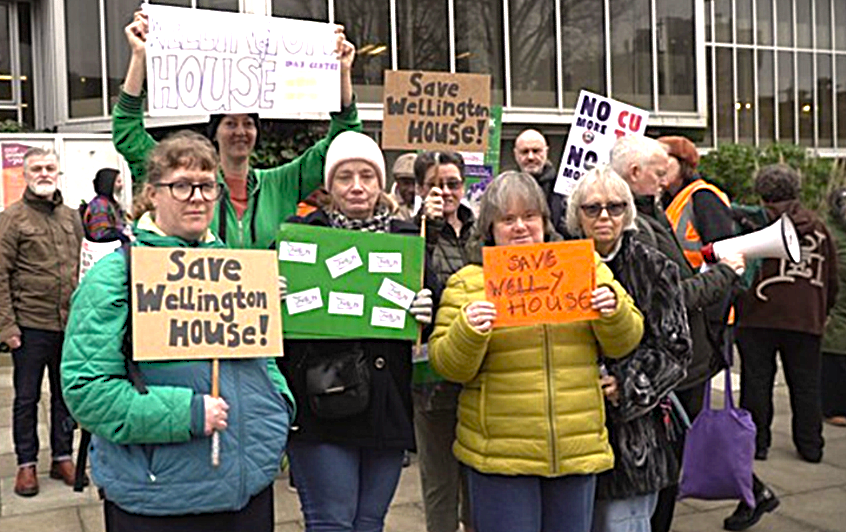
Mr Plant said that government wanted to make big changes to local government in Sussex – although these plans are currently on hold.
He said: “This is therefore not an appropriate point at which to make an irreversible reduction in the city’s directly operated specialist learning-disability provision.
“Before disposing of Wellington House, the council should establish how specialist adult social care will be planned and commissioned under the future arrangements, what needs exist across the wider area and whether retaining the service could contribute to a more resilient regional network of provision.
“Closing the facility now risks removing valuable public capacity immediately before responsibilities, commissioning arrangements and opportunities for regional service planning are reconsidered.
“At minimum, any decision should be paused until this work has been completed and independently tested.
“The council should also avoid permanently dismantling directly operated provision at a time when the future funding, organisation and balance between public and outsourced delivery of adult social care are likely to be reconsidered nationally.”
Mr Plant criticised the financial case, saying: “I am not persuaded that the proposed saving has been demonstrated as a genuine net saving to the council or to the wider public sector.
“Any proper financial assessment must include not only the operating cost of Wellington House but also
- the cost and availability of comparable independent provision
- transport and one-to-one or two-to-one staffing
- clinical, behavioural, communication and personal-care support
- the consequences of placements breaking down
- increased pressure on family carers and respite services
- emergency intervention and safeguarding costs
- residential or out-of-area placements where suitable local provision is unavailable and
- the cost of rebuilding provision if independent or charitable services subsequently withdraw from the market
“Removing a council-run service may reduce one budget line while transferring equal or greater costs elsewhere.
“The Care Act requires the council to promote a sufficiently diverse, sustainable and high-quality care market and to secure services capable of meeting local needs.
“The ‘public sector equality duty’ also requires the council to give proper and demonstrable consideration to the impact of its decision on disabled people and their families.”
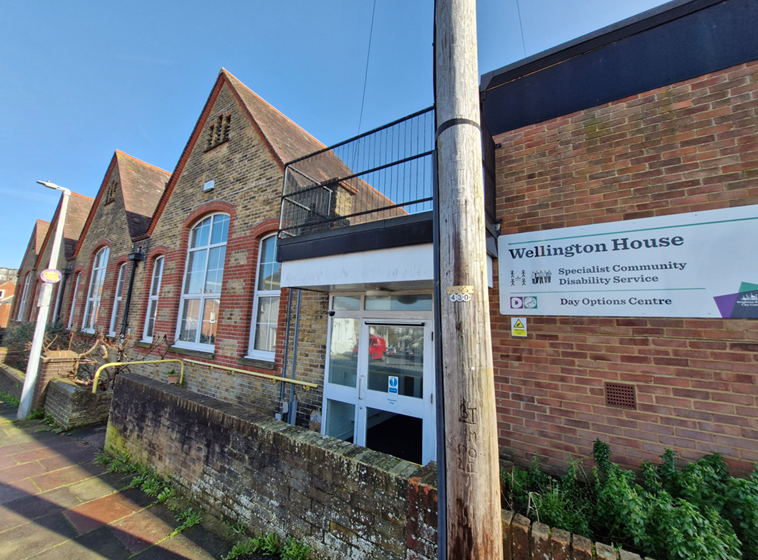
Mr Plant called on the council to
1 Produce a properly evidenced five and ten-year forecast of demand for adult learning disability day provision, incorporating anonymised cohort information from Hill Park and other specialist education providers.
2 Meet Hill Park’s leadership and governors to understand the number, complexity and likely adult support requirements of pupils currently progressing through the school.
3 Publish the full financial model, options appraisal, market-sufficiency assessment, equality impact assessment and transition risk assessment supporting the proposal.
4 Demonstrate, by category of need, where sufficient alternative provision currently exists for people requiring specialist buildings, personal care, clinical input, high staffing ratios, specialist communication support and management of behaviours that may present risks.
5 Assess alternatives to closure, including retaining and modernising Wellington House or developing it as a specialist centre of excellence alongside community-based provision.
“The council should not dispose of its final directly operated specialist day service without first establishing, through robust evidence, that future demand can be met safely, sustainably and affordably. At present, that case has not been made.”