Five candidates are standing in a by-election in Queen’s Park ward for a seat on Brighton and Hove City Council (BHCC) next Thursday (24 September).
The seat became vacant when former Labour councillor Milla Gauge resigned.
The five candidates are Stefan Speckesser (Conservative), Mark Strong (Green), Steve Gladwin (Labour), Rüdiger Dikty-Daudiyan (Liberal Democrat) and John Shepherd (Reform UK).
Each candidate has answered questions about local issues and why electors should vote for them.
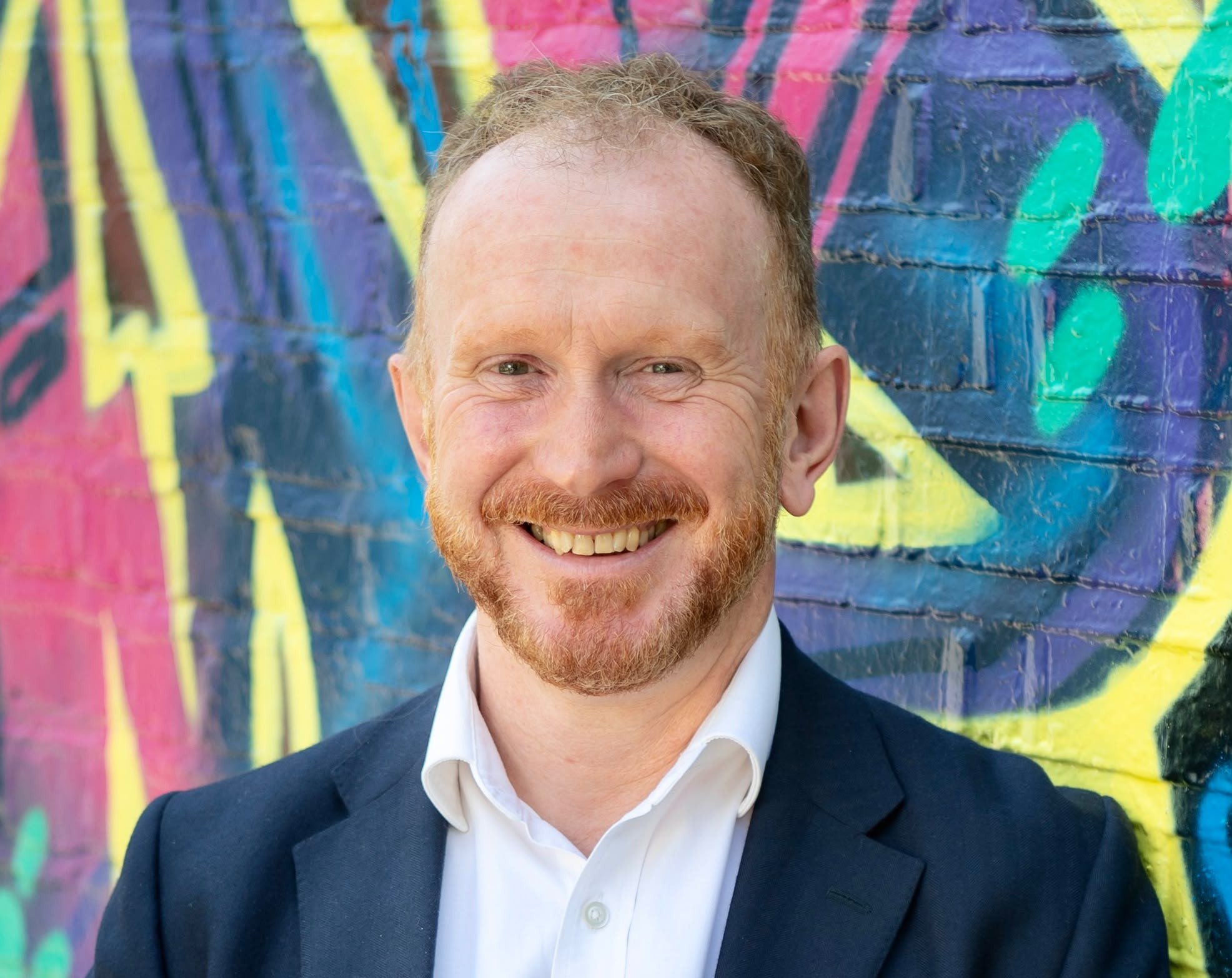
Here are the responses from Labour candidate Steve Gladwin, 61, a retired NHS director, public relations specialist and journalist.
Why do you want to be a councillor?
Put simply, I want to give something back to my community.
When I retired earlier this summer, I asked myself how I could best use my skills and experience.
As a former NHS director, small business owner, PR professional and journalist, I concluded that serving as a city councillor was the best way to contribute.
I believe passionately in social justice and helping everyone fulfil their potential.
I grew up in social housing and went on to have a successful career because strong public services gave me opportunities.
Labour made those opportunities possible and I want everyone to have the same life chances.
Why do you want to stand in this ward?
I have lived locally for nearly 30 years and know Queen’s Park well.
I regularly walk my dog in the park, use the recycling bins in Queen’s Park Terrace, cycle down Freshfield Road to the Brighton Swimming Centre and have many friends in the ward.
Queen’s Park faces real challenges including relative poverty, poor housing, anti-social behaviour, protecting its green spaces and ensuring its roads are safe for everyone.
Since taking control from the Greens in 2023, Labour has made real progress in Queen’s Park and across the city. I want to be part of that journey and help build on what has been achieved.
What are the key issues specific to this ward?
Behind the façade of the large houses surrounding Queen’s Park lies some of the worst relative poverty in the city.
I want to help tackle the inequality and disadvantage this brings.
The Labour council, working with Andy Burnham’s government, is already making significant progress through stronger renters’ rights, landlord licensing, the abolition of VAT on fuel bills, a fairer school admissions process and investment in play facilities.
I strongly support this work and want to play my part in ensuring that everyone in Queen’s Park, whatever their circumstances, has the opportunity to thrive.
Falling birth rates are affecting pupil numbers in primary and secondary schools. How should this issue be managed?
School funding is allocated per pupil so empty classroom places mean schools lose vital funding.
The Labour council has therefore made difficult but necessary decisions to reduce admission numbers at some primary schools, ensuring pupils, especially the most vulnerable, receive the teaching resources they deserve.
I support efforts to explore school federations to improve efficiency, alongside the Labour council’s extensive council and social housebuilding programme which will help more families afford to remain in the city and support sustainable pupil numbers.
Temporary and emergency housing is a huge cost to the council. What measures should be taken to reduce this cost?
The housing crisis was fuelled by the last Tory government’s failure to build enough homes. Our Labour council is supporting homeless people through temporary and emergency accommodation while delivering Brighton’s biggest boost to housebuilding in a generation, helping tackle homelessness and rough sleeping.
To reduce the cost of temporary accommodation, the council must continue purchasing its own properties and block-booking accommodation to secure better value.
By contrast, the Greens relied on expensive spot-purchasing of temporary accommodation, resulting
in excessive costs and benefiting poor landlords.
How would you improve and maintain roads in the ward?
I welcome the Labour council’s record investment in road resurfacing this year: more than £8.8 million including £1 million to tackle damaged and uneven pavements.
Years of underfunding by the last Tory government left a significant backlog including in Queen’s Park.
My priority will be ensuring Queen’s Park roads are prioritised for resurfacing, particularly bus routes where potholes cause discomfort for passengers and damage vehicles.
I am pleased that Craven Road is due to go out to tender and, if elected, I will push to ensure that work progresses as quickly as possible.
Given the reasons for the by-election, what steps will you take to ensure the council complies with its legal obligations to protect children including those who may be confused about their gender?
The Labour council has a strong record of protecting children including those questioning their gender.
In 2023, we acted to end a major safeguarding scandal overseen by the Greens, during which 137 unaccompanied asylum-seeking children went missing from a Hove hotel.
For trans and gender-questioning children, the Labour council has a trans inclusion toolkit supporting schools to ensure every child can access education free from discrimination and stigma while meeting their legal and safeguarding responsibilities.
Our priority must always be the safety, wellbeing and dignity of every child.
Polling stations will be open from 7am to 10pm. Valid photographic ID is required to vote.







It’s good that Steve Gladwin recognises the poverty and deprivation in Queen’s Park. As he says himself, ‘behind the façade of the large houses.. lies some of the worst relative poverty in the city.’ That is an important point, and it applies to too many areas of our city.
But it’s worth noting that this is exactly what’s wrong with how the Labour Council’s secondary school admissions changes over the last two years have treated those children in the Dorothy Stringer/ Varndean
catchment including those in Queens Park, as uniformly privileged, when clearly it isn’t. This has created real uncertainty for parents in the catchment, including those whose income sits just above the threshold for Targeted Free School Meals, who now bottom of a long list admissions priorities, and may face a long journey to a school outside their own area as a result.