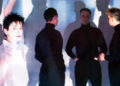
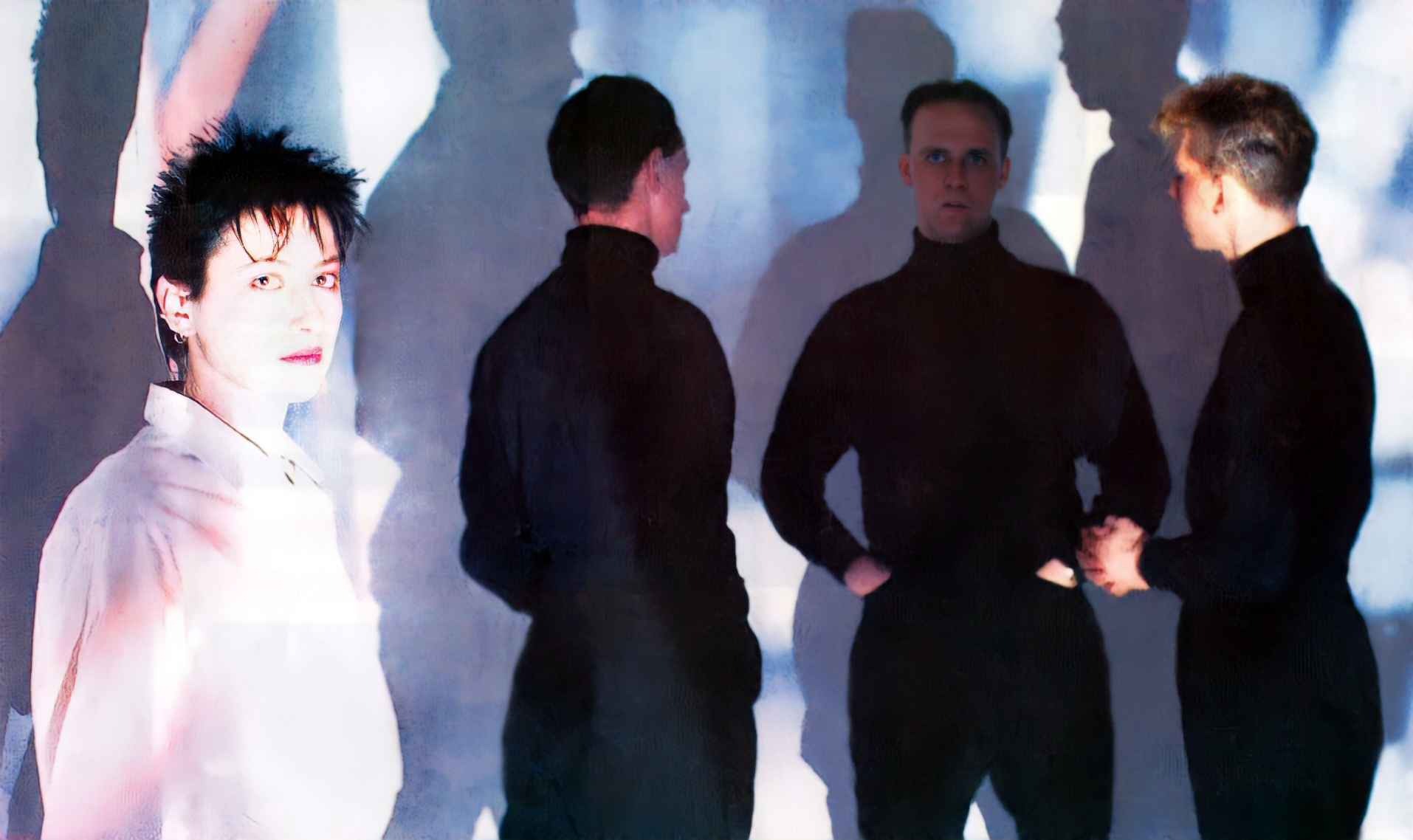
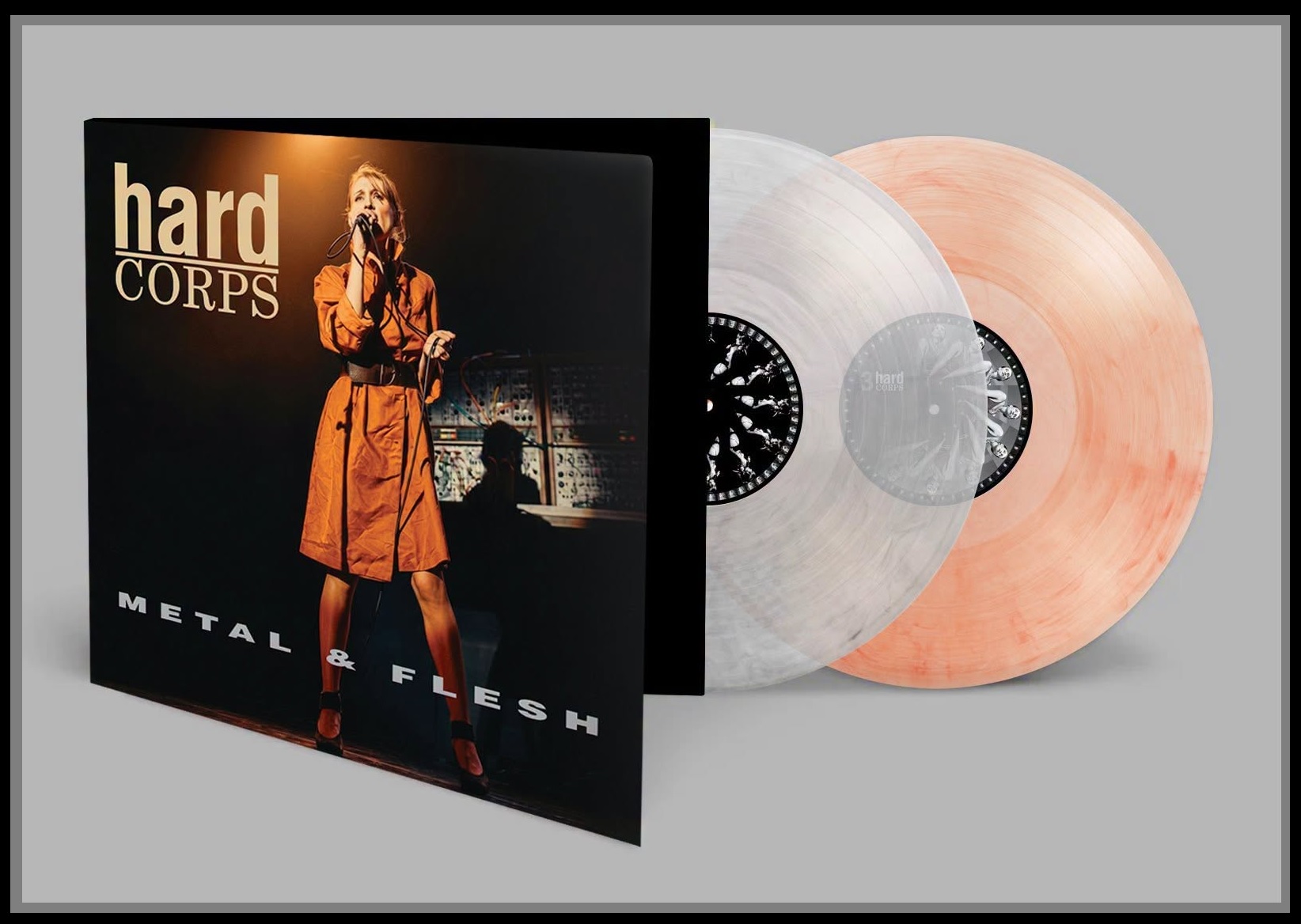
Ahead of the release of their 16 tune ‘Metal & Flesh’ double album, out 9th October via Anna Logue Records, we proudly bring you a rare in-depth interview with none other than Rob Doran and Clive Pierce from edgy trailblazing synthpoppers hard CORPS.
We are deeply honoured as we believe that this is their first interview for 8 years! So without further ado, let’s get down to business:
Nick Linazasoro:
Hi guys, it’s fabulous to see you again after all these years!
ROB DORAN:
It’s good to be here, Nick. And extraordinary to be talking about hardCORPS all these years later because, as you probably know, at the time we were just living it. Without any idea where it might lead, you don’t really imagine that later people would still be interested in what we were doing.
CLIVE PIERCE:
Good to see you again, Nick. There’s a strange mixture of familiarity and disbelief when you look back at it now, as so much happened in such a short period of time and yet it still seems like yesterday.
Nick: Please introduce the members of hardCORPS with a brief backstory of how you all met if that’s possible?
ROB:
The original three were Hugh Ashton, Clive Pierce and myself. Hugh and I lived in the same large Victorian house in Brixton which we shared with some incredibly creative and eccentric others! There was a raw-looking recording studio built in the basement. Imagine a Victorian servant’s quarters (it was in the basement so I assume that is what it was) with two rooms and a separate kitchen area. One room was heavily sound proofed with cork tiles and false walls filled with sand (the studio) and a window into the other room (the control room) which had an old fireplace with two large speakers on either side, a mixing desk and a load of music-related odds and ends. It was called Mekon Studio originally and later when specifically set up for electronic music, Sonoscope. That studio became the heart of everything we did then and of what happened afterwards.
Hugh had played bass guitar in a number of bands and was getting a reputation as an amazing ‘feel’ type bass player. He loved holding down a groove and a number of jazz and funk drummers loved jamming with him. I started out as a recording engineer and built up a lot of knowledge around equipment but also all the various genres of music I was recording when the studio was hired out. I never knew the style of a band until they had either come for an initial discussion or turned up on the day. So, it might be a heavy metal band, an experimental left-field band, dub reggae, punk, jazz, a string quartet or even a ’50s rockabilly revival set up. I had to think quickly on how the genre should sound and what mics to use etc. Nothing like being thrown in the deep end.
CLIVE:
Yeah, I answered an advert that described a sort of ex-punk group and although it wasn’t exactly what I’d envisaged myself doing, there was a mention of a connection with Pete Townshend of The Who, so I thought I’d give it a go!
Eventually that group involvement morphed away from physically playing drums in a standard four-piece, which I still did occasionally, but mostly for sessions, and into the electronic music side.
The great thing was this studio environment in Brixton, as we weren’t restricted to set rehearsal timings. And the usual guitarist/bassist/drummer approach went out the window because we were using the Roland System 100m to make all the sounds. It felt incredibly liberating. And like Rob, I had to try to work my experiences and musical tastes into something eventually called hardCORPS which was not fully defined like a template, but was really…
ROB:
An aesthetic?
CLIVE:
Yeah.
ROB:
So true, Clive, there were so many arguments about the musical input, weren’t there? You couldn’t just think “ah, there is this sound or club style musical riff I can use at this point”, it had to be blended into this unwritten template of taste! The Template of Taste!! Clive, maybe after all these years we could finally write the Template of Taste!
CLIVE:
Hah! Yes! Then Régine came into our lives, didn’t she, and everything changed.
Nick: And how did Régine Fetet come into the picture?
ROB:
We tried a number of singers but none felt right. Then we were at a party somewhere I can’t remember and someone said there was a woman who was a singer whom we should meet. They pointed to Régine who was standing on her own in the corner of the room with a joint, a shaved head and a small plait at the front. She looked extraordinary and we asked if she had any interest and she said she had a demo tape which was dropped off to the studio some days later. Well, talk about unorthodox! It was a recording of her singing and banging out a rhythm on a tabletop. Nothing else.
I think we all thought this was not going anywhere but, as we were also unconventional, we agreed to try her out. So, we gave her a copy of a backing track we had been working on and a few days later she had written some lyrics and sung over it in the studio. This was eventually ‘Respirer’ and we tried her on another track which was eventually ‘Dirty’. It was a transformation for us.
Régine was the missing ingredient. Hugh, Clive and I had been building up all these backing tracks and experimenting with increasingly electronic sounds, but when Régine appeared she brought something completely unexpected.
She hadn’t really been a conventional singer. She was more a stage performer with an extraordinary aura and initially there was no obvious reason why she should fit with what we were doing. But something happened when her voice was placed against those deliberately cold, industrial rhythmic backing tracks.
That was really the moment when the ‘metal’ machine music acquired its ‘flesh’. I am thinking back as I speak now and that feeling is still etched in my mind as my heart leapt and it was such an exciting moment.
CLIVE:
That was the magic of it. Régine’s voice wasn’t polished in the conventional sense, and that was precisely why it worked. It had character, vulnerability and unpredictability.
She could be incredibly frustrating because she was hit and miss, but then she’d come out with a line or a word that simply sounded right. You couldn’t teach that. We had to recognise it when it happened.
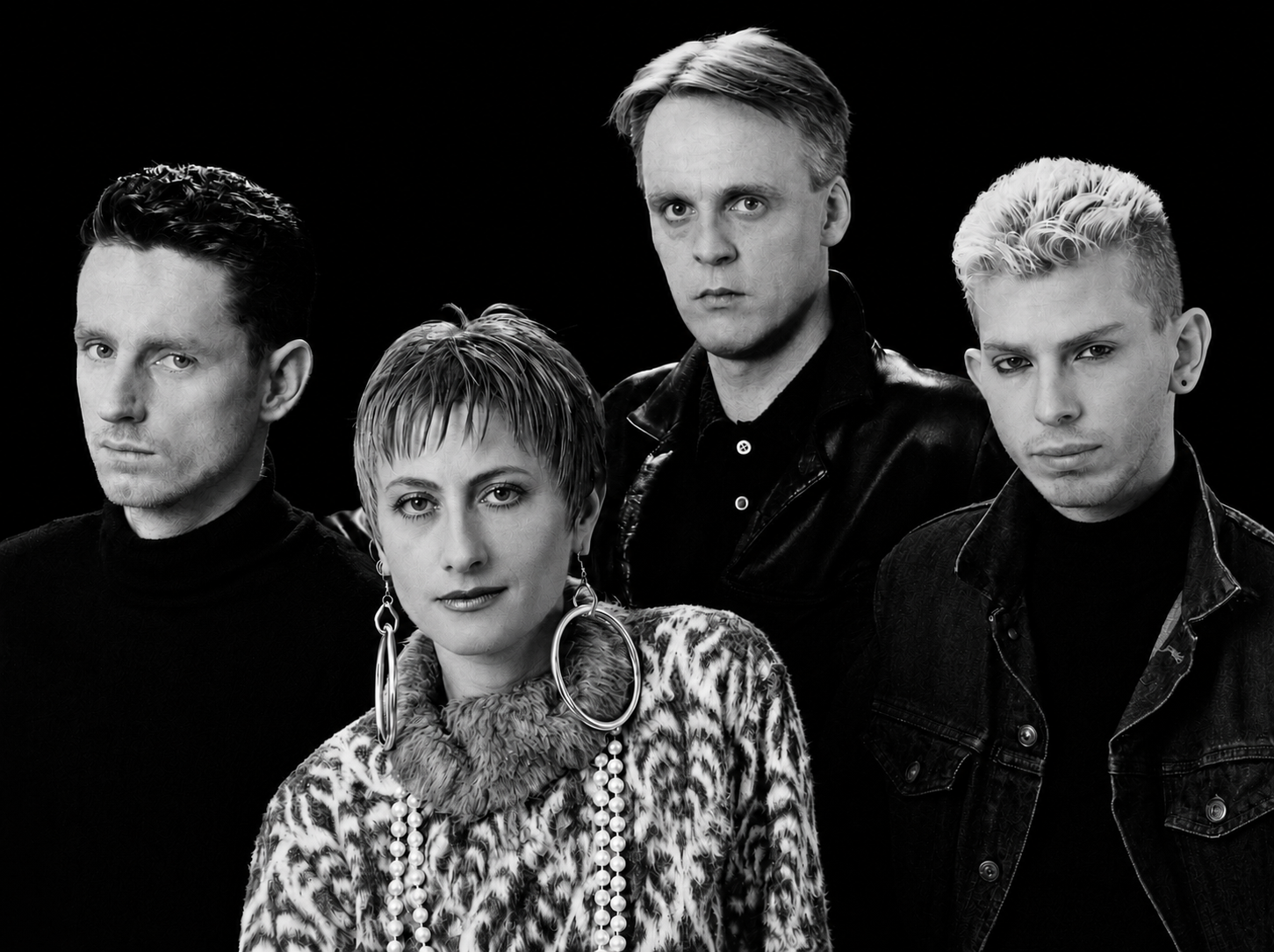
Nick: What are your earliest recollections of the band, and how did the cool band name come about?
ROB:
The earliest recollections are really of experimentation. We were taking the machinery and the studio itself and treating it almost as another member of the band. Because we could not compete with a studio costing hundreds of thousands of pounds, we took a more ‘punk, two-fingered’ approach and went deeply into making sounds exciting rather than ‘BBC well recorded’. This really did involve unconventional approaches such as distortion, flanging, reverse echoes, lots of strange types of delays on instrumentation you would not normally do it to. Most often it didn’t work but when it did it was unique!
The name hardCORPS seemed to capture what we were doing, as in the hard, mechanical element against the human element. But its origin was in the first synth experiments. As I said, we shared the house with many other creatives and eccentrics, one of whom was a very camp guy called David Bunny.
David wanted to do a cover version of a song and chose ‘My Coo-Ca-Choo’ by Alvin Stardust. He thought a synth version would be different and Hugh was intrigued as he would do the majority of the programming. I recorded it and added some touches but we needed to promote it and there was a chance to play in the break of an established band, Marillion, at the Marquee Club in Wardour Street. But we had no name, so Hugh wrote a list in a notebook, and David picked Hard Corps because it sounded like the opposite of Soft Cell! That was it.
CLIVE:
It was almost us growing into the name after that, as we were a million miles away from ‘My Coo-Ca-Choo’! There wasn’t a grand marketing exercise behind choosing the name and no one thought to change it. It just seemed to fit. By then we knew we weren’t going to be a conventional rock band, and the name reflected that.
ROB:
Clive, do you remember Simon Bates later played ‘Je Suis Passée’ on his breakfast show on Radio One and called us Hard Corpse! No clue about the French pronunciation of corps?
Nick: Who, if any, would you say were your inspirations?
ROB:
At secondary school a very cool American kid with hair down to his backside arrived and introduced me to The Doors. I particularly loved ‘Unknown Soldier’, partly because of its political message and partly because of the way ‘found’ sources could be incorporated into music. I rediscovered the early Pink Floyd and their experiments also with found sources but their use of atonal sounds too and because I was growing up in the Cotswolds, the inevitable Led Zeppelin was everywhere!
When moving to Brixton I fell in love with reggae, especially dub as again it had the visual elements I was growing to love, the experiments of breakdowns in the music, almost recreating new pathways from an existing song and of course the wonderful feedback delays added to the music. The songs were simple and melodic and, being of Irish heritage, I felt the oppressed lament in them.
Later, Kraftwerk became hugely important, as did the whole idea of electronic music being something that could have emotional power rather than simply being a technological exercise. It was also accessible for someone like me who had not the discipline to learn one instrument but enjoyed and understood better the whole complete musical picture. I loved the idea where Clive, Hugh and I could build everything without relying on the whims and egos of specific musicians, who more often than not would not understand what we were trying to do.
CLIVE:
Well, we didn’t really know what we were trying to do either. (Laughs) But we certainly did know instinctively what we didn’t want to do, if that makes sense. What was left after that were the pure elements and fundamentals to build our own sound.
For hardCORPS, though, the philosophy was very much about doing something new. It was different, it was a challenge, it felt revolutionary. We wanted to get away from what we saw as the increasingly stale world of conventional guitar rock and the bland corporate American music around it.
For me, Kraftwerk was obviously important and Giorgio Moroder was another major influence. But I was also into the club scene at the time too.
I was fascinated by the machinery as much as the music because you could take a sound, process it, feed it back into itself and create something completely different, then with sampling that was your sound, unique. That became very much part of the hardCORPS process.
Nick: Have you any idea how John Peel got on the case with hardCORPS, which led to your John Peel Session?
ROB:
Steve McGowan, the manager of Perfect Strangers, a pop band I had been recording in the studio, took an interest in what we were doing and started taking our recordings around record companies as he wanted an ‘art’ band as he said, on his showreel. However, the interest generated was in us, not Perfect Strangers and Steve became intrigued about offering to manage us. He had a contact with John Peel’s PA and dropped a cassette tape of ‘Dirty’ and ‘Respirer’ to her. Apparently, she played it to John and he liked ‘Dirty’ especially. So, we quickly mastered and pressed some copies of ‘Dirty’ / ‘Respirer’ on our Sonoscope label. John Peel started to play it, we became a regular in the weekly indie charts and things started to take off from there.
CLIVE:
It was an amazing period because things started moving very quickly. We weren’t sitting there thinking, “We’re going to become a successful electronic band.” We were simply making music we liked.
ROB:
That’s right, we were in a womb-like environment of a Brixton basement as the world went by. Then Steve said there was an offer of a BBC session on the John Peel show. So, after the initial shock and stress of how to do this, we did it and the next day the phone was red hot with record companies ringing up about who we were, whether we had a deal, etc.
CLIVE:
It was actually quite a sterile experience at the BBC. I had naively imagined John Peel would be wandering in and out of the studio while we recorded.
There was also a moment when the BBC sound engineer (who you could tell was a dinosaur of rock and hated electronic music) thought he’d found a nasty distortion on ‘Dirty’. We couldn’t hear anything wrong, then realised he was pointing at a sound deliberately created by feeding a delay back into itself until it broke up. Mate, the song is called ‘Dirty’!
Nick: With your name being picked up by those in the electronic music field, how did the jump to Polydor come about, with the release of the Martin Rushent-produced ‘Je Suis Passée’ in 1985?
Steve McGowan was instrumental in getting record companies interested. To be honest, he was a creative and marketing visionary. Without his initial foresight, and his ability to create and communicate who we were and what we were about to the right people, I suspect we’d still be in that Brixton basement!
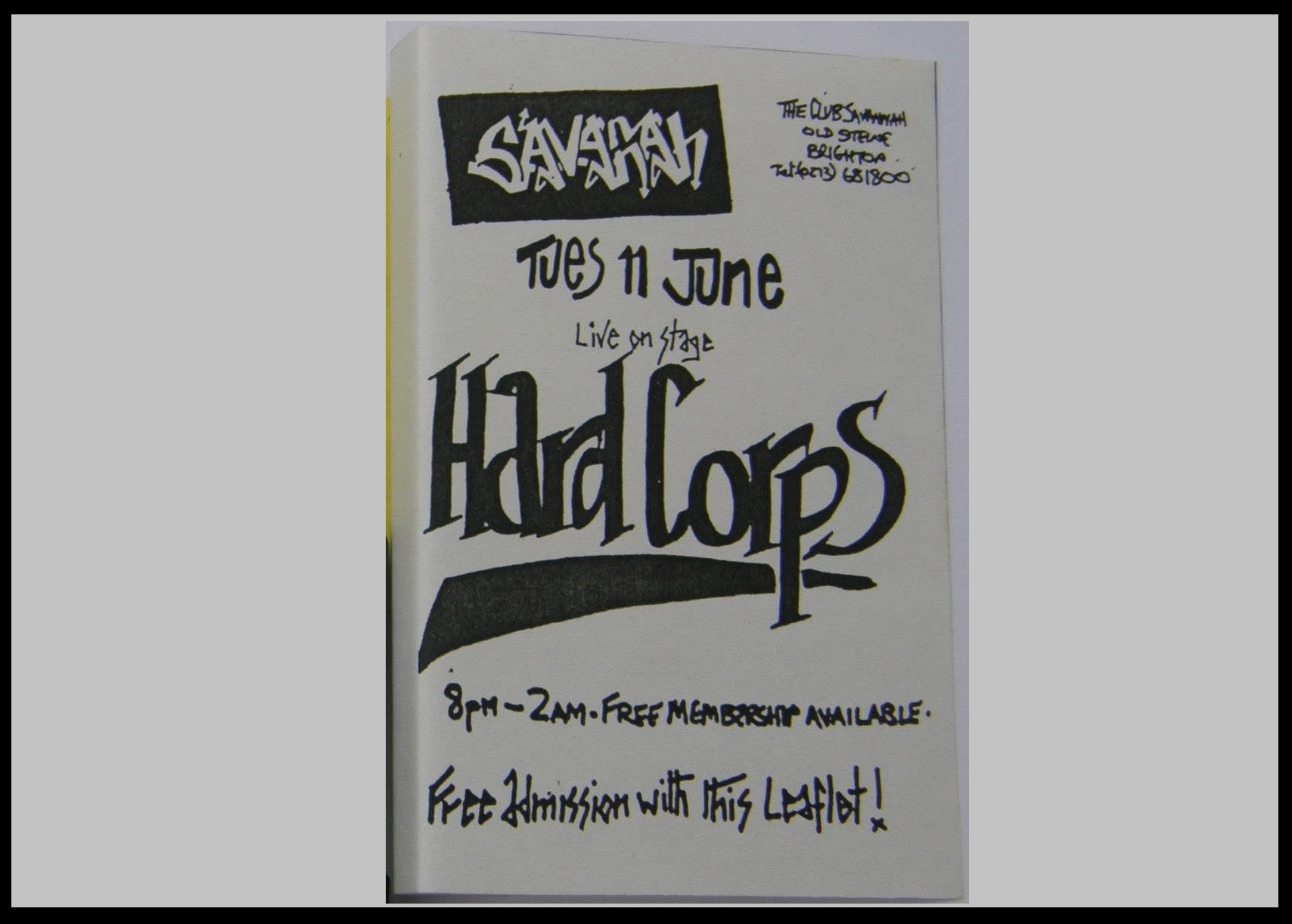
Steve was responsible for introducing us to John Peel and getting us airplay, and he also arranged our first-ever gig, at Rusty Egan’s birthday party. Then, in consultation with us, he hired the Marble Factory in East London, a karate dojo, for an underground party, and invited the media along. They turned up largely because of the way Steve had promoted us.
It was an extraordinary left field underground night. We had Sophie and her lesbian security crew from the Brixton Fridge, the upcoming film director, Bruno de Florence filming everyone, photographers, art students, other invited bands and a whole load of friends and eccentrics, all contributing to this incredible atmosphere that something special was happening. We played on the floor because there was no stage, which only added to the mystique of hardCORPS.
Our next gig came through a direct link with John Peel, when we headlined the Tuesday night of his Rock Week at the ICA. So, three gigs in, we were playing at the Institute of Contemporary Arts! Somewhere in amongst all this, Steve also engineered our live TV appearance on The Tube through the media contacts he had developed. He even managed to get a record company to pay for our plane tickets, on a promise.
After the Tube appearance, there was a lot of negotiating between Steve and the record companies. He would report back to us with the latest offers and developments. We were offered what appeared to be an extraordinary deal by Chrysalis Music, but Steve recommended the Polydor deal instead. It was considerably less money, but the idea was that we would retain creative control while gaining access to the resources of a major label.
But… there was an inevitable ‘but’.
The reality of being on a major label turned out to be very different from what we had imagined. Surprise, surprise! Nevertheless, we signed with Polydor, and it was around that point that things also began to unravel with Steve.
Part of Steve’s visionary genius was accompanied by a character flaw that we didn’t recognise until it was too late. He had a self-destruct button.
CLIVE:
Polydor wanted a single and a “name” producer involved. We suggested Daniel Miller but Daniel was unavailable and we only realised later he tended only to produce Mute acts. So they offered us Martin Rushent, which was almost impossible to refuse considering what he’d done with The Human League. We recorded ‘Je Suis Passée’ at Genetic Studios in Reading. For me, it was a genuine pinch-yourself moment.
I remember sitting beside Martin at the mixing desk, both of us riding faders on different sequences and effectively duelling with each other as the track went through. I remember thinking, WTF! Here I am, with this oddball genius whose work I already admired. It was completely nuts.
ROB:
Do you remember when I did some backing vocals in the main booth and they were finished and I walked out of the first section completely forgetting there were two glass doors and whacked my head against the glass? That was a shock but it was you lot and Rushent laughing that was worse.
‘Je Suis Passée’ still sounds like it was recorded recently. Martin had a knack of knowing what was needed but also how to keep things simple. My biggest regret is we never finished an album with him. I think it would have made all the difference to our career. He was complicated, emotional, opinionated, arrogant, egotistical and nice at the same time, but inspired a belief in me that with him we were in the hands of an amazingly confident and as I said, extremely talented man.
Nick: And Martin Rushent wasn’t the only heavyweight producer you worked with, was he?
ROB:
No. We did manage to persuade Daniel Miller to become involved as well, which was another extraordinary development. Martin was involved with ‘Je Suis Passée’, and he also recorded the backing tracks to ‘Respirer’ but then Daniel subsequently finished it with Steve ‘Flood’ engineering. Apparently, Steve got his nickname Flood because, when he and another guy were tape operatives starting out, Steve would always be offering to make tea or coffee in the studio, but the other guy never did. So, some musician named the other guy Arid and Steve, Flood.
After we left Polydor and joined Mute (Rhythm King), Daniel co-produced ‘Lucky Charm’ too. Which was probably, looking back, our most commercial track. Kind of like ‘The Model’ was for Kraftwerk. (laughs)
CLIVE:
The irony was that we were working with some of the best people in electronic music, but the commercial machinery around us wasn’t necessarily sympathetic to what hardCORPS actually was.
Nick: Where did it all go wrong with Polydor?
ROB:
This is where the economics of the major-label deal become important and a warning to up-and-coming artists.
People assume that an album deal is the business! You hear it on the TV talent shows, a million-pound contract etc. Well, we were on a similar deal over seven albums. However, it wasn’t simply that our album was not released because Polydor didn’t like the music; it was actually more complicated than that. We’d recorded enough material for an album, but if they released the album under the terms of the contract it would have triggered another year of their commitment and a hefty rise in studio, marketing and advance fees from them to us. So, accountants had taken over the creatives. That’s the brutal reality of the record industry, the clash between creativity on the one side and how much risk they were prepared to take on the other. Many successful companies were able to take risks, but Polydor were not prepared to.
CLIVE:
We had gone into Polydor believing we’d have an album and creative control. Instead, we found ourselves in the classic major-label situation where the single had to perform before the album would be supported.
And ‘Respirer’ or ‘To Breathe’ was a strong track, but it wasn’t an obvious commercial hit single. That was a problem.
ROB:
Also, you have to remember the prejudice of record buyers at that time in the UK. We had a French singer who sang in English and French. Other than gimmick records there were very few foreign artists other than Americans, who broke into the top twenty.
Nick: For myself, your appearance on the legendary ‘Tube’ TV show was one of the best ever performances, as you not only looked cool as f*ck but the music sounded decades ahead of most other things at the time. How did the band look come about, and how did you select the instruments?
CLIVE:
For me, the way I looked on stage was a theatrical statement about how I felt about the music. I saw some musical phrases as having a masculine quality and others a feminine one.
I wanted to represent both sides of that, the hard edge and the sensitive edge because both existed within me. It was also a way of escaping the everyday Clive. In reality, I was a fairly ordinary bloke!
As for the instruments, we were using the machinery because it allowed us to create the sounds we wanted. The Roland System 100m became particularly important visually as well as musically.
ROB:
We wanted to create a hard machine world. You had the three men lined up in front of machinery and Régine, this gentle human presence, pushing through all of that metaphorical concrete, so deliberately theatrical.
The Tube was Steve the manager again who was trying to get us signed to various labels and he heard that a band had dropped out of The Tube’s celebratory edition and pushed for us. Amazingly we got the offer and Steve made a record company pay for the flight tickets to Newcastle, by promising we would sign with them!
Nick: The performance of ‘Je Suis Passée’ on The Tube has become almost legendary. Régine looks incredibly intense. What was actually going on?
ROB:
We’d actually missed our flight from Heathrow to Newcastle. That was Hugh’s fault as he was in the middle of a domestic. We eventually flew to Teesside, then got a taxi and told the driver to put his foot down. Fortunately, the equipment had gone ahead of us.
CLIVE:
I later discovered that Régine had had an argument with Steve, shortly before the performance. At the time I had no idea. I simply thought she was being Régine! What you’re seeing is actually genuine tension. She was brooding live on television. She was so emotional.
Nick: What was going on in 1986 as there weren’t any releases?
ROB:
Getting out of the Polydor contract took nearly a year as they kept hanging a carrot over us saying write that hot song and we will reconsider. We wrote a number of songs in that period but knew they would be rejected by the new A&R, Carol Wilson, as it had become political. Régine wrote a line in ‘Raining in the UK’, ‘We went to see the talking doll…’ The frustrating thing is that an absence of releases didn’t mean an absence of activity.
CLIVE:
That period was particularly frustrating because we’d already demonstrated that there was an audience for hardCORPS. We weren’t short of ideas or recordings, we were short of a route to release them.
Nick: How did things get back on track with the signing to Rhythm King and the release of ‘Lucky Charm’ in 1988?
ROB:
‘Lucky Charm’, or ‘Porte Bonheur’, had originally been recorded as a demo in our Brixton studio. We performed it live and gradually refined it.
Eventually we recorded it onto 24-track at Blackwing Studios with Mark Saunders, and Daniel Miller became involved in the final mix. Blackwing was, of course, closely associated with the Depeche Mode world, so that connection became particularly significant.
CLIVE:
By that point we were very much trying to keep the band moving despite everything that had happened with Polydor. Mute was a much more sympathetic environment for what we were doing.
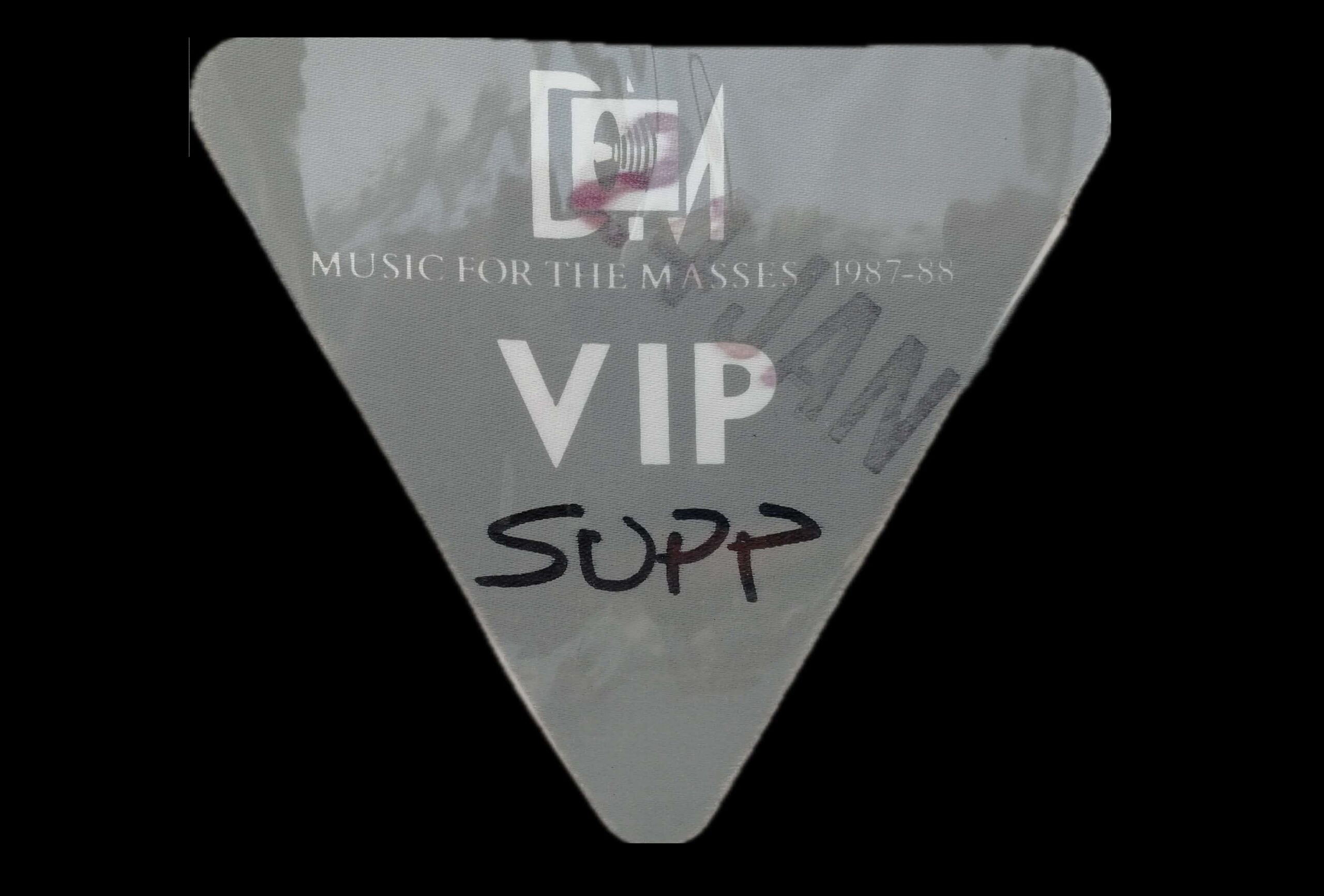
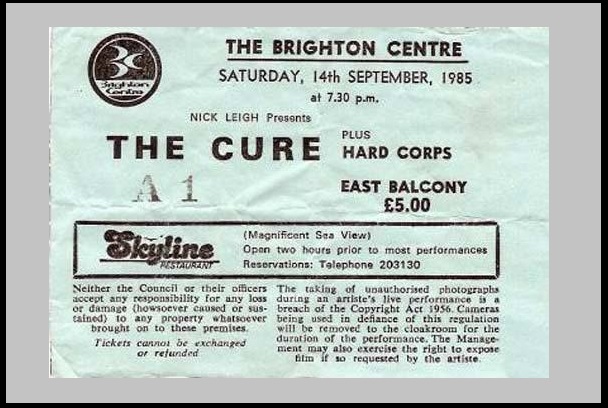
Nick: How on earth did the 1985 tour support for The Cure and the 1988 tour support for Depeche Mode both come about?
ROB:
The Cure opportunity came through our publishing connection. We were published by the same company, Fiction Music, and that helped us to be offered the support slot on The Cure’s ‘Head on the Door’ tour. The Depeche Mode tour came about differently. We’d been recording new material and, having finally been released from Polydor and signed with Mute / Rhythm King, sent some of it to Daniel Miller. He offered the support slot in the UK after they came back from the US. We were now supporting one of the biggest electronic bands in the UK. This was far more suitable for us than the Cure tour, as we were like-minded with similar audiences.
Nick: On those two tours you were really getting the hardCORPS name out there and winning more and more fans with each concert performed. Did you feel that things were taking off for the band, and if not then why not?
CLIVE:
The Cure tour certainly gave us exposure and the Depeche Mode tour was another enormous opportunity. But by the time we toured with Depeche, we were already struggling internally to keep the momentum going. That became increasingly apparent during that tour especially with the controversies that accompanied our performances.
ROB:
That’s the great irony. We were getting exposure that most bands could only dream of, but the records weren’t necessarily available when people wanted them. You could stand in front of thousands of people and make an impression, but if they went looking for the record and couldn’t find it, you’ve lost momentum.
It was like hitting a self-destruct button, but I won’t go into that!
Nick: What were the band members of The Cure and Depeche Mode really like?
ROB:
With the Cure it felt like there was a distance between us and the band, but I sat with Robert on a number of occasions and he was quite shy and very likeable. I was quite shy too so conversation was limited! I knew little about them before doing nearly 30 gigs but I would stand in the audience and watch their set every night. I grew to love their songs. It was more that The Cure’s audiences struggled to understand us, especially in Europe where electronic music was still some years away and guitar bands reigned. Depeche were brilliant, so much more in tune with us and they would watch us soundcheck and I would watch them. It was just a much nicer experience with the lighting, road crews, catering and the band themselves. But, of course, we both loved Kraftwerk!
CLIVE:
With Depeche Mode, we actually had some very good interactions with the audiences.
One of my favourite stories was at the NEC in Birmingham. Rob and I were kicking a football around with some of the Depeche Mode road crew. Before long it turned into a five-a-side game, with Martin Gore joining in.
Unfortunately, one of their roadies tackled me with considerably more ‘enthusiasm’ than was required for a friendly kick-around! It nearly ended my tour before I had even gone on stage.
Martin Gore actually ended up stepping between us when things got a little too heated.
Nick: What are your best and worst memories of these tours?
CLIVE:
The Cure tour had some memorable disasters. In Torino, for example, we were playing to a half-empty crowd because most of the audience were still in the bars.
ROB:
The best memories are simply the scale of it. Walking into a venue and seeing thousands of people, knowing you’re about to play your music to them, was extraordinary. And the memories, of course, such as a huge tent in Bologna with the Cure. If it was to hold three or four thousand people it had twice that inside. The scaffolding around the mixing desk in the crowd was swaying and the condensation was pouring, literally pouring down the steel lines holding the tent up. Apparently, the electrics were shared with a fairground surrounding the tent and so when the fairground rides and the increased volume of the Cure coincided, bang! A power cut for a few minutes, then on again. It was so chaotically Italian!
Nick: Why did it take so long for your debut long-player ‘Metal + Flesh’ to see the light of day in 1990?
CLIVE:
It’s important to understand that ‘Metal & Flesh’ wasn’t really a conventional “debut album” in the way people might imagine today. It was effectively a compilation bringing together material we’d accumulated over the years.
ROB:
Because the album we’d intended to make for Polydor never actually happened in the way we’d planned, and hardCORPS had fallen apart by 1990, I was desperate for some legacy before we all moved on. Concrete had made contact, so I compiled the ‘Metal & Flesh’ compilation for them to release as a limited vinyl and CD edition.
Nick: What’s the story behind the demise of hardCORPS?
ROB:
I don’t think it was one single dramatic moment. There were a number of contributory factors. Looking back now, one glaringly obvious missed opportunity was caused by the Régine controversies on the Depeche tour which meant there was no chance of accompanying them on their second tour of the US, which finally broke them there.
Ironically, as we split, The Prodigy emerged and that is exactly the territory I would have liked for hardCORPS. But we had just stopped functioning.
CLIVE:
We fizzled out rather than formally split.
The death warrant was probably signed when we became too difficult to handle after the Depeche Mode tour. We’d painted ourselves into a very bleak corner.
It was sad, but there wasn’t necessarily one final meeting where somebody announced, “That’s it, hardCORPS is finished.”
Nick: Do you wish that the band could have gone on further and longer? And what’s the reason behind your answer?
ROB:
Looking back, we would have had to reinvent ourselves, take a short break and find a direction again. It would not have had to be starting again as we were fairly well known, but it would have had to have a shared vision and a definitive direction. If we’d had a visionary manager at that time who could help develop that pathway? Well, we didn’t and we had no energy left to work together.
I’m proud of what we achieved in the time we had. The fact that people are still talking about hardCORPS tells me that something worked.
CLIVE:
There will always be a “what if?” attached to hardCORPS. We probably could have achieved more if the circumstances had been different.
But I’m also conscious that the band existed for a relatively short period and still left a body of work that people care about decades later. That’s something to be proud of.
Nick: In your hardCORPS downtime, were there many external projects going on, such as your T.U.F.F. 12” promo record?
ROB:
TUFF was something Clive and I did for a laugh over a week when Hugh and Régine were away and the manager at the time, John Simpson-Boyall, thought it was brilliant. Samples of Brains from Thunderbirds and a recreated riff from an early Kinks record mixed into a dance track. But a phone call from some serious geezer at Warner Brothers, which I answered, threatening legal action over the samples put a stop to it. 1,200 12-inch copies had already been produced. In hindsight, maybe we should have gone with the mantra, ‘when there is a hit there is a writ’.
CLIVE:
We weren’t really the sort of musicians who could simply stop being interested in sound because hardCORPS wasn’t releasing a record. There was always another piece of equipment, another recording or another idea to investigate.
Nick: Clearly, there is still a market for hardCORPS material, as the forthcoming arrival of the newly remastered expanded version of ‘Metal & Flesh’, which is coming out on double vinyl and CD via Annalogue Records, bears witness. How did this come about and where can people order them from?
ROB:
Marc Schaffer at a wonderful label in Germany, Annalogue, got in touch with us around nine months or so ago and asked if we were interested in an idea he had. And yes we were, but there have been a lot of revisions to the original idea and now it is something we can feel proud of again and it has felt as though we’ve always considered what Hugh and Régine would have wanted, especially Hugh, as he was ultra-difficult to please (laughs) but it does all of us proud, I believe.
The release is being prepared as a limited double LP and CD edition, with new artwork and additional material, so it’s a really substantial revisit to the catalogue.
CLIVE:
It’s wonderful that people still want the music. We were never a band that sold millions of records, so the fact that somebody is prepared to put the time, money and care into preserving the catalogue is very special.
And there’s something particularly satisfying about younger people discovering hardCORPS now. They hear the records without the baggage of 1980s record-company politics and simply judge the music on its own terms.
Nick: Is there anything else that you both would like to add?
ROB:
I’d just like to say thank you to everybody who has continued to listen. When we were making the music, we weren’t thinking about legacy. We were trying to make something that excited us and felt different.
The fact that people are still discovering it, discussing it and wanting to hear it again is probably the greatest compliment we could have received.
You know, Nick, the clothes change, studio technology changes, the delivery of music to the public changes, live performances become bigger and more immersive and so on. But people still want the same things from music, such as to be taken into a dream world away from everyday reality, to have their emotions heightened and to hear their sadness, happiness, love, loss and their personal history reflected back to them and captured in musical events they will remember.
Music seems to reinvent itself with every generation, but the reason we make it, listen to it and need it has probably remained unchanged for hundreds, if not thousands, of years. Well, that is what I think anyway.
CLIVE:
Exactly. We were very much products of our time, but hopefully the music isn’t trapped in that time.
If somebody discovers ‘Dirty’, ‘Je Suis Passée’, ‘Metal & Flesh’ or ‘Lucky Charm’ today and gets the same feeling we had when we were making it, then that’s fantastic.
Nick: Thanks very much for your time! It’s been wonderful!
ROB:
Thank you, Nick. It’s been a pleasure and rather surreal looking back at it all.
CLIVE:
Thank you very much. It’s been great to revisit.
hardCORPS 16 track ‘Metal & Flesh’ 2LP set will be released on Friday 9th October 2026. Purchase your copy from HERE, HERE or HERE.