Ocean Film Festival returned to Brighton this week on its 13th tour with a collection of funny, inspirational and awe-inspiring films.
Smashing sea urchins with hammers may seem an unlikely example of ecological activism but this is what Italian film maker, Ismaele Tortella, discovered in Stone Biter: Saving the Arctic Sea Forest.
He begins his film on a mission to capture the perfect shot of the enigmatic Wolffish in its natural habitat, the kelp forests of the Arctic. When he finally locates this crooked-toothed charmer he finds the fish surrounded, not by kelp, but thousands of sea urchins.
The film takes Tortella to Tromso, Norway, where he learns the urchins feast on the kelp and, in order for the forests to thrive once more, they need to be destroyed. The sea urchin’s natural predators have all been scooped up in fishing nets, allowing the spikey critters to run amok.
This is good-humoured film with serious themes at its heart, and demonstrates the impact a small group of people can have in the fight to save our planet.
The underwater footage is spectacular and there is strong editing. In one section, anticipating the audience’s shock at scenes of divers smashing urchin off rocks, the filmmaker cuts to fishing nets hauling tonnes of sea life from the ocean. The destruction of the urchins is put into blatant perspective.
The final footage of his beloved Wolffish, relaxing in the newly-restored forest, served as a tender reminder of what is at stake.
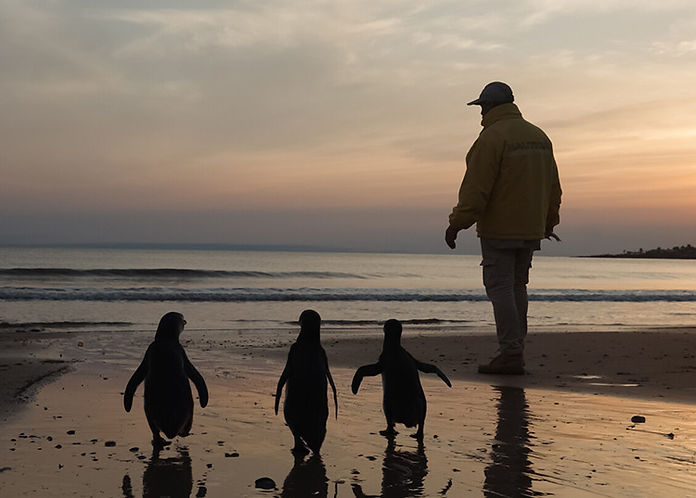
Tatiana McCabe’s Tides of Life follows Richard Tesore, the founder of Uruguay’s first marine rescue centre.
His story, like that of the urchin-smashers of Tromso, is one of hope against the odds.
Tesore’s modest centre is not much more than a beach shack with a couple of pools and an outdoor kitchen, where the former-entrepreneur prepares meals for the penguins, cormorants and seals which count amongst his temporary guests.
But his sanctuary is under threat, local authorities want to move him and his marine patients away from the beach to a more ‘suitable’, smaller inland location.
If the sanctuary is forced to relocate, its beautiful pitch by the ocean will be free for developers to build a restaurant or hotel.
McCabe dips only briefly into the politics and the tone is light, reflecting Tesore’s good-natured dedication to his cause which, as we are reminded as we follow him collect plastic rubbish from the beach, must be constantly tested.
Staying with the conservation theme, director Jack Breedon’s warm, quiet film The Kelp Collector, follows former scientist Sandy Webb and her documentation of the different varieties of seaweed she finds when diving near her Australian home.
Great care is taken as she selects which samples to remove and examine under the microscope in her laboratory/spare bedroom before they are pressed and archived.
Like resistance fighters quietly chipping away at a system much larger than themselves, the activists from these films offer hope, inspiration and the possibility of change through ordinary people making decisions which, when united, have potentially extraordinary results.
Chadden Hunter’s The Raftsman has barely a piece of plastic in sight, just 12 men, two monkeys, three kittens sailing the Pacific aboard three bolsa wood rafts.
The film includes fascinating archive footage from the 1973 journey and the preparation the men underwent, including incredible scenes of the 250,000 person send-off they received when they departed Guayaquil, Equador for Australia.
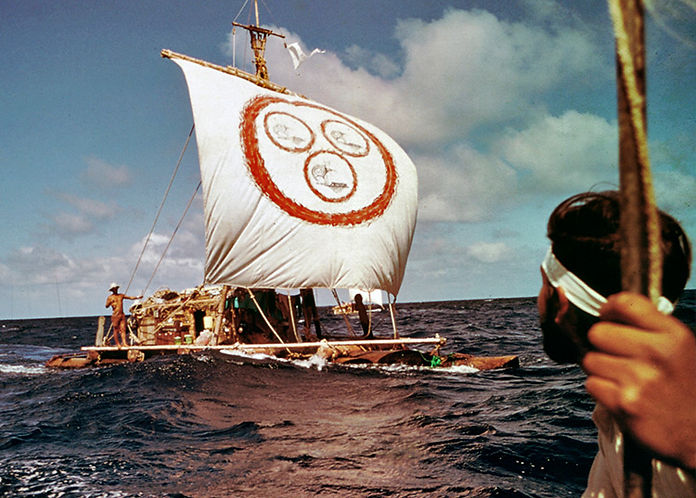
Hunter draws emotional interviews from the surviving crew members as they reflect on the experience of a lifetime which has never since been repeated.
The sailors had varying levels of experience and skill, and shared nine nationalities, were specifically chosen for the expedition by charismatic Spanish explorer Vital Alsar. His mission was to prove people from all over the world could unite to work peacefully towards one common goal.
This is the point where you might expect the plot twist, perhaps Viral turned into a Colonel Kurtz type figure or the men started cannibalising each other but, no, and this is the most remarkable part of this heartwarming story.
Despite the hardship, the varying personalities and Vital’s disciplinary style, the men ‘left as friends and arrived as brothers’.
The film could have easily run to three times longer and the filmmakers must have had to make tortuous decisions in what to include and what to leave out. This surely won’t be the last we have heard of this extraordinary adventure.
The thrill of the surf, something the raftsmen discovered plenty about, is the theme of Steven Lawrence’s Ride of a Lifetime which followed Californian surfer Alo Sabir and the day he headed to the Mavericks, a famous surf spot, to tackle the largest wave of his life.
Lawrence manages to convey the awesome power of the huge wave but his film veers away macho surf bro’ territory.
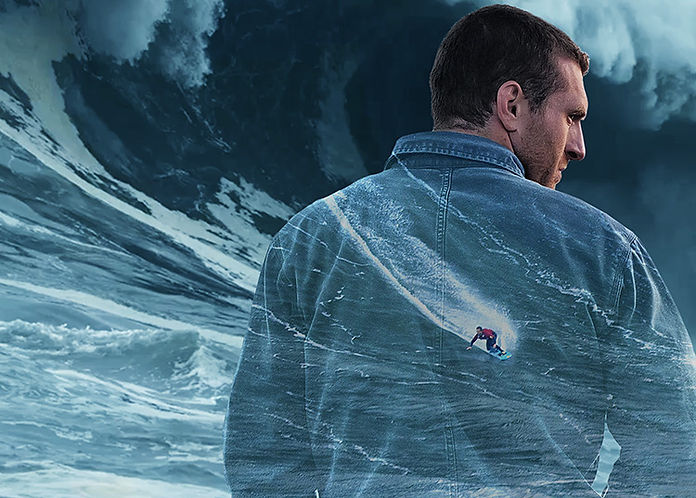
Alo is portrayed as an unassuming man who just happened to catch a huge wave. It is left to his mother to explain how exceptional it is for an unknown, barely sponsored surfer to achieve such a feet.
Alo may have ridden an 70 plus foot wave but I don’t believe for a moment he was having as much fun as the stars of the final film of the programme, Granny Grommets.
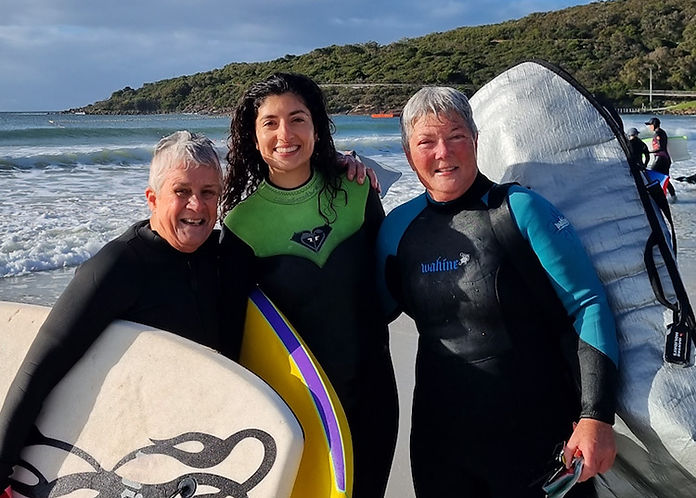
Director Leah Rustomjee’s joyful film handles the women’s lives with care. We are offered brief, carefully-chosen glimpses into the hardships they have endured which they survived together. Great friendships built though a love of the ocean and a fabulous sense of humour.
In one scene two women chuckle away when reminiscing about the weight-loss benefits of chemotherapy, in another the group remembers a recently deceased ‘grommet’ who has a place on their board of remembrance, they lament making the plaques so large – ‘we’re going to need another board’, one quips.
Granny Grommets demonstrates the unbridled joy and freedom the ocean offers the human race, you don’t have to scale an ocean or ride a giant wave, just get in it and have fun.
The film rounded off another year of informative, entertaining and inspiring films from the festival organisers.
Find more arts and culture reviews at Brighton & Hove News – Follow @BHCitywhatson and @bhcitynews on Instagram. Covering everything from fringe theatre to major tours across Brighton & Hove – tag us if you’re going!
#WhatsOnBrighton #BrightonandHoveNews #Brighton #BrightonTheatre #BrightonArts
#BrightonHoveNews