
A former Brighton journalist turned psychologist has written what could well be the football book of the year. It’s eye-opening, moving and downright funny.
Damien Pearse, 56, lifts the lid on why the sport means so much to fans in Till I Die – Why Football Means Everything (Even When It Shouldn’t).
A fan himself, Pearse openly admits the ways in which he reacts to goals, fouls and referees’ decisions, let alone how a good or a bad result affects his mood.
He confesses to casting a shadow over his domestic life after a defeat and pouring out his rage in a WhatsApp group and he writes movingly about the greater excesses of many other fans.
Pearse was inspired to tackle fans’ behaviour after an otherwise respectable young man punched Jack Grealish. It wasn’t an isolated event, it turns out. Another fan later hit the same player.
It says little about Grealish and a lot about the mentality, tribalism and misplaced loyalty of those who see to go by the Bill Shankly quote.
The legendary Liverpool manager famously said: “Some people think football is a matter of life and death. I can assure them, it is much more serious than that.”
Pearse covers some of the vile social media posts that have brought shame and worse on fans – and on their friends and families – and he tracks several of them down.
And there are even people who have lost their lives in the name of football – and the journalist in Pearse also locates various people who have been affected by what happened.
One of the saddest stories concerns Sahar Khodayari, known as the Blue Girl, after her team’s colour. She set herself alight outside a court in Iran and died from her burns after being arrested for trying to go to watch a game.
But Till I Die is far from being all doom and gloom. The flipside of fans’ shared experiences proves to be equally moving and Pearse includes a number of uplifting examples.
Some of his warmest words are for Brighton and Hove Albion – not just the remarkable rise from the brink of extinction but the powerful community spirit harnessed in the club’s name.
He tells the tale of “the man in the stetson” as one former player Guy Butters led a reminiscence session with dementia sufferers, helped by another former player, Chris Cattlin, who went on to manage Brighton.
There is fond talk of the Goldstone, Albion’s former home in Hove, and training in Hove Park, heading medicine balls and the contrasts with the modern game. The man in the stetson is one of those who seems brighter for engaging with various footballing memories from the past.
It’s not the only example of positive psychology at the Amex, with Pearse also picking up on the short Samaritans film shown at half-time when Albion hosted Spurs just over a year ago.
The best examples show how even rival supporters can come together in the name of football whether it’s to raise money for someone in need or for awareness of a good cause.
For Albion supporters, many will remember Fans United – the wonderful widespread support from across the game when bankruptcy and homelessness loomed.
More recently, fans of Brighton and arch-rivals Crystal Palace joined forces to raise money for the Robert Eaton Memorial Fund which helped disadvantaged youngsters.
These are among the upsides when fans identify with their club but, for some, it goes further: identity fusion.
Pearse explores the idea with Sussex graduate Martha Newson, a cognitive anthropologist, who dated a die-hard Palace supporter.
He writes: “She got dragged to Selhurst Park at 19. She was blown away – not by the football but by the fans.”
Dr Newson picks on Pearse’s own identification with his club – Wolverhampton Wanderers – as he describes his elation “when we win”.
She asks: “What do you mean when we win?”
Of course, they win – the team. But we – well, those hardcore fans with highly fused identities – feel as though we win too.
And the same idea can apply in other areas of life – cults, for example. Pearse tells the story of Jim Jones and the Jonestown mass suicide in Guyana in 1978 – the strength of a fused group identity fuelling the madness of a crowd and the power of a siege mentality.
He quotes Nick Hornby who, in his book Fever Pitch, said that he could never get a divorce from Arsenal even if he wanted one. It was not possible, he said, to go for a “bit of slap and tickle” with Tottenham.
But were couples divorcing when men put football above all else? Pearse confesses to being blocked by Mumsnet in his quest for football widows as he sought to answer the question.
While lurking – reading a number baffled comments on the theme – he said that he felt like a creep hanging around the women’s changing room.
Some of the Mumsnet contributors wrote about their partners’ wide and deep knowledge of all things football, their passion for the game and their emotional attachment to their side.
He wrote: “It struck me that these women were completely baffled by how football seemed to unlock a part of their partners they rarely got access to.
“It provided their men with an emotional toolbox and vocabulary that was otherwise absent.”
It’s addictive and can be expensive, not least when some fans turn to gambling. Pearse even explores the masochistic streak that binds fans to what the comedian Peter Cook called the cruel mistress.
When Pearse prepared to start writing his book, he described walking his dog Crackle through a churchyard in Hastings and seeing two girls by a grave festooned with football memorabilia.
The grave is the resting place of 11-year-old Harry Dennis. He died after a wooden board came loose from a scaffolder’s lorry and hit him in the front passenger seat of his father’s car.
Pearse indicates that Harry’s mother Maria reached a low point in her numbness. Friends stepped in and the football community gathered around.
He writes: “It was the love of that football family – and the love for the family she still had – that kept Maria going.”
A conversation between Maria and Harry a week before he died – on organ donation and football – led to Harry in death saving the lives of five others.
And even in the past few weeks, Maria Dennis has been campaigning with Sussex Police for more awareness and better training for commercial drivers to carry loads safely.
Beneath the tree by Harry’s football-themed grave, a new bench bears his name. Pearse writes: “I sit on it and reflect on this strange, magnificent game.”
Harry and his mother Maria prove a keen reminder – despite the irrationality, despair and bad behaviour associated with the beautiful game – of “how football has immense power for good”.
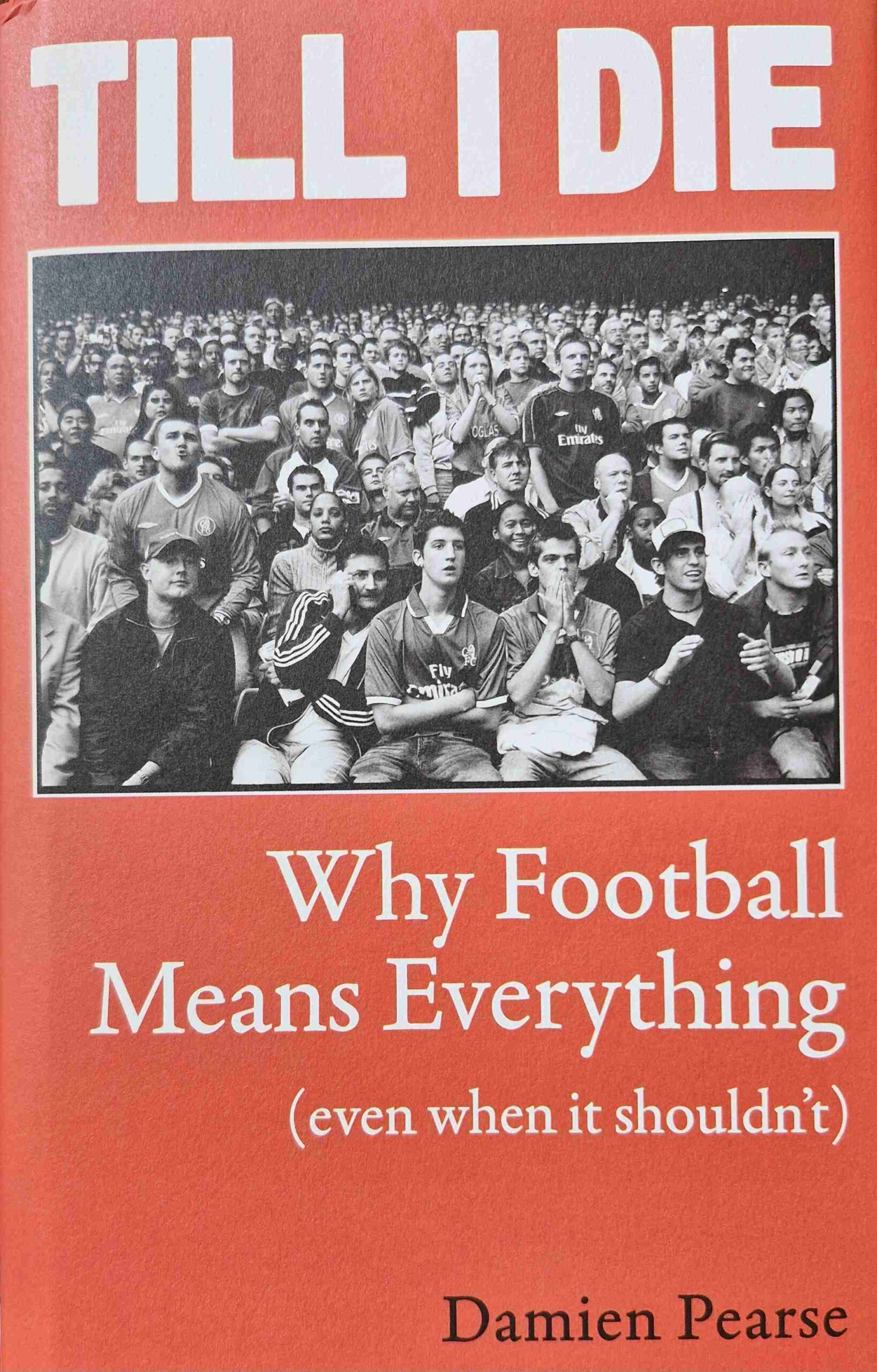
Till I Die has made the longlist for William Hill Sports Book of the Year 2026. That’s no surprise.
Pearse’s book is funny, insightful and thought-provoking. It’s also a breezy and accessible read and doesn’t seem anything like almost 400 pages.
This is less academic conference and more premier league psychology.
Till I Die – Why Football Means Everything (Even When It Shouldn’t) by Damien Pearse was published in hardback by Oneworld last month. It costs £18.99.