
More money from the government means Brighton and Hove City Council has less to pay for the third phase of new sea defences.
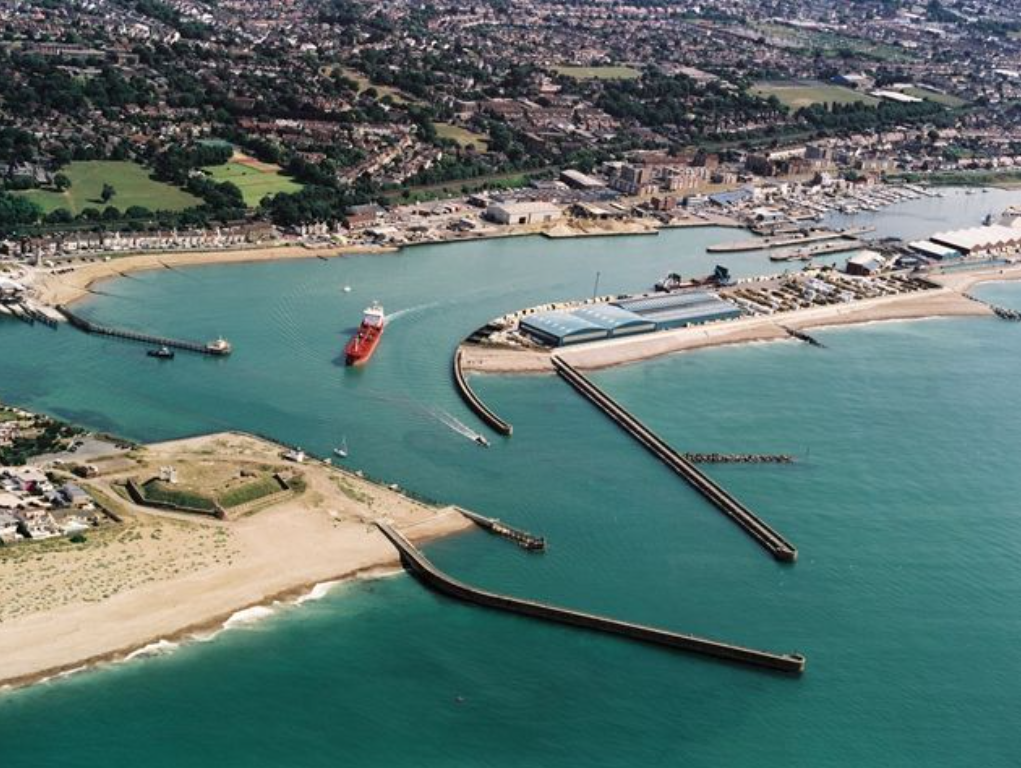
Phase three of the Brighton Marina to River Adur Flood and Coastal Erosion Risk Management Scheme includes repairs and improvements to the existing sea wall at Shoreham Port and other sea defences and reinstating public access routes.
The first phase included the planning and assessments with the second phase covering coastal defences at Kings Esplanade and Southwick Beach.
An updated business case report released ahead of the cabinet meeting said: “Without intervention, key defences could fail within 30 years, and some defences have a residual life of less than one year.
“This would increase the number of residential and commercial properties at risk of flooding.
“Construction of several new coastal defences and beach renourishment works along the Brighton Marina to River Adur frontage will reduce the risk of erosion and flooding, protecting the urbanised areas of Brighton and Shoreham.”
The overall value of all three phases is £36.5 million, with the Environment Agency Grant in Aid increased from £14 to £26 million, with a £6 million contribution from the Shoreham Port.
More money from the Environment Agency meant the council’s original £11 million funded through capital borrowing is reduced to £4.5 million.
As well as approving the contribution the cabinet delegated authority for senior officers and cabinet member councillor Trevor Muten to evaluate tenders and enter into contracts for the project.
Councillor Muten told the cabinet on Thursday 12 November that the project was a long-term investment to protect homes, businesses, and the seafront.
The cabinet member for transport and city infrastructure said: “Our seafront is fundamental to the identity and economy of Brighton and Hove.
“It is somewhere people live, work, exercise, visit and enjoy. Investment in its resilience is therefore also investment in our communities, our businesses and the long-term future of our city.
“And there is a wider point here. By working across council boundaries and with the Environment Agency and Shoreham Port Authority, we have been able to build a single scheme with shared benefits.
“That partnership has allowed us to secure substantially greater national grant support than Brighton & Hove could have achieved acting alone.”
Deputy leader councillor Tim Rowkins said the city is living with climate change now and the issue of coastal erosion.
The cabinet member for environmental services and net zero said: “There is a constant dance that’s going on with the shingle on the beach just to protect our coastline.
“People often think of Brighton and Hove as south facing, it’s more south west facing which means we get quite the battering from the Atlantic currents and those currents are constantly moving the shingle, the beachfront from the west of the city to the east.
“There’s this constant cycle of that shingle then being picked up in bog lorries and transported back to where it started again only for the whole sysle to repeat.
“Obviously, the groynes and the way the beach is constructed is designed to mitigate that.
“The whole thing is becoming much more serious, obviously with more regular and more extreme weather conditions.
“I think that was probably nearly illustrated by the fact that a pretty significant further chunk of the West Pier made its way to a grave at the bottom of the sea again recently.”