
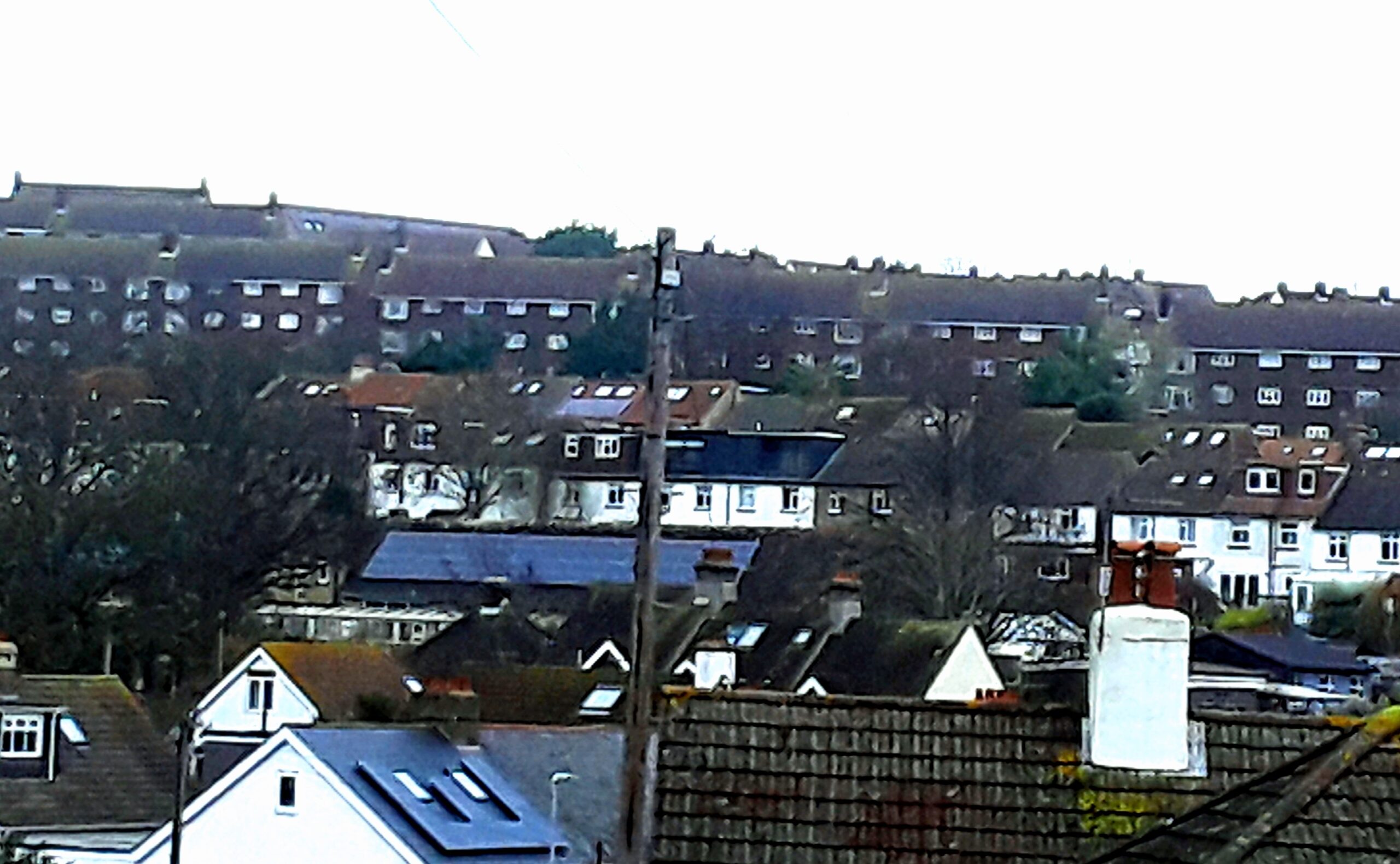
More than 200 empty private sector homes have been brought back into use since last April as a result of work by the council’s empty properties and council tax teams.
But the latest figures suggest that almost 1,000 more homes could be made available for tenants or buyers as work on tackling this aspect of housing supply continues.
Brighton and Hove City Council said that 264 empty homes were now being lived in, with the extra council tax on empty homes spurring some owners into action.
The council said: “According to government reports, there are currently more than 998,000 empty homes in England, a figure that has been steadily rising over the past five years.
“Of these, 265,061 are classed as long-term vacant which means they’ve been empty for more than six months.
“Locally, latest figures show 968 private residential properties in Brighton and Hove have been empty for longer than 12 months and classified as long-term vacant.
“This does not include second homes or those going through the probate process.
“Empty properties are not only a wasted resource at a time when so many people are experiencing housing uncertainty but can also blight neighbourhoods and cause distress for those living near by.
“As part of Empty Homes Week, which takes place from Monday 9 March to Sunday 15 March 2026, the council is encouraging residents to tell them if a property you live near has become empty or derelict.
“With housing in such demand, the council needs to make sure best use is made of every property in the city.
“There can be complex and personal reasons why people leave a property empty in Brighton and Hove so the aim of the council’s empty properties team is to collaborate holistically with the owners.
“The team regularly writes to owners of empty homes, urging them to consider one of a number of options to ensuring the property is reoccupied.
“Often this is enough to spur them into action but in more complex cases we can offer closer individual support to help find the most suitable way forward.
“Where that fails and as a last resort the council will use a range of enforcement powers to make sure that empty properties are brought back into use.
“Part of this process may be to ensure the owner deals with anti-social behaviour or overgrown and rubbish-filled gardens that are attracting rats or mice.
“Council tax premiums are applied to those properties that have been empty for the longer term.
“If a property is empty and unfurnished, for example, between tenancies, the owner will have to pay the full amount of council tax.
“The owner of the property will also have to pay
- 100 per cent extra council tax if the property has been empty for over 1 year, up to 5 years
- 200 per cent extra council tax if the property has been empty for over 5 years, up to 10 years
- 300 per cent extra council tax if the property has been empty for over 10 years
“These are called long-term vacant property premiums and are set up to help maximise the number of homes available in Brighton and Hove.”
From the start of April last year, an extra council tax of 100 per cent is payable on a property if it is empty and furnished, a second home or a furnished let from the day on which it becomes empty.
The council added: “Raising additional revenue acknowledges the impact that second and empty homes can have on communities and housing supply.
“The premium also acts as an incentive to owners of empty homes to bring them back into use.”
Labour councillor Gill Williams, the council’s cabinet member for housing and new homes, said: “The steep rise of empty properties across the UK is a troubling phenomenon that’s difficult to understand, especially considering the general housing shortage.
“Transforming 264 abandoned properties into homes for our residents is no easy feat and we’re proud of our hardworking empty properties and council tax teams for this achievement.
“With the supply of housing in Brighton and Hove limited, we desperately need to make sure all empty properties are brought back into use.
“If you’re aware of a property in the city that has become empty or derelict, please do let us know.”









Change in legislation needed to allow short term lets where the property is only available briefly before transfer, escrow, inheritance and a few other categories, has to be legalised and managed to allow for free flow transfers, would say 6 months per let term no rights incuded regarding tenancy contracts just allow the availability short term, would take a load off emergency housing. Got to be cheaper than doing nothing to make those empty properties useful.
I believe there is a whole new class usage (C5) coming in for STLs with upcoming legislation!
Sounds like that would help, if that could be used and controlled enough for the property owners to retain control so that their transactions can be done then they would likely be more willing to short term lets, also keeps income to the property owner and temp housing cost control to council.
Indeed! Also, there’s a few STLs out there that I’m pretty confident that if challenged don’t have planning permission, nor have the right type of mortgage on their property to be using it as an STL. And the mandatory registration will be useful to ensure, as businesses, STLs pay business rates as appropriate, to fund our vital city services.
A deliberate, “devastating” house fire occurred at a property in Down Terrace, Brighton, on September 25th 2023. Today in March 2026 Brighton and Hove Council has not started repairs on these 2 burnt out empty council flats.
Why have these 2 council homes not been repaired?
Interesting. Very good question. Have you tried submitting an FOI on whatdotheyknow? I’d be curious to hear the reason. Could be quite a few things.
It is a step in the right direction. It will short term solve a situation that will only become worse.
This now needs to rolled out to offices as there is more vacant commercial than residential.
Sector
Vacancy
Residential
~968 homes (≈0.6–0.7%)
Retail shops
~9%
City centre retail core
~3–4%
Offices
~17% = 550,000 sqft. That could be 1000 apartments if retro fitted
Office spec is not the same as housing spec, too costly to modify without extensive modification. Fire regs, lifts, stairs, windows, doors all a little different, offices are not built for 24/7 occupation, only working day hours as opposed to housing is 24/7 occupied.
Agree with Stan here, although I absolutely appreciate the sentiment. Easiest thing to do with some of these would be CLT guardianships for meanwhile letting, because the standard is slightly less in that form, but still pricey, and that’ll be most likely be at no less than LHA-rates to be viable.
How many council homes are currently unoccupied due to being unfit for habitation ?
Quoted from the latest Housing Management Panel Report:
“There were 144 void council housing dwellings on 31st December 2025, of which 14 (10%) were
being prepared for works, 90 were undergoing works (63%), 34 were ready to let (24%) and 6 were
void for other reasons (4%) on this date. Furthermore, 76% of these dwellings (109 of 144) became
voids during Q3 2025/26.”