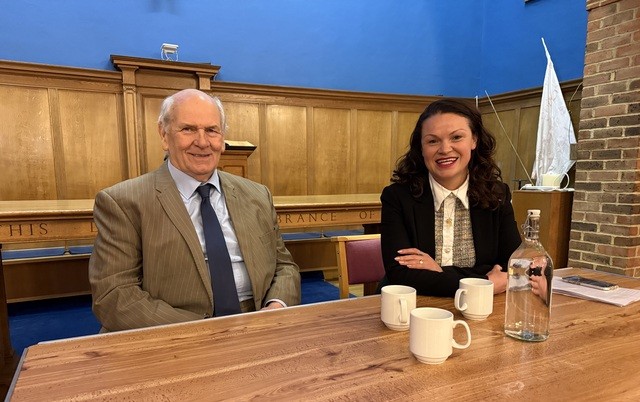
Two council leaders made the case for their separate proposals for new unitary councils in a coming shake up when they addressed a public meeting in Saltdean last night (Wednesday 7 January).
Brighton and Hove City Council and East Sussex County Council have put forward different ideas as the government prepares to reorganise local government into single-tier unitary authorities.
Both leaders, Bella Sankey, from Brighton and Hove City Council, and Keith Glazier, from East Sussex County Council, explained their proposals and answered questions at the meeting which was organised by Saltdean Residents’ and Community Association.
In all, four proposals form have been included in a government consultation on reconfiguring councils across the whole of Sussex. The consultation closes on Sunday 11 January.
The submissions from Brighton and Hove and East Sussex reflected responses to their own consultations but both leaders urged residents to respond one more time to the government before ministers decide the county’s future.
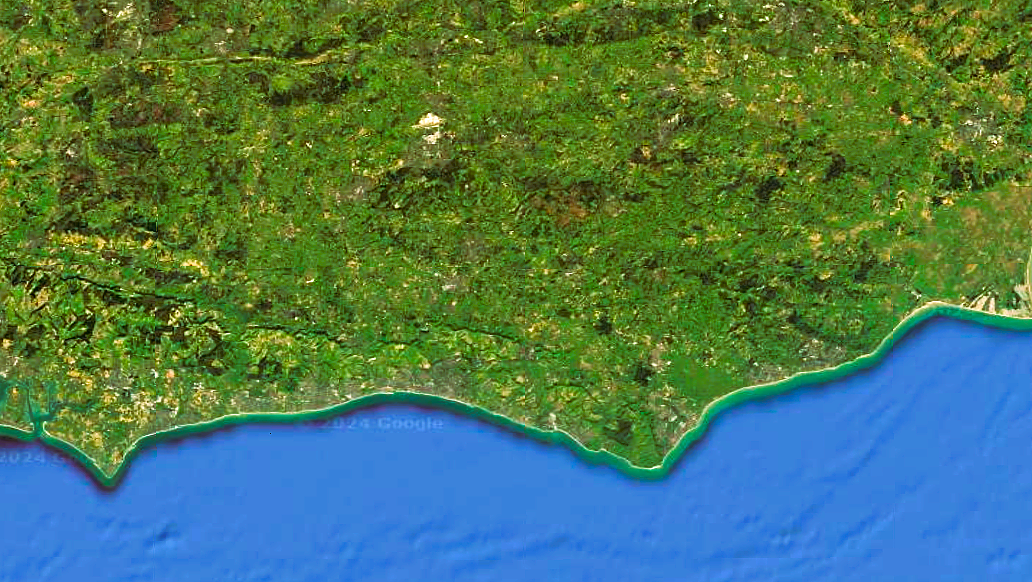
Brighton and Hove City Council proposed that Sussex should be served by five unitary councils, with Brighton and Hove’s footprint expanding to include East Saltdean, Telscombe Cliffs, Peacehaven and Falmer.
Currently, part of Saltdean and part of Falmer are in Brighton and Hove and part of each is served by Lewes District Council which is due to be abolished in the reorganisation.
All three of the proposals would retain the current boundary for Brighton and Hove City Council. It has been a unitary council since 1997.
The rest of Sussex has two-tier local government, with county councils and district councils having different responsibilities.
Councillor Sankey said that Brighton and Hove had looked at patterns of behaviour for its submission. It found that many people travelled from towns and villages to the east into the city for work, education, shopping and healthcare.
The proposal for five councils would mean each area serving a population of between 300,000 and 400,000. Councillor Sankey said that this would keep local government closer to the people.
Councillor Sankey said: “It’s the best way to ensure that local people still have a very real voice in electing representatives and then making sure those representatives put their priorities and objectives into action.
“My view is that if councils become too large and cover too great an area, that potentially dilutes that really important democratic accountability.”
She said that the consultation was not neutral and government ministers would decide not whether change happened but how it would happen.
Councillor Sankey said: “This is not about maximising the population size or extending boundaries for their own sake.
“It’s about whether, in reorganisation that’s happening anyway, the government should test whether existing lines still serve communities well, particularly in this case, I would argue, where a local government boundary cuts through the community of Saltdean.”
Councillor Glazier said that he was excited by the proposals when the government published its white paper proposing local government reorganisation in December 2024.
He said that the “One East Sussex” proposal was the culmination of co-operation between the leaders of the county and district councils. Some of the districts are also known as borough councils.
One East Sussex would serve a population of 560,000, in line with the government’s original proposal for new unitary councils to represent at least 500,000 people.
He said: “A big cost of devolution is disaggregation. Bringing things together is cost-saving. Splitting things up is costly.
“The work we have done is to show if you just split East Sussex into two, the costs and the savings are totally out of kilter and there is no benefit to it at all.”
When East Sussex consulted the public, it received 7,472 responses, with 89 per cent against becoming part of Brighton and Hove.
Councillor Glazier said: “Delivering services in a rural county is different to delivering services in an urban city.”
One of his key concerns was ensuring proper funding for local government because 75 per cent of council budgets went towards supporting the vulnerable – and more money was needed for social care, children’s services and housing.
For the next financial year, Councillor Glazier said that East Sussex faced a budget gap of £54 million and had to find the money to fix the roads, particularly the A259.
Whatever the government decides, change is on the way and three, four or five new unitary councils look likely to replace the existing county-wide network of 15 principal councils.
To see the four proposals, including two for West Sussex, and to respond to the government consultation before Sunday 11 January, click here.
To see social media posts live from the public meeting on Skywriter Blue for Bluesky, click here or Thread Reader App for tweets, click here.
Brighton and Hove Independent councillor Bridget Fishleigh, who represents Rottingdean and West Saltdean, archived a livestream of the meeting on her Facebook page Bridget by the Sea. To view it, click here.








Doesn’t change the fact that my vote has been stolen.
On Radio Sussex just now Horsham District Council denied once more that Horsham would struggle to deliver the local elections while handling reorganisation work. Lib Dems and Reform are in agreement there that running elections is a statutory duty the council is fully prepared to meet.
County vs district-level, Tracy.
Give us our May elections!
Labour stole my vote in 2025
Labour stole my vote in 2026
Labour hates democracy
If you’re Brighton resident as well as ‘Brighton born’, then the next elections aren’t until 2027.
Both these proposals seem fairly self-serving on the part of the council’s concerned.
East Sussex want to continue to run East Sussex, while adding the district’s services. Fine, but they would say that, wouldn’t they? And it takes the services run by the district councils further away from users. So not ‘devolution’, but the opposite. A money-saving wheeze devised by the treasury.
And Brighton and Hove, from the looks of it, wants to get its grubby mitts on lots of lovely virgin downland to build houses on. It would indeed make sense to put East Saltdean into B&H but the proposal goes a lot further than that, proposing that Brighton should include Peacehaven (though not the far more connected areas of Southwick and Shoreham to the west).