
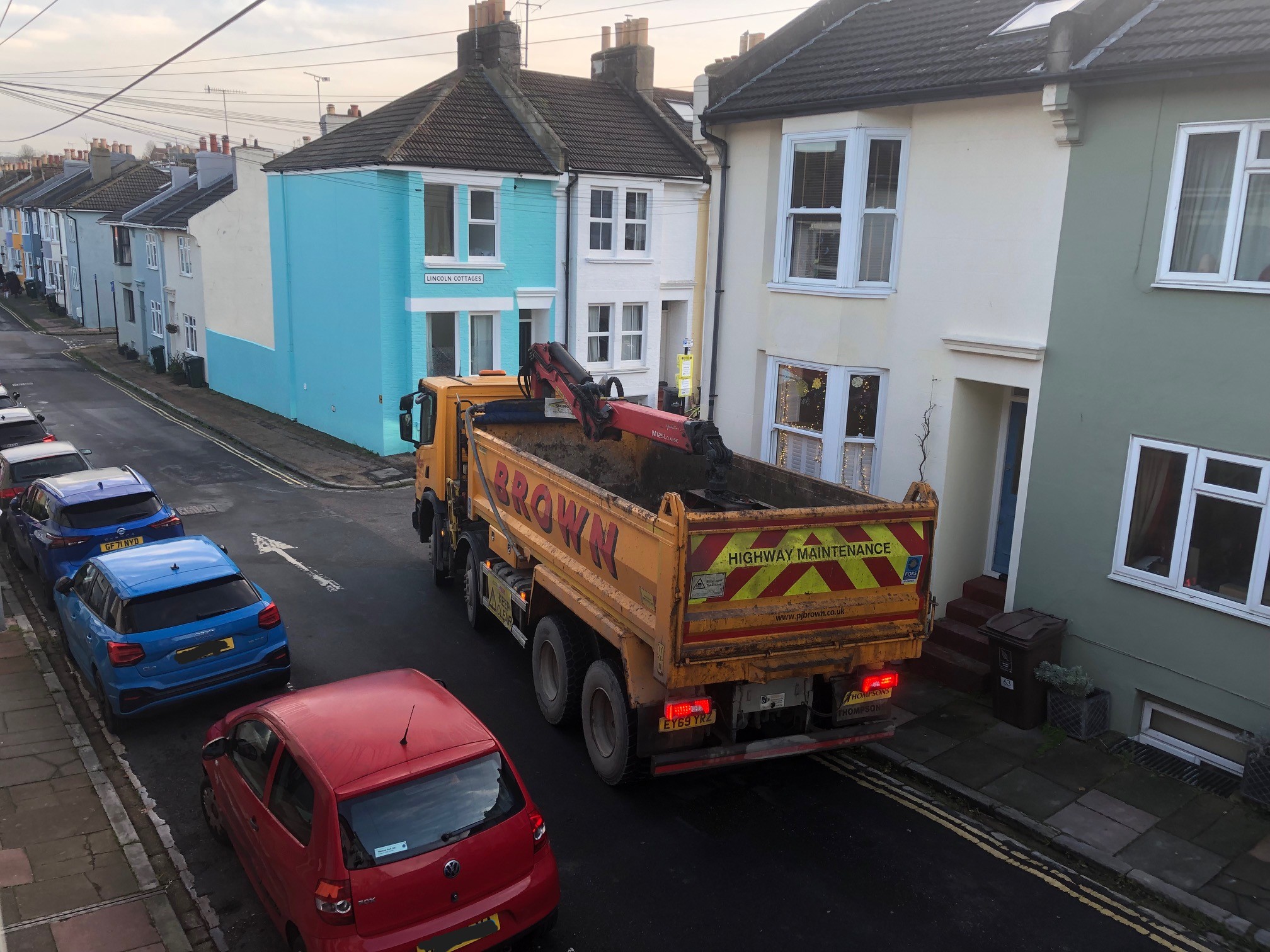
Eight townhouses are being built behind a colourful terrace in Lincoln Street, in the Hanover area of Brighton.
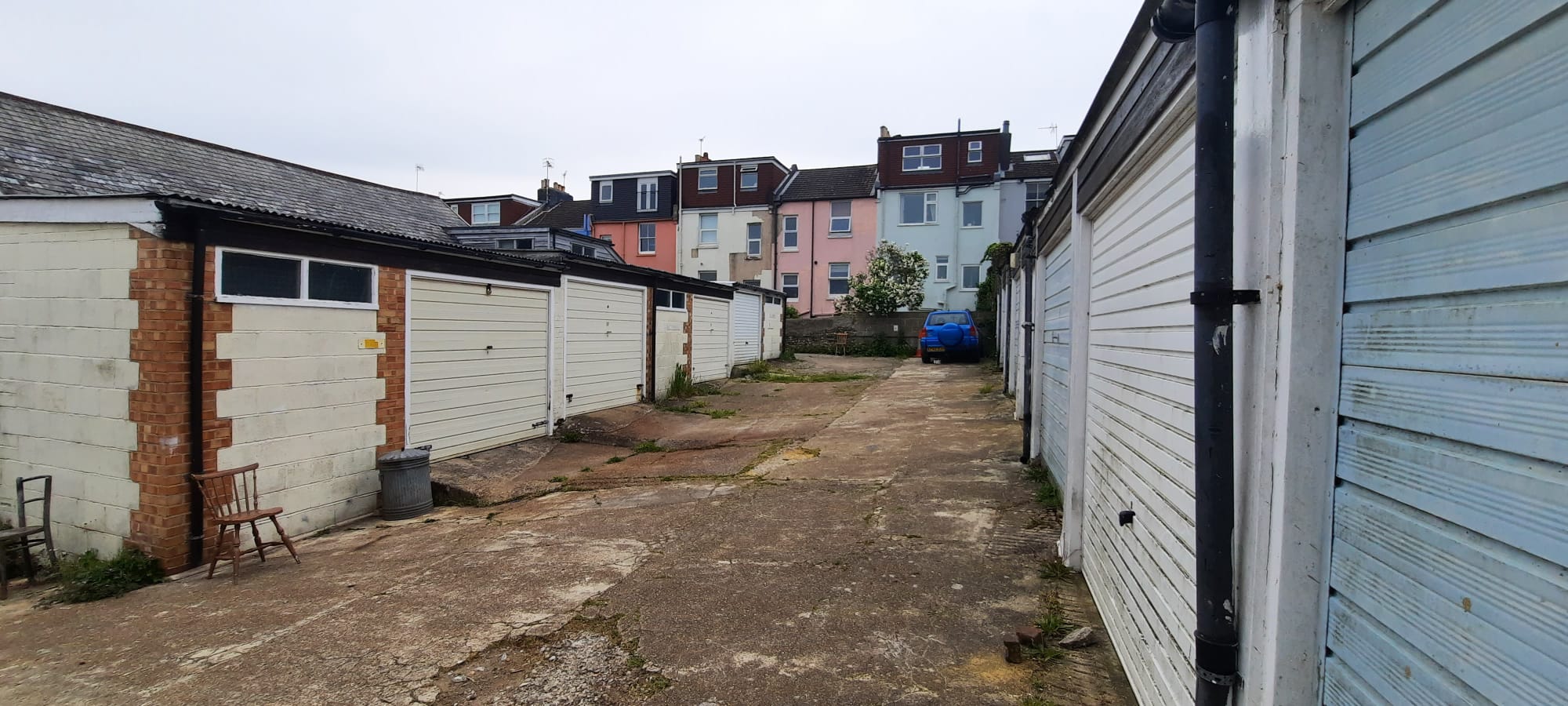
The site was a small open space, down a narrow alley, occupied for years by a few garages, before the building work started.
Although officially part of Lincoln Cottages, a cul-de-sac off Lincoln Street, it’s known to locals simply as “the back of the houses”.
The building work there is a small example of a construction boom in Brighton and Hove – a place where increasing numbers of people want to settle.
But hemmed in by the sea on one side and the South Downs National Park on the other, Brighton and Hove is a constrained location for housebuilding.
As a result, low-density brownfield sites have become prime targets for new housing, with planners, developers and the council all exploring how to build more homes to address increasing demand.
Council statistics reveal a significant shortage of social housing, with 7,500 households on the housing register and 1,800 people living in temporary or emergency accommodation.
And yet, with the drive to build more homes, members of the local community often feel their needs are not being taken into account.
The Lincoln Cottages scheme shows what can be achieved – even if it’s taken a few years during which a number of challenges have had to be overcome.
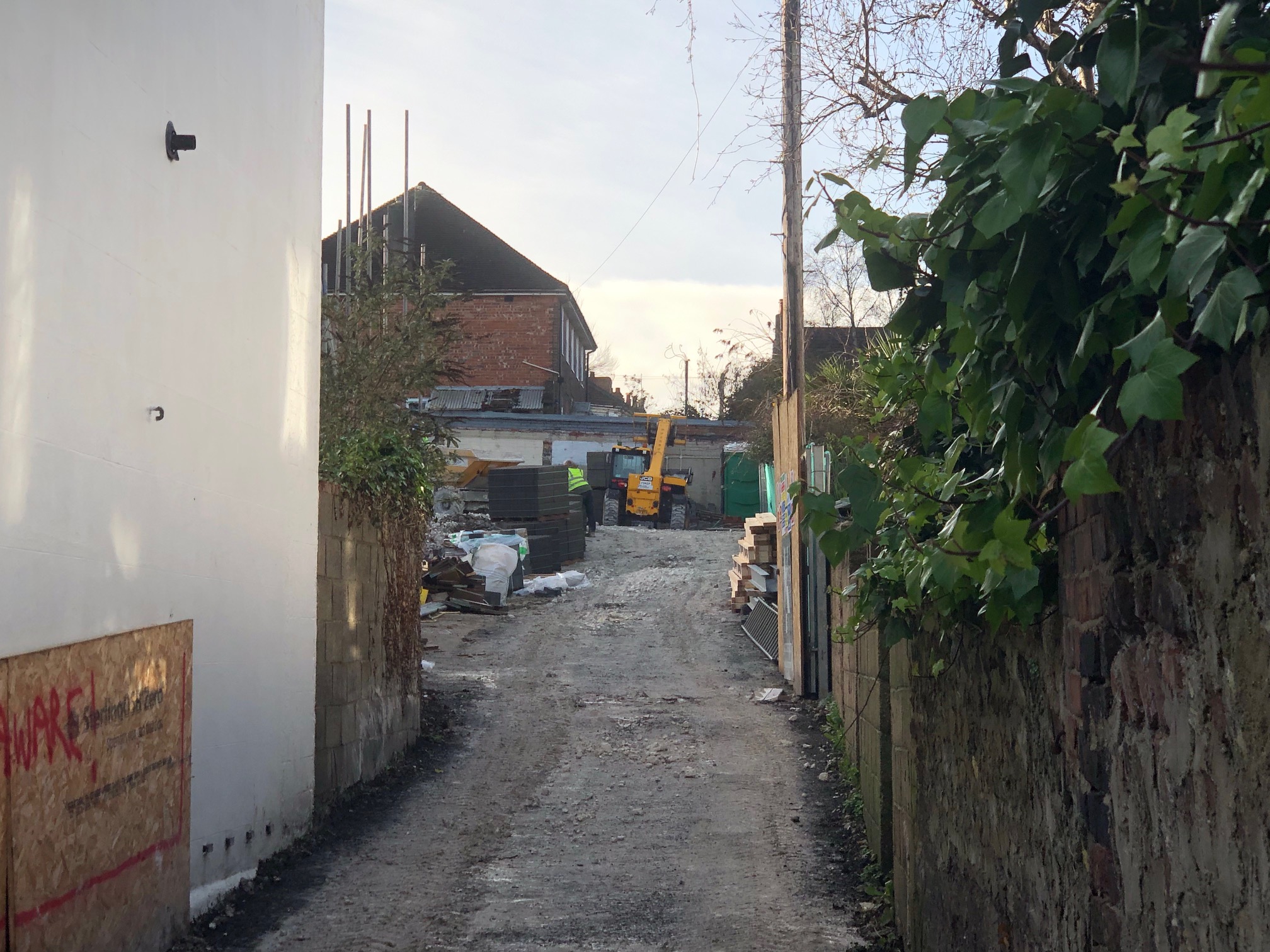
A London developer, Burlington Group, bought the garages behind Lincoln Street and submitted a planning application to use the space to build nine homes. This was later revised to eight.
From the start, there was a contentious relationship between the developer and the community. Residents felt the proposals would result in overcrowding, overlooking of their homes and an overall reduction in their quality of life.
One local business owner and community activist spoke about the struggles faced by the community.
She said: “It was terrible. They didn’t get this was a community. They didn’t get this was a sensitive area. They just thought they could barge in and develop.”
But the community fought back against what some said was Burlington’s blatant disregard for local interests. They filed easement rights applications, a legal move to protect existing rights over land.
The former Green Party leader and MP for Brighton Pavilion, Caroline Lucas, supported their application and echoed their concerns.
When the developer got wind of the applications, it responded promptly. Burlington owner Phillip Patrick came from London to visit the site personally.
One community campaigner said: “It was really intimidatory. He started filming us over our back walls.”
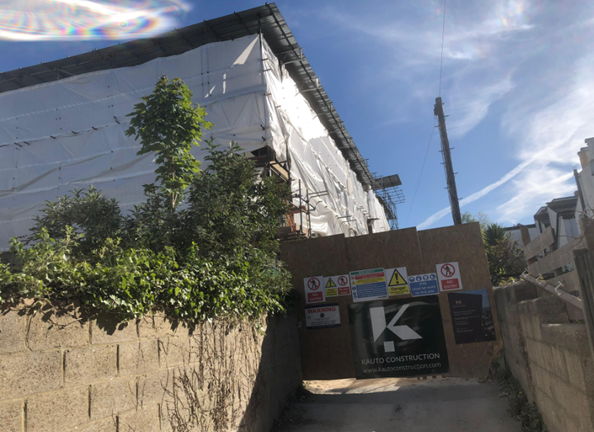
Eventually, Burlington abandoned the scheme, despite having obtained planning permission. It sold the development rights to construction firm Kauto Homes which has several projects in Sussex.
It’s not entirely clear why Burlington decided to sell the project, but one resident has a theory: “They hadn’t reckoned on this community fighting back.
“They thought they would move in, get their money and get out … but after two years of dealing with us, they possibly went ‘sod this’.”
The space at the back of the houses was something of a secret playground to some of the children in an area with one of the highest levels of housing density in the country
But to alleviate the pressure on Brighton’s housing market, every little space counts. Although not everyone believes that developers such as Burlington offer all the answers.

Georgia Wrighton, course leader for the master of science degree in town planning at the University of Brighton and a former Green Party councillor, said that the private sector alone could not solve Brighton’s housing crisis.
She said: “The private sector just can’t deliver the housing we need. It’s not in their interest to have a housing glut because the prices will go down and they won’t be able to sell.”
She said that the crisis could be tackled with more council housing and “being stricter with affordable housing requirements”.
Burlington Property Group was approached for comment.









Years of negotiations make developments like this unaffordable, next thing the hairy legged woman of hanover will be demanding they all be affordable houses, easier ways for developers to make money.