
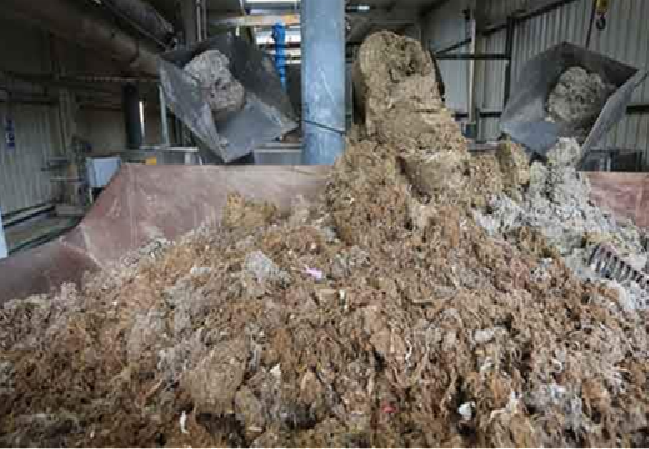
Water bosses have welcomed a ban on wet wipes containing plastic but warned customers not to flush any type of wet wipe down the toilet.
They said that even so-called “flushable” wet wipes snag in the sewers and combine with fat, oil and grease (FOG) to cause blockages which can then flood homes and businesses.
Southern Water said: “Around 1 billion wet wipes are removed from our sewer network each year in the south east, according to latest estimations from Southern Water’s dedicated FOG and unflushables team.
“If 1 billion wet wipes were stretched out, they would reach a distance of more than 111,000 miles – that’s 4.5 times round the earth.
“Or that’s around 4,500 tonnes of wet wipes, the equivalent to the weight of 30 adult blue whales.”
In Sussex, an estimated 330 million wipes were removed from the sewage system in a year – about a third of the total tackled by Southern Water.
The company said: “Wet wipes have become one of the biggest causes of sewer blockages. Between 2020 and 2025, they were behind 59 per cent of the blockages cleared at Southern Water – more than 91,000 incidents.”
FOG and unflushables manager Matt Collins said: “We deal with around 30,000 blockages every year, and a lot of these could be avoided if wipes and other non-flushables were put in the bin instead.
“Unlike toilet paper, wet wipes – even those labelled ‘flushable’ – don’t break down quickly enough. Instead, they snag in pipes and combine with fats and debris to form fatbergs that block sewers and overwhelm the system.
“From spring next year, it will be illegal to sell wet wipes containing plastic. This is a really positive step and one many of us in the industry have been hoping for.
“But from what my team and I see day to day, it doesn’t go far enough to reflect the scale of the problem.”
The ban on wipes containing plastic comes into force next spring but Mr Collins warned that so-called “flushable” wipes could create just as big an issue and could still cause blockages and flooding.
Southern Water said: “The consequences of this can be severe: flooding in homes and businesses, significant clean-up costs and lasting environmental damage.
“Across the industry, dealing with these blockages costs an estimated £200 million every year.
“But the damage doesn’t stop underground. Wet wipes are also a major source of visible pollution, with surveys finding an average of 20 wipes per 100 metres of UK coastline.
“Only flush the three Ps – pee, paper and poo. Simple habits like using the bin can make a significant difference.
“Putting wipes in the bin is a small action that protects homes, reduces costs and safeguards our environment.”






I find Southern Water blaming residents for their problems rather distasteful, considering how Macquarie (Southern Water’s owner) recorded an annual net profit of £2.8bn in 2023, up 10% on the previous year.
Agreed.
This article has encouraged me to go and purchase wet wipes and flush them on a regular basis, without using them.
If there’s anything we can do as a community to make Southern Waters’ lives harder, we should be doing it. Despicable company.
Aussie investment company, takes everything out puts nothing back only collects our Goverments % which is based on a daily rate and not on how water much you use, same formula for gas and electricity.
Standing charges are interesting. We don’t like paying them, wanting to only pay for what we use. But we expect our electricity, gas and water to be there where we want it, when we want it, whether it’s where we work, live or visit. That’s what the networks are there for. That’s what the standing charge is for. Having said that, there is one gas, one electricity and one water network, with no competition. On that basis the networks should be nationalised for the national good.
Martin Lewis just spoke on standing charges and why they are a tax on vulnerable people to select committee. https://www.youtube.com/shorts/22LVaaBE7Ek
Standing charges should be incorporated into the pricing, not all households use all of the networks at full capacity 24/7, it’s simple to calculate the the portion of standing charges in relation to how much you use, this system is just laziness without any fair system applied, if the daily rates were divided as per usage the Government would lose nothing and those being careful would see the benefits of sensible use while those who don’t care if they use more should pay more, petrol, diesel et al is paid for the same way, you pay duty and taxes on the amount you tank up, why should anyone pay more ?? families with 10 kids use all the gas, el, water networks more, it stands to reason they should pay more including the daily rate, use more pay more, use wisely see the benefits and pay less, simple maths is all it takes.
In a world with no standing charge to pay for our utility networks, what would happen if we all cut our consumption to near zero? There would be no money to maintain and develop the networks. The consequence would be that the networks would soon cease to exist as being safe and reliable.
As Stan was saying, you’d factor maintenance into the pricing. At the moment, standing charges disproportionally effect those of a lower income, especially those with lower usage. Means-testing is a far fairer metric than flat-rate standing charges, and flat-rates in general!
??? the standing charge would still be there, just shared as per usage, factored in per cubic metre that way the funding remains the same just fairer payments by everyone, I use ca 75 litres per day why should I pay the same standing charge as those that se 500 litres per day ?? with standing charges levied per cubic metre and NOT per household then that’s fair and equal plus the standing charges are still funded to the same amount just applied to usage. try calculating it, your water bill would be different but fair, same applies to gas and electicity. Government laziness and ignorance has caused this inequality, should be rectified ASAP.
Why don’t they just ban them altogether instead of fanny arsing about with ones with plastic in!
We lived without them beforehand and I’m sure we can again!
Ewww no!
I thought these were just for babies? I didn’t know they did ones for adults too. Are they bigger?
Wet wipes? My family goes through so many of them for loads of things. People, surfaces, cuts and grazes. They are a extremely useful product!
Crikey I have managed my decades without them. I shall have to try them out to see if they are useful.
Same! Until my Mrs forced me into reluctantly into using them, now I quite like the convenience!