The number of community groups opting out of glyphosate weedkiller treatments in Brighton and Hove has more than trebled since last year.
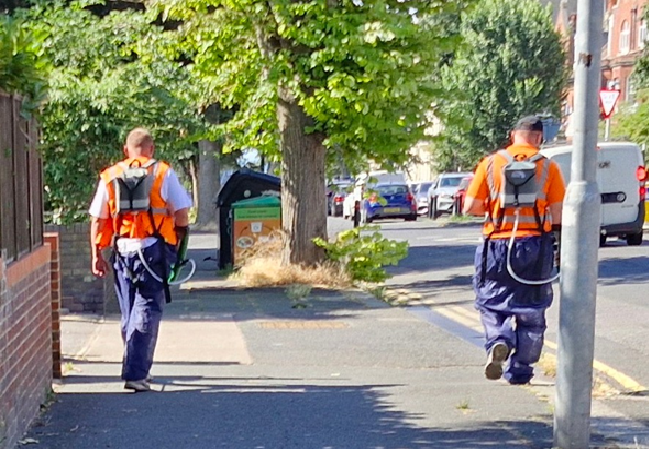
This year is the third year that Brighton and Hove City Council has used “controlled droplet” glyphosate, with 123 streets opting out of the scheme, up from 40 last year.
And the second phase of weed treatments this year are under way across the area.
Labour councillor Tim Rowkins, the council’s cabinet member for net zero and environmental services, revealed the details in answer to a question from Brighton and Hove Independent councillor Mark Earthey.
Councillor Earthey, who represents Rottingdean and West Saltdean, wanted an update on whether the glyphosate programme was controlling weed growth and details about the council’s future weed control strategy.
Last year, the council carried out three full treatment cycles with glyphosate, sold commercially as Roundup. It was sprayed directly on to specific plants in an oil solution.
This year only “hot-spots” will receive three treatments. Eleven roads were originally listed as hot-spots but removed after the community opted out from spraying.
For a map of hot-spots and opt-out streets, click here.
He said that the council’s objective of containing weed growth while minimising glyphosate use through the controlled droplet method, had been met.
Before the council stopped using glyphosate in 2019, with cross-party support, workers used to spray the weedkiller along pavements from the back of quadbikes.
Councillor Rowkins said that a third treatment was being carried out in “hot-spots” – known problem areas such as the length of the Old Shoreham Road including the central reservations.
He said that the council’s objective of controlling weed growth while minimising glyphosate use through the controlled droplet method had been met.
Two trials were also taking place, using a hot foam treatment and an e-weeding machine.
In his response to Councillor Earthey, Councillor Rowkins said that a new policy paper would be coming out later in the summer.
Councillor Rowkins said: “Unlike most other councils, we continue to use the much more targeted controlled droplet application method to make sure glyphosate is only used exactly where required and only in quantities necessary.
“We have reduced treatments to two main cycles this year, down from three in 2025, but with additional hot-spot treatment for known problem areas.
“This year we’ve also continued trialling alternative methods – including using a brand-new type of electric weeding machine in some areas – and we’ll be assessing the effectiveness later in the year.”
Councillor Rowkins, who is also deputy leader of the council, added: “In the meantime, our thanks go to everyone who has helped tackle weeds in their neighbourhood.
“It has been brilliant to see so many people so keen to do something positive for their community and to help us continue to improve the look and feel of our city.”






That’s a neat map!