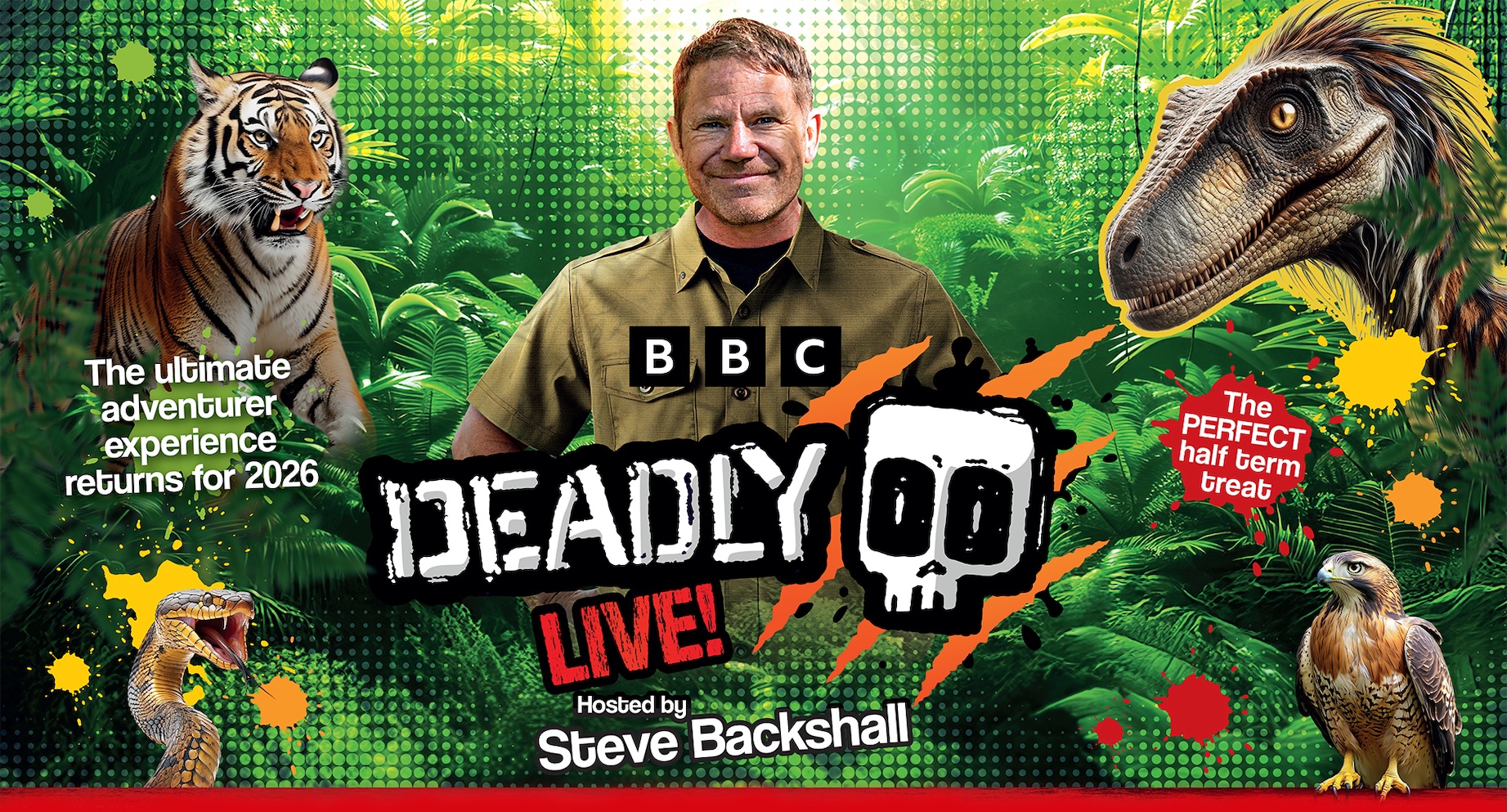
During his time as presenter of the CBBC show Deadly 60, Steve Backshall has been bought to tears by bullet ants, narrowly avoided becoming a Great White’s dinner and lost a chunk of finger to a hungry piranha.
His adventures have inspired, informed and entertained youngsters for almost 20 years. And, although those early audiences have grown up and moved on, the enthusiasm for the format, if Brighton Centre’s crowd is anything to go by, remains as effervescent as ever.
Backshall brings the same energy and passion to the live show as he demonstrates on television and the atmosphere in the rather cavernous Brighton Centre has many a young fan leaping out of their seats.
There are specific logistical challenges when transferring a show such as Deadly 60, which is shot on location around the world with some of the world’s rarest and deadliest beasts, to a live arena setting.
One of the reasons for the TV show’s enduring appeal is Backshall’s, and his intrepid crew’s, up-close encounters with wildlife, often finding himself in perilous situations, face-to-face with predators.
Even if it were possible to bring Anacondas and Orcas to the stage, the use of animals in live shows is no longer considered ethical, and rightly so. This does, however, pose a question: can the Deadly team conjure up the same magic without the ‘stars’ of their show?
The team has cleverly circumvented the problem by concentrating on prehistoric predators.
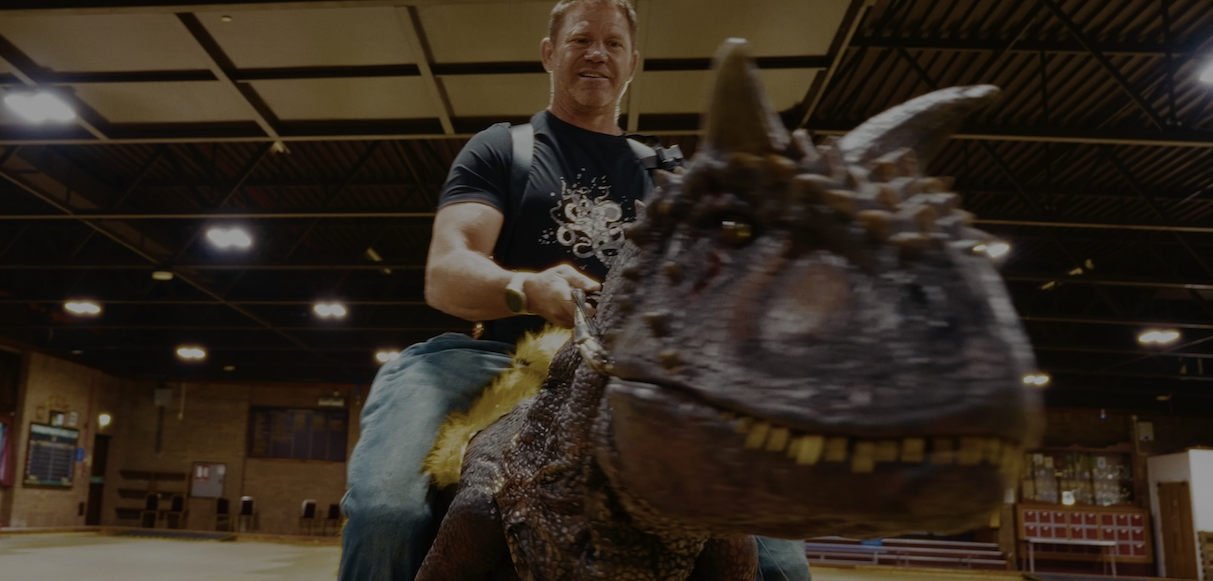
Backshall takes the audience from the dawn of time through to the Ice Age, stopping at key points in Earth’s ecological journey to explore the deadliest creatures to have inhabited the planet, alongside their closest living relatives.
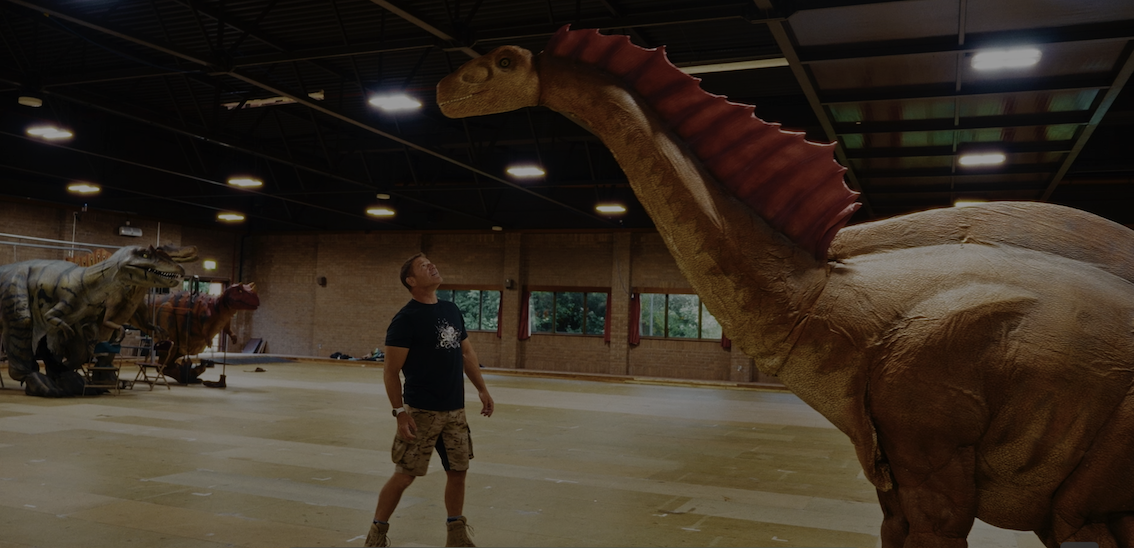
Using animatronics, inflatables and models, Backshall demonstrates the size and power of an extraordinary range of creatures, from the Giant Squid to Utahraptors, Woolly Mammoths and Sabre-Toothed Tigers.
It’s hard to keep a room full of youngsters entertained for two hours, but the team know their audience well and, as a result, the show, like the young crowd, doesn’t stand still for long.
The show moves at cheetah speed, fun facts punctuated with plenty of slapstick and poo jokes.
Audience participation is actively encouraged with questions thrown out to the crowd, a thermal imaging camera lighting up our temperature and the ‘deadly’ team ensure we all receive a good drenching in ‘venom’.
Backshall is accompanied on stage by a camera operator, replicating the Deadly 60 format. At times he speaks directly to camera, with footage appearing on the large screen, bringing pace and variety to the performance.
He has a self-deprecating charm and is more than happy to be the butt of the joke. At one point, getting covered head to toe in dinosaur diarrhoea – a novel way to take the show to the interval.
There are a couple of ‘behind you’ moments which are lapped up by the young crowd, but they are used sparingly enough to prevent the show descending into predictable pantomime clichés.
Plenty of gags stem from his misadventures in the wild, but it is clear that Backshall still revels in what has been an extraordinary career.
His knowledge and love of the natural world are more than matched by an audience made up largely of primary-school-aged children and their parents. This is a crowd that knows its stuff. When Backshall throws questions out to the audience, a roar of children shout back answers, demonstrating frankly impressive knowledge of everything from Titanoboa to Tarantula Hawks.
Backshall has to be on his A-game. You get the sense that he would rather put on a pair of bullet ant gloves than misidentify a Utahraptor and risk the wrath of his dedicated audience.
There is a raw enthusiasm for the natural world, shared by Backshall and his audience, that is genuinely lovely to experience.
For environmental educators, there is a difficult balance to strike amid today’s doom-laden headlines. How do we speak honestly to children about the challenges facing the natural world without terrifying them?
The Deadly Live! team navigate this skilfully. When the show touches on darker themes, Backshall’s infectious optimism quickly shifts the focus towards more positive possibilities.
In a thoughtful and hopeful closing monologue, he gently acknowledges the problems facing the planet while encouraging his young audience to become part of the solution.
It is moving to hear Backshall communicate respectfully and sensitively to his young fans, he is clearly aware of the unique responsibility he has to them and the natural world. Never patronising, he speaks to them as future conservationists, scientists and activists.
This is an uplifting way to end a show that manages to entertain, educate and, perhaps most importantly, leave its audience feeling that there is still plenty worth fighting for.
Find more arts and culture reviews at Brighton & Hove News – Follow @BHCitywhatson
and @bhcitynews on Instagram. Covering everything from fringe theatre to major tours
across Brighton & Hove – tag us if you’re going!
#WhatsOnBrighton #BrightonandHoveNews #Brighton #BrightonTheatre #BrightonArts
#BrightonHoveNews