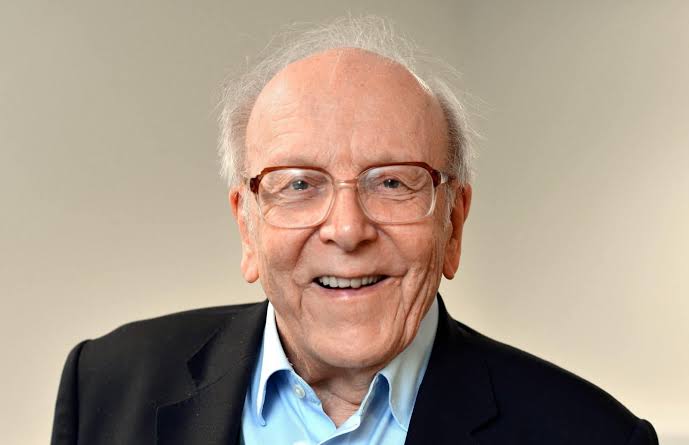
Tributes have been paid to cardiologist Douglas Chamberlain, with one saying: “He didn’t just save lives. He transformed how we save them.”
Professor Chamberlain died on Thursday (22 May) at the age of 94, having spent most of his career working at Royal Sussex County Hospital, in Brighton.
But his reach was worldwide and – as the father of the paramedic profession and a pioneering teacher of life-saving techniques – he became something of a hero to patients and even fellow professionals.
A&E consultant Rob Galloway, who works at the Royal Sussex, said that he was “the most inspirational of doctors I’ve ever met”.
Professor Galloway said: “There are countless that owe their life to him but he was so humble he would never recognise that.
“He was the definition of a hero and legend to so many of us. The world is a better place because of him.”
Consultant paramedic Jaqui Lindridge, from the South East Coast Ambulance Service (Secamb), said: “Secamb is very proud and is fortunate to have had an extremely close working relationship with Professor Chamberlain for many years.
“He will be remembered extremely fondly by colleagues past and present.
“Douglas’s work in the early 1970s led to the birth of the UK paramedic profession in Brighton, as the first ‘ambulance men’, who had been selected for additional training by him, began to respond to patients equipped with the first ambulance defibrillators.
“We would like to pay tribute to Douglas for his tireless work over the decades in striving for better outcomes for people suffering cardiac arrests in the community.
“A large portrait of Douglas takes pride of place at our Make Ready Centre in Brighton, Chamberlain House, which was opened and named in his honour in 2020.
“It is clear that Douglas’s legacy will continue to inspire colleagues in Secamb and beyond and we thank him for his dedication and expertise in improving pre-hospital cardiac care.”
A petition has been started on Change.org for a statue to honour “a hero of emergency medicine”.
The supporting text from Chelsea Lowe said: “He didn’t ask for permission to train the first paramedics. He didn’t worry about the personal or professional ramifications. He just recognised a need and he did it.”
The idea wasn’t popular with everyone but it was inspired by his own experience, as the petition said: “It’s 1970 – Brighton. Doug is doing what consultant cardiologists do, conducting a home visit to see an NHS patient and do some cardiac studies in their lounge.
“Unfortunately, mid-examination his patient goes into sudden cardiac arrest … so he starts CPR (cardio-pulmonary resuscitation) and tells the patient’s wife to call for an ambulance.
“At this time this meant a couple of ambulancemen from Brighton Ambulance Service but what Douglas needed was a portable defibrillator.
“After much delay and confusion over this request, two ambulancemen eventually arrived and (carrying the giant device between them) plugged it into the mains.
“The unit exploded and then caught fire, the patient died and Professor Chamberlain summarised the situation in the usual NHS understated way: ‘We ought to be able to do better.’”
He then started training ambulance crew, nurses and fellow doctors and then others in resuscitation techniques and emergency first aid with an almost missionary zeal.
Professor Chamberlain helped to refine and spread the techniques of resuscitation and the training of professionals and the public, going on to write and edit books on the subject.

The petition added: “The last patient Douglas treated was in 2016 when, while taking tea at the Hove Rotary Club, he saw a fellow member collapse.
“Much like 1970, Douglas arranged for an AED (automated external defibrillator) to be fetched, had someone call 999 and (now in his eighties) started CPR.
“He achieved ROSC (return of spontaneous circulation) before the first ambulance crew arrived and remarked that he was glad this one had not exploded.”
He was made a CBE (Commander of the Order of the British Empire) in 1988 and an honorary Doctor of Science (DSc) by Sussex University in 1989.
The Change.org petition concluded: “This man deserves a statue in Brighton.”
The reasons for a statue included
- To stand tall in the city where lifesaving history was made.
- Because he didn’t just save lives. He transformed how we save them.
- Not just for what he did but for every life that’s still being saved today. A legacy that is written in every life that emergency care has touched.
- Because what he gave us can’t be measured but it can be remembered.

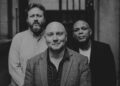




There’s not a paramedic out there who doesn’t know about the legend that is Douglas Chamberlain.
A lovely man, who leaves a wonderful legacy.
It is with huge sadness that The Sussex Heart Charity learned of the recent passing of its founder Prof Douglas Chamberlain, CBE, OStJ, KSG (21st May 2025); a renowned cardiologist who created the first paramedic unit in Europe.
An Honorary Advisor to South East Coast Ambulance Service NHS Foundation Trust and London Ambulance Service NHS Trust; Douglas worked at the Royal Sussex County Hospital between 1970 and 1991 as a Consultant.
When Douglas arrived in Brighton from the very beginning he was keen to start work to open a cardiac department (which did not exist); there were six acute hospitals at the time but none of them had dedicated cardiac facilities. The Royal Sussex County Hospital was in the process of opening an Intensive Treatment Unit (ITU) and Douglas was given a small area for the first four Coronary Care beds; opening a clinic to offer specialist treatment.
In 1979 Douglas was joined by Dr Richard Vincent, the clinic had become a department. Wonderfully kind patients wanted to pay for the specialist care and services they received and ‘The Cardiac Department Discretionary Fund’ was set up, the fund was used to buy equipment and support the growth of the department even further.
The discretionary fund was also able to support other areas of cardiac care including local research and community resuscitation training programmes, one of these was ‘Heart Guard’ the second of its type in Europe. By 1984 over 20,000 residents had been trained in basic life support and were also given access to defibrillator familiarisation sessions – to better understand their huge importance in saving lives.
In 1987 ‘The Cardiac Department Discretionary Fund’ was incorporated (with the help of former patient/trustee and friend – Mike Long) as a charitable company and called the Brighton Heart Support Trust. The charity funded Automated External Defibrillators (AEDs) on two railway stations, we believe that these were the first two publicly accessible defibrillators in Europe (which led to the county wide SHC partner project of railway defibrillator installation from 2015/16).
The Brighton Heart Support Trust continued to fund innovative equipment, research and training programmes within an ever-increasing radius and as a result started to fund projects outside the immediate vicinity of Brighton; in 2006 – The Sussex Heart Charity was formed.
I got to know Douglas joining the board of trustees back in 2006 as a local business owner – advisor, working as a volunteer directly with CEO Terry Ayres in the office and at events. I was asked to consider joining the board by Terry; becoming a trustee in 2010, when Douglas was still on the board of the charity he founded. To this day I remember very well his cheeky, intelligent, and charming chastising! I will miss him terribly.
All of us at The Sussex Heart Charity know words can’t take away the hurt the family are feeling, nevertheless all of us who knew Douglas and I am sure I speak for past patients, colleagues too – want you to know how much we all care; the entire board of volunteer trustees, staff – cardiac patients across Sussex and their families. We send the entire family love and strength in this time of loss.
Jason Palmer
Former Trustee and Chair; Charity Ambassador
The Sussex Heart Charity (SHC)
Just heard the sad news that Douglas Chamberlain has died — an extraordinary man and groundbreaking consultant cardiologist, I interviewed in 2020 for The Crucible project which explored 200 years of hospital history in Sussex – of (what is now) uh sussex hospital.
It’s said that when a person dies, a library is lost. That’s why I think oral history is so important — it preserves voices, experiences, and knowledge that might otherwise disappear. A few other contributors to The Crucible have since passed away, which only reinforces why this work is important.
Douglas was in his 80s when we met, sharp as anything, with a mischievous gleam in his eye. I feel really fortunate to have captured his reflections just before the pandemic.
You can hear his story here:
https://thecrucible.org.uk/care/#item-modal-douglaschamberlain
One of my residents in Hove Park who’s always been a pleasure to work with. RIP Professor Chamberlain