
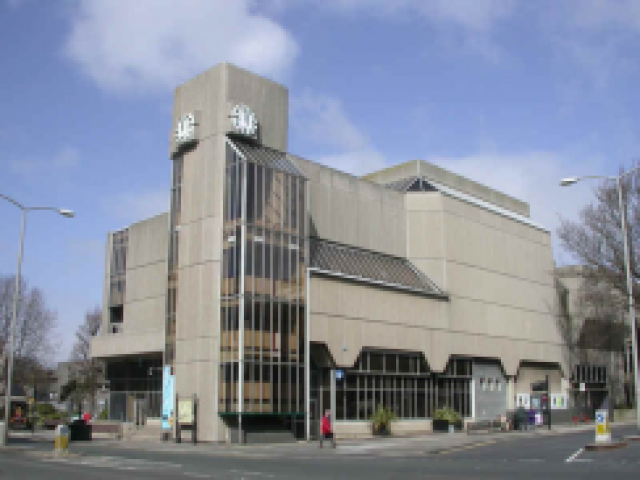
The council is too slow to respond to too many freedom of information (FoI) inquests, according to opposition leader Steve Davis, who also said that staff felt nervous and under pressure to withhold information.
Official figures showed that replies are late in more than a quarter of cases, the Green councillor told a Brighton and Hove City Council meeting.
Councillor Davis spoke out after seeing an FoI request about the council’s performance in responding to questions.
He said that the most recent figures, for the first quarter of the 2025-26 year, showed that 74.2 per cent, or 417 out of 561 cases, received a response within the statutory deadline.
In 2024-25, the council recorded its best performance since 2020, with 90 per cent of cases dealt with within the required time.
But the Information Commissioner’s Office said that a compliance rate of under 90 per cent was “unsatisfactory”.
One reason given for the poor performance in the first quarter of last year, the report said, was a “nervousness around releasing certain information, leading to pressure on the team to agree exemptions”.
The FoI response said that a “culture shift” was needed towards “greater confidence in sharing information and accepting managed risks”.
Other issues raised in the report suggested that FoI staff did not have enough time to engage with records management staff, plus long-term sickness and a vacancy in the information rights team.
Councillor Davis said: “In the council leader’s former role before entering politics, she once said: ‘Without FoI requests, decisions on what to publish will lie with those in power – those with a vested interest in keeping politically embarrassing, contentious or damning information out of public hands.’
“Hopefully, you will agree that it is wrong for FoI officers to be put under pressure by others within the council to agree exemptions in the way suggested and worrying that there is a culture of nervousness around releasing certain information.
“What steps will the administration take not only to address resourcing issues in the FoI team but to encourage openness and transparency from the council and to remove the nervousness and pressure FoI officers say they face when responding to FoI requests?”
Councillor Sankey agreed that she was a “proponent of freedom of information in her previous life when she campaigned to maintain the legislation”.
She was previously director of Detention Action, deputy director of Reprieve and director of policy at Liberty (the National Council for Civil Liberties).
She was unaware of the resourcing issues in the FoI team, she said, and would look into them.
Councillor Sankey said: “We as a Labour group are very supportive of transparency and openness.
“That is why we recently commissioned a report into the failings that led us to invest in the i360 under the previous Green leadership of this council.”
She urged the Greens – and in particular the Green chair of the council’s Audit, Standards and General Purposes Committee – to consider the i360 report to ensure “the public have full transparency and openness when it comes to that critical decision”.
She said that staff health and wellbeing were important and she was not aware of any undue pressure being put on staff in the FoI team but added that she would look into it.








If Cllr Sankey was unaware of pressures on the team, then she her Cabinet colleagues should have been flagging the issues to her. Or she should have been actively asking questions herself about an issue she is so passionate about.
Back in January, at the People and Overview Committee, Cllr Allen confirmed that the Information Rights team were holding vacant posts as a deliberate savings measure – this is recorded in the minutes. The council’s own internal governance reports, released under FOI, show that the Cabinet Member responsible for performance was formally briefed on the compliance figures back in July 2025. It is extraordinary that the Cabinet member appeared to never have follow-up given the collapse in performance.
Against this backdrop, it’s perhaps not surprising that the council has now had thirteen ICO decision notices in the last year alone, the majority finding a breach. A quick look through the website ‘what do they know’ shows substantial number of overdue cases – like the one about tennis courts at Withdean, where the council took nearly seven months to respond at all, then relied on a cost exemption claiming around 1,500 emails needed review, and still haven’t responded to the internal review response a year after the original request.
Given her commitment to transparency, maybe Cllr Sankey could commit to regularly publishing the FOI response rates from the council? It is something other public bodies – including local councils – already do. Proactive publication would avoid the need for FOIs like the one that was asked on 14 May asking how many FOIs were currently overdue and which ironically is currently 31 working days overdue (against 20 working day statutory deadline).
The FOI disclosure log exists and is publicly accessible.
The FOI disclosure log is not a complete record. As it says on the page itself, it only includes responses ‘of wider public interest,’ at the council’s own discretion, and it specifically excludes cases where an exemption was applied. In other words, it’s designed to exclude exactly the cases that would show how the council is using exemptions, which was itself one of the concerns the Information Rights team raised internally. It therefore gives no indication of overall compliance.
While not a comprehensive list, the ‘what do they know’ website gives a much richer picture. For instance, the case I mentioned above on Withdean does not appear anywhere on the disclosure log. Reading the decision notices from the Information Commissioner, the majority of which go against the council, is also illuminating.
The quarterly publication and debate – often in a scrutiny or audit committee – of some basic freedom of information statistics is something many other councils do, and would have flagged up these performance issues proactively. It would also have avoided these issues coming as a revelation to Cllr Sankey when raised by opposition councillors.
Whatdotheyknow is even worse; as it only records elements done via the website, and requires users to update the status, so isn’t a good method to make assertions from.
Both sources are selective in their own way. What Do They Know only includes requests made via the site rather than directly to the council, so it’s not a complete record of every FOI request BHCC receives either.
That said, for getting a genuine sense of performance, it’s the better of the two. It publishes the complete correspondence for every request made through it, both what the requester wrote and the council’s actual responses, regardless of whether the council would otherwise choose to publish it. The disclosure log, by contrast, only includes cases the council itself judges to be ‘of wider public interest’, and specifically excludes cases where an exemption was applied, which is exactly the category that would show how the council is using exemptions.
To be clear, I’m not making assertions based on status labels attached to cases by users. I’m going by the actual text of the questions and responses, which I’ve read myself, along with my own knowledge of how the FOI Act operates in a public authority.
But neither source is a substitute for the real thing. Which is precisely why proactive publication of full performance statistics, something a number of other councils already do, matters. It would give a complete picture rather than relying on either a self-selecting sample of requesters or a curated council log.
Genuinely curious, can you think of any good reason the council shouldn’t be transparent about its FOI performance?
With respect, this isn’t about me. So, you’ve consistently asserted the council’s FOI performance as “testing the limits” of the Act, but the data doesn’t support this. With 13 ICO decision notices against approx 9,600 FOI requests in 2026, we’re looking at a compliance rate of over 99.8% – hardly evidence of systemic non-compliance or “testing limits” as you’ve claimed. I also find it highly unlikely you’ve read anywhere near 9,600 requests, each with multiple messages, and responses.
‘With respect’ usually signals the opposite is coming, so let’s stick to the substance. I note that you are, again, deflecting a direct question. I find it notable that you don’t want to offer an opinion on whether there is any good reason the council shouldn’t be transparent about its FOI performance, when you are so willing to share your opinions on other topics.
Let me first correct your maths. The 9,600 requests in a year is wrong. The council’s own data shows roughly 2,000 requests a year, not 9,600. It looks like five or six years’ totals added together.
You also appear to have misunderstood the role of the Information Commissioner and decision notices. They aren’t a measure of compliance, they are the final step in a formal escalation process that most requesters never take, someone has to notice their request was mishandled, request an internal review, be unsatisfied with that, and then complain to the ICO, which then investigates.
They are a serious matter, and many councils won’t have one in a year, let alone 13.
Before a council gets to a decision notice, it has a chance to get it right at response stage, again at internal review, and the ICO typically tries to resolve things informally before issuing a formal notice at all. If a council then fails to comply with a decision notice itself, the ICO can refer the matter to the High Court to be certified as contempt. Decision notices are a sign things are going very wrong, well before it ever reaches that point.
And the key figure isn’t in dispute, only 73% of requests were replied to on time in 2025/26, the worst of the last six years and well below the 90% timeliness benchmark the ICO expects of public authorities. Transparent reporting would help all councillors address this, as would a clear message from the leadership that transparency and accountability is important.
LLMs have a really bad habit of claiming things that didn’t happen and changing the goalposts when it’s wrong. So I’m going to keep challenging this idea that “limits are being tested” as being objectively wrong. Again, with respect, I think you have to concede that this is not a fair or accurate characterisation.
Your correction is incorrect I’m afraid, because we can test this with simple maths. I stuck to 2026, but if we go the previous 12 months. The disclosure log shows 1138 pages for that period, each with 20 requests: 1138 × 20 = 22,760. And we have both agreed this is likely not all of them.
This makes my point even stronger, because even using the highball figure of 13 notices, that’s only about 0.057%. That’s not limits being tested by any creative measure.
I’m not using a large language model for this Benjamin – although I do sometimes find them useful. I just really am this much of a geek when it comes to freedom of information requests.
Fortunately we don’t need to test this with ‘simple maths’ as you put it. We can just read the actual internal report on FOI from the council which was published in response to an FOI request. That shows that:
– in 2023/24 there were 2040 FOI requests (170 a month)
– In 2024/25 there were 2049 requests (171 a month)
– In 2025/26 there were 2094 requests (174 a month).
I’ve had a look at the disclosure log, which for the reasons I mentioned above is incomplete, and I think I’ve worked out the error you made. You’ve put a year timeframe into the disclosure log and it has said there is a total of 1138. Your error was that you thought that this was the number of pages, each with 20 entries, rather than the total number of entries on the disclosure log – which is what it actually is. So you’ve incorrectly calculated a number of cases which is 20 times the actual number on the log. Maybe if you had clicked on the links rather than just looked at the summary you would have realised you had made a basic error confusing entries and pages.
Just to be more helpful, if you put ‘freedom of information performance’ into the search bar on the disclosure log then you can find the figures for yourself. It is page 29 of the third attachment.
Of course this would all be simpler if the council proactively published quarterly figures.
To be honest, it’s pretty obvious you rely on it a lot to generate your comments, which is a real shame, because you do genuinely produce interesting insights, which gets a bit lost in LLM translation.
Anyway, that aside…I did certainly misread the log, I’m gonna put that one down to the heat. 1126 entries over the past twelve months from today. However, it doesn’t detract from my point that “limits have not been tested” as you’ve insisted, because that’s still only 1%.
So once again, even despite my slip, I think you still have to concede that your claim remains an unfair and inaccurate characterisation.
Cllr Sankey had to deny any knowledge of anything as acknowledging the issues put her Career at significant risk, being open honest and transparent now would mean she has already broken the Nolan principles and more.
They find excuses not to answer most of them. Council Leader Sankey seems to think the law doesn’t apply to her administration. Or worse still, they can make up the law as they go along.
No they don’t, lol.
The ‘plastic barrister’ doesn’t seem to have received the memo. Many good council staff who tried to abide by the rules have allegedly now left owing to continual interference in being allowed to do their jobs properly.
That’s not an answer. You said that they “make up the law as they go along”, that’s clearly untrue. Trying to change the goalposts doesn’t work on me James, you should know this by now.
The Council under Cllr Sankey’s leadership does seem to be testing the limits of the Freedom of Information Act, and is now regularly having to be corrected in that interpretation by the Information Commissioner, of the thirteen decision notices issued against the council in the last year, ten were upheld or partially upheld.
It’s worth noting that while the council’s internal governance reports don’t describe anything as extreme as ‘making up the law’, they do describe a real problem: officials wrote that there is ‘nervousness around releasing certain information, leading to pressure on the team to agree exemptions,’ and separately admitted the council has been ‘too accepting of exemptions.’ That’s the council’s own assessment of itself, not an outside claim.
It’s also worth noting a pattern in some of the more delayed cases. Withdean, for instance, took nearly seven months for any response, and the correspondence at issue involves named councillors directly. That’s not proof of anything on its own, but it’s consistent with what the internal reports describe around internal pressure. Having spent some time looking at the pattern of exemptions, delays and responses, it does seem that the council has some way to go if it wants to actually be open and transparent.
The internal reports you reference actually acknowledge challenges around resourcing and staff confidence, not deliberate obstruction. You have generated an argument against yourself in trying to characterise that the council is “testing the limits”.
13 notices in 9,600 FOIs this year is 0.14%
I’ve already addressed the 9,600 figure above – it’s wrong by a factor of about five – and any decision notices at all, let alone 13, should be raising serious concerns. It is good that the experts in the Council have been trying to raise the increasing number of referrals as a concern although it would appear they have struggled to get traction.
On resourcing versus obstruction, the reports don’t describe only a resourcing problem. In the council’s own words ‘nervousness around releasing certain information, leading to pressure on the team to agree exemptions’ and, separately, ‘we are being too accepting of exemptions.’ Neither of those is a staffing issue, they’re about how and why exemptions are being applied. You can’t characterise that away as ‘just resourcing’ when the council’s own internal reports specifically distinguish it from resourcing.
Your correction is not accurate, as I have explained above. Neither have I claimed it is a staffing issue, that’s a hallucination, nor have I ever characterised it as “just resourcing”, that is unfortunately another hallucination. Please try not to rely on generation too much; you genuinely make good points without it.
Benjamin – my correction was entirely accurate. Do see my detailed response above.
I think we can all read the direct quotes from the FOI team and see that they were being put under pressure to agree exemptions and not to publish information. Where that pressure was coming from is less clear.
Again, I’m afraid it is not accurate. I’ve clearly defined the figures. And again, you’re arguing a completely different statement to what I challenged you on.
*I’ve clearly defined why this doesn’t materially change the figures. – Christ, my writing is poor today!
“That is why we recently commissioned a report into the failings that led us to invest in the i360 under the previous Green leadership of this council.”
No Ms Sankey. You commissioned this report at unknown cost – foi anyone? to stitch up the Greens.
Tell the truth.
Absolutely.
The reports that the council commission have the scope set out by the Labour administration so is it no wonder that:
– the i360 report Bella talks about doesn’t go far back enough to look closely at her party’s failures. It all began in 2006 when Labour championed the project, it was given planning permission on their watch and they even changed national legislation about what could be built at the site. When reports are commissioned by a political party of one persuasion, and they erase relevant periods of time when their party previously controlled the council and led on decision-making, it is the opposite of being transparent imo.
– likewise, New England House the council are closing, the internal audit into that only went back as far as 2020, despite the catalogue of disrepair going back for at least a decade before. Again, why did Labour set the scope of the audit to start at a point when they weren’t controlling the council.
– and as for City Clean, why have Labour never been interested in investigating the “political interference” that happened during their earlier time running the council, especially when the KC was of the view that it hampered improvements for so long. To date I’ve seen no Labour councillor ever confirm whether the council has made any attempt to get to the bottom of the KC’s comments that “A number of witnesses indicated that there were close links between the Labour administration and GMB reps within the Council and concerns were expressed to me that highly confidential information passed between the administration and GMB reps within the Council.”
Until Labour councillors take responsibility for their role in failures, poor-decision making, and in some cases, inaction (like NEH), it’s a case of “mock transparency”. Doing a report is meaningless unless the scope of the report is a genuine attempt to understand the problem, rather than a way to lean findings in one direction for political point scoring.
Cathy B. “It all began in 2006 when Labour championed the project, it was given planning permission on their watch and they even changed national legislation about what could be built at the site.”
No wonder Ms Sankey didn’t want THAT mentioned in the report if Labour changed the actual law in order to facilitate the building of the i360 on that site!
The report into the Greens’ failures re the i360 – doubtless to discredit them before the next election – does seem to have backfired on her somewhat