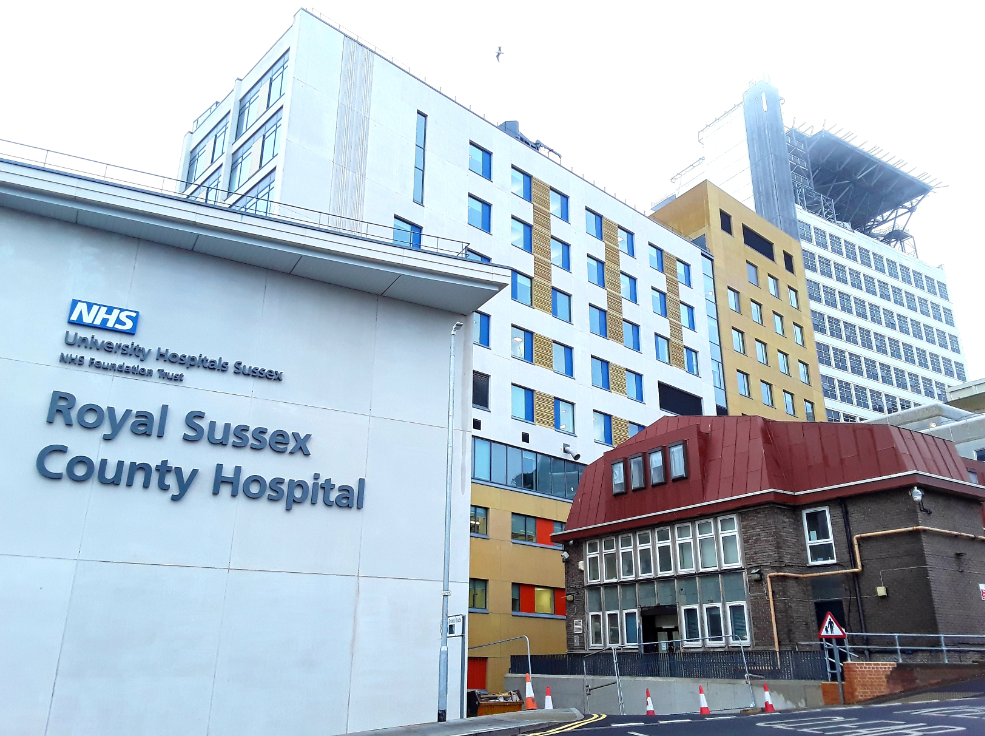
Hospital trust chief executive Andy Heeps said that maternity and neonatal staff were making progress in improving care for women and babies after criticisms contained in an official report.
The report by Baroness Valerie Amos was published yesterday and included individual reports on 12 hospital trusts.
Dr Heeps, who runs University Hospitals Sussex, said: “Many of the experiences Baroness Amos details in her report are difficult to hear, but they are deeply important because of that.
“Here at University Hospitals Sussex, we know there are families whose care fell below the standards they had every right to expect. I am deeply sorry for that and for the harm and distress they have suffered as a result.
“The report makes clear that we must do better, especially in how we listen to women and families, how we communicate and how we respond when things are difficult or when something goes wrong.
“We are committed to doing that. Our hospitals care for people at some of the most vulnerable moments in their lives.
“We owe it to everyone to do all we can to ensure every woman, baby and family receives safe, compassionate, consistent care across all our hospitals and that we listen to and learn from their experiences – good or bad.
“Despite the extreme pressures our maternity and neonatal teams face, I have seen the important progress they have made and I know they are determined to continue improving further still.
“Telephone triage is one area that has been transformed in response to some of the experiences Baroness Amos heard while we have also recruited more midwives and changed for the better how we listen and learn when things do go wrong.
“These steps have helped improve our performance against national safety and quality standards over the last three years.
“This progress must continue and we will support our teams to achieve that.
“To ensure it does, we will commit to implementing all the recommendations the national taskforce brings together from this and other recent maternity and neonatal reviews.
“Our maternity teams will continue using our own data and family feedback to improve the quality of care we offer everyone who needs it.
“And, above all, we pledge that the voices of the people we serve will guide our efforts to build an even safer, kinder maternity service here.”
To read our report of the Amos report, click here.
To learn more about the Amos report, click here.
To read the report on University Hospitals Sussex, the trust that runs the Royal Sussex County Hospital, in Brighton, click here.







The scam allegedly involves proxies impersonating nurses and taking a key test in Nigeria, which must be passed for them to become registered and allowed to work in the UK.
“It’s very, very worrying if … there’s an organisation that’s involving themselves in fraudulent activity, enabling nurses to bypass these tests, or if they are using surrogates to do exams for them because the implication is that we end up in the UK with nurses who aren’t competent,” said Peter Carter, the ex-chief executive of the RCN and ex-chair of three NHS trusts, calling it an “industrial-scale fraud”.
He praised the Nursing and Midwifery Council (NMC) for taking action against those involved “to protect the quality of care and patient safety and the reputation of nurses”.
Nurses coming to work in the UK must be properly qualified, given nurses’ role in administering drugs and intravenous infusions and responding to emergencies such as a cardiac arrest, Carter added.
Forty-eight of the nurses are already working as nurses in the NHS because the NMC is unable to rescind their admission to its register, which anyone wanting to work as a nurse or midwife in Britain has to be, unless directed to do so by an independent panel at a hearing. In the meantime, it has told them to retake the test to prove their skills are good enough to meet its standards but cannot suspend them.