

Brighton Dome, Monday 26th May – Brighton Festival 2025
There was a buzz inside Brighton Dome earlier this week as attendees packed into the venue for the final headline event of this year’s Brighton Festival: an in-conversation between North American award-winning writer, journalist, campaigner and activist Rebecca Solnit and former Brighton Pavilion MP Caroline Lucas – the UK’s first Green Party MP and a long-standing advocate for climate justice, democracy and human rights. The event promised depth, reflection and a stirring end to the festival programme — and for a packed auditorium of fans and followers, it largely delivered.
Solnit, (the author of 17 publications) best known for books like Hope in the Dark and Men Explain Things to Me (which gave rise to the term ‘mansplaining’), was in town to talk about her latest essay collection, No Straight Road Takes You There, subtitled Essays for Uneven Terrain. This has been a New York Times bestselling book that explores how effecting positive change (particularly environmental change) often unfolds in ponderous, circuitous ways. The book and related talk praised the indirect, the slow and the subtle, and has gathered plaudits from well-respected figures worldwide.
With Lucas steering the conversation (making a very deft job of it), the two covered topics ranging from climate justice and intergenerational activism to poetry, protest and the value of uncertainty in these complex times we live in. Solnit mentioned an attributed quote from Einstein that “everything should be as simple as possible but not simpler”. It was positive to hear Lucas mention that it is important to hold more than one truth in one’s head at the same time, in this era of cancellation, and the pair discussed the role of complexity in a modern world that feels so binary.
There were some genuinely thought-provoking moments. Solnit spoke with ease and confidence, drawing on her deep back-catalogue of writing, referencing everyone from Audre Lorde to Frank O’Hara and Karl Marx’s notion of ‘primitive accumulation’. Also flagged were the cultural and demographic silos we fall into through “generational segregation” with this writer calling for “better intergenerationality” to improve communication and care.
She referenced Czech dissident and later President of the post Iron Curtain Czech Republic, Vaclav Havel, with the idea that “hope is an orientation of the spirit” which clearly struck a chord with her, as did her defence of ambiguity and subtlety in an increasingly binary world. For those who’ve followed her work for years, it felt like hearing a greatest hits set — thoughtful, philosophical and often lyrical.
But despite the warmth on stage and in the room, the talk didn’t always hit the mark. At times, Solnit’s responses felt more like extended monologues than part of a two-way conversation. Her focus remained largely on North American examples — from the Occupy Wall Street movement of 2011, to post-2008 housing foreclosures among others. While these were interesting, the world has changed considerably since then, and they didn’t always resonate with an audience hungry for more locally grounded or even insights from the global south.
There was also a missed opportunity to dig deeper into the structural forces driving the crises she spoke about. Capitalism, patriarchy, feminism, colonialism and their impacts on both the environment and marginalised communities were mentioned in passing, but never fully explored. For a city like Brighton — with its radical traditions and activist cultures — this lack of sharper political edge might have left some wanting more.
The conversation often circled around big ideas without offering tangible actions or pathways. And while the notion of “radical hope” is compelling, this attendee would have appreciated more practical reflections on how to channel that hope into effective change — especially in such uncertain times.
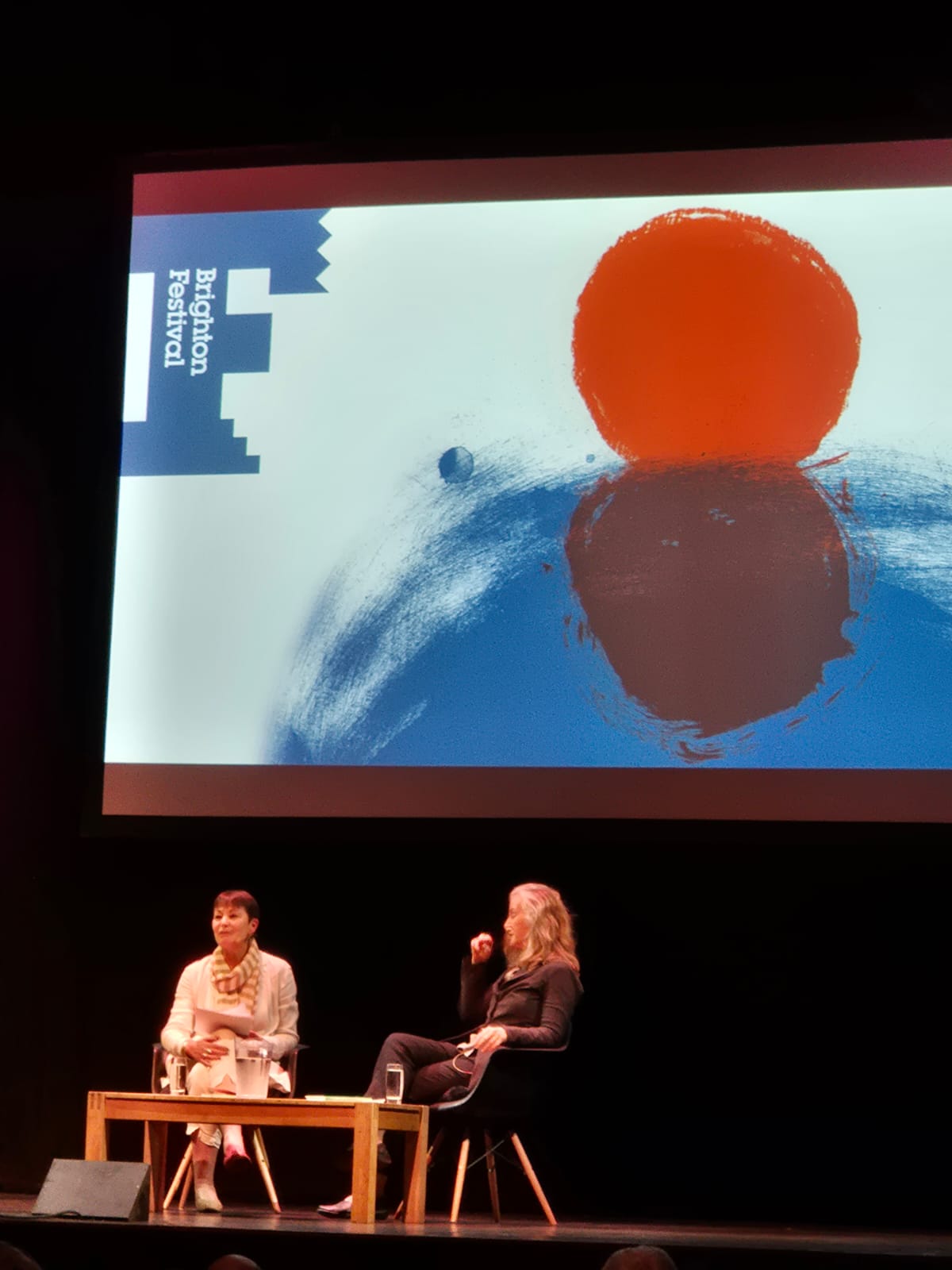
That said, the event clearly struck a chord with many in the packed audience. A Q&A was popular with many referencing her previous work and a busy post-talk book signing too. There was a palpable sense of admiration for Solnit’s work and presence. Caroline Lucas, ever the gracious host, kept things steady and grounded.
In the end, while part of a wider international book tour, this was an event that felt more like a celebration of Solnit’s legacy than a truly searching exchange. Thoughtful, yes. Inspiring at moments. But also safe — and surprisingly light on challenge or coherence, given the scale of the issues discussed. A fitting end to the Brighton Festival? For some, absolutely. For others, perhaps a reminder that radical ideas deserve — and need — more friction and uncomfortable truths.
No Straight Road Takes You There: Essays for Uneven Terrain by Rebecca Solnit is published by Granta (£16.99).