A group of bereaved families said that inquest findings in relation to a mental health trust have become “utterly predictable” after a coroner said that a young mother took her own life after “neglect” in a specialist unit.
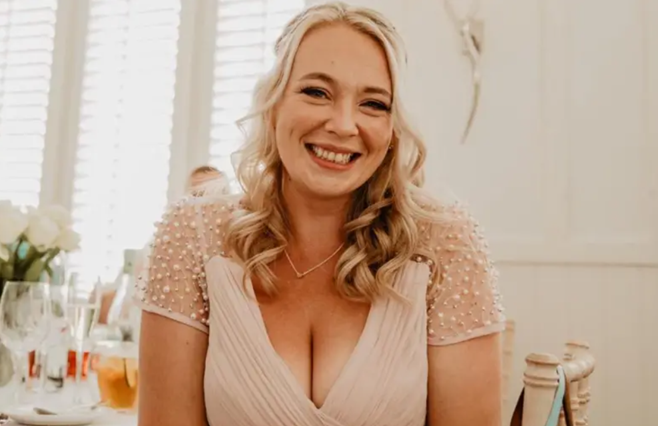
Amy Chapman, 35, died on Thursday 27 March last year when she was experiencing a mental health crisis and was a patient in the Haven Unit at Mill View Hospital, in Hove, run by Sussex Partnerships NHS Foundation Trust (SPFT).
She was allowed out unaccompanied against the wishes or knowledge of her family, according to law firm Slater and Gordon who represented her family at the inquest.
After leaving Mill View, she fell to her death from a bridge over the A27 Brighton bypass, in Hangleton.
A statement from her family said that they believed that the mother of one would still be alive if she had received the care she needed and deserved.
They said: “With no prior experience of mental health services, we trusted that Amy’s best interests would be at the centre of her care. Tragically, she was let down, and this failure cost her life.”
According to the law firm, West Sussex, Brighton and Hove assistant coroner Nick Armstong found that Ms Chapman did not receive a proper care plan during her time in Mill View.
And there was no proper focus or planning as to when she might be allowed to leave the unit.
On the day of her death, she was permitted to leave twice by two different nurses who did not know her well.
Neither checked her records beforehand or contacted the family, despite notes suggesting that Ms Chapman should only go out with family.
The coroner’s findings added that neither nurse recorded their decision in her notes and in the circumstances of the case “that was gross failure of basic care and amounted to neglect”.
The family said that they encountered “serious shortcomings” from mental health services, including failures in management, administration of her medication, poor record-keeping and inadequate communication.
They said: “As a family, we were kept in the dark and were unable to advocate effectively for her. There was also insufficient monitoring of Amy which ultimately led to her death.
“We are desperate that lessons are learnt from this and that by us speaking out about the poor care Amy received, this can help change things for other families so they do not have to live with the daily devastation that we face.”
SPFT chief nursing officer Mandy Stevens said that the trust recognised the concerns raised during Ms Chapman’s inquest and said that it needed to “more consistently” listen to people and make them feel heard.
She said: “We also need to avoid being defensive when people raise concerns.”
The health chief added that the trust was “making progress” and had been awarded two out of three stars from the Carers Trust for working together with families, carers and professionals in someone’s mental healthcare.
But SPFT Bereaved Families Unite said that, as families, “we have got to a point where outcomes and findings of these inquests are utterly predictable” in areas such as failure to include families and plan safe discharge.
Louise Hodgson and Tanya Bletchley, mother-in-law and mother of Morgan Bletchley, who died in March 2023, said: “We are seeking accountability for the deaths of our beloveds, most of whom were just starting out in their lives and should have been allowed time to heal, grow and flourish.
“But we are also seeking real reflection and a true understanding of how broken the culture of healing is at this trust, as this is the starting point for real change to happen.
“We have been consistently batted away and gas-lit in our efforts to achieve this.”
Ms Bletchley was a mother of a one-year-old boy when she died through a self-inflicted injury on an SPFT-run ward at Meadowfield Hospital, in Worthing.
The charity Inquest said that jurors at her inquest in 2024 concluded that evidence showed repeated failures to follow policies and procedures by staff at Meadowfield.
And there were failures including in family involvement and discharge planning which “prevented Morgan from receiving access to services she needed at the time”.
Meanwhile, another group member Shelagh Sheldrick, mother to Matty Sheldrick, 29, who died in November 2022, said: “We hear statements from SPFT that changes have been made.
“Yet still none of our bereaved families have received any personal reassurances that our loved one’s death has led to any positive change.”
Amy Chapman’s death happened more than two years on from the deaths of Matty Sheldrick and Morgan Bletchley, where families were also found to be excluded in their cases, Shelagh Sheldrick said.
She added: “Clearly the evidence shows that this poor practice still continues and lives are being lost.”
SPFT, which specialises in mental health and learning disabilities, was issued with a warning notice by the Care Quality Commission (CQC) in July last year.
The warning was over “failing to ensure that the care and treatment of patients who used the mental health crisis services and health-based places of safety received care that was consistently safe, appropriate, met their needs, upheld their privacy and dignity rights and protected them from avoidable harm”.
It added that governance systems in place “were not robust”.
The trust provided the watchdog with an action plan on how to make improvements, the CQC added.
A further assessment published last Thursday (30 April) of SPFT’s mental health crisis services and health-based places of safety found downgraded the trust on two measures.
The scores for providing an effective and responsive service were downgraded from good to requires improvement.
The trust also continued to require improvement in being well-led and safe while it was rated good for being a caring service.
On downgrading the service on its responsiveness, inspectors said that this was because staff did not always ensure care was person-centred and that it met patient’s needs and the trust did not always respond to complaints.
It also dropped the rating on the service being effective after finding that some patients did not have a crisis plan in place so it was not clear to them what to do if they needed urgent support with their mental ill-health.
For being well-led, the watchdog added that the trust “had not ensured that there were robust governance processes and procedures in place that supported the running of the service”.
Responding to the CQC findings on the Havens, its 24/7 community-based mental health crisis service, the trust said that it fully accepted the concerns raised and took them extremely seriously.
Ms Stevens added: “Since the CQC’s inspection in June 2025, we have introduced a more robust model of care for patients in the Havens and Health Based Places of Safety.
“We have delivered additional training to ensure staff can meet the full range of needs of people experiencing a mental health crisis.”






This is exactly what happens when institutions protect themselves instead of taking accountability. Families are too often ignored, blamed, or kept in the dark while serious failures are brushed aside as “mistakes” instead of being recognised for what they are: gross negligence.
When multiple inquests keep finding the same failings — poor communication, lack of care planning, failure to involve families, unsafe decisions, inadequate monitoring — it stops looking like isolated incidents and starts looking like a systemic culture problem.
These were vulnerable people who trusted professionals to keep them safe. Their families deserved honesty, transparency, and proper care, not defensiveness and repeated “lessons will be learned” statements after lives have already been lost.
Real accountability means more than apologies and reports. It means change, responsibility, and ensuring no other family has to suffer the same devastation.
I imagine this is a particularly hard time for you with the report coming out specifically for your hospital next. I do genuinely hope you are getting support.
The constant “good luck with therapy” comments are such a transparent, cowardly little troll tactic. Hiding behind anonymity to throw passive-aggressive digs while pretending to sound sincere is honestly embarrassing.
It says far more about you that you feel the need to keep repeating it than it does about me. If you actually meant it, you wouldn’t weaponise it every chance you get to avoid engaging with what’s being said.
But that’s the thing with anonymous trolls — snide comments are easier than having an actual argument or taking accountability for what they say.
Not today, Rupert. I wish you well.
Benjamin drifts where the arguments spark,
Not bringing much light, but keen on the dark.
While others build thoughts, he chips them for sport,
Turning a dialogue into a court.
He’s quick with a jab, with a smirk in each line,
Less interested in truth than in winning on time.
Each comment a nudge just to see what will flare,
Then leaning back, pleased that he’s stirred up the air.
It’s not about learning, or seeing things through,
It’s the ripple, the reaction, the digital view.
A moment of noise, a flicker of fame—
Gone just as fast as it came on the screen.
Strange way to spend all that time and that wit,
Chasing small wins that don’t amount to much of it.
Very good. Well done on writing that prompt.
Benjamin Franks is a prominent commentator on the Brighton and Hove News website, often participating in debates on local political and social issues. He is widely recognised in the community as a local Conservative politician who has previously stood as a candidate for Brighton and Hove City Council.Profile as a CommentatorPolitical Stance: His comments typically reflect Conservative viewpoints, often critiquing current Labour and Green party policies regarding local governance, waste collection, and cycle lanes.Engagement Style: He frequently engages in lengthy exchanges with other regular commenters, such as “Barry Johnson,” on topics ranging from transgender rights to immigration and housing.Recent Activity: As of May 2026, he remains active on the platform, contributing to discussions on university free speech fines and new community centres.Local Political BackgroundCandidacy: Benjamin Franks has stood as a Conservative candidate in several local elections, including the Wish ward (2023) and the South Portslade by-election (January 2024).Professional Background: Outside of his political and commenting activities, he is an English language teacher and has previously been identified as a lecturer at Oxford Brookes University.Key Issues: In his official campaign profiles, he has campaigned for better bin collections, removing graffiti, and opposing “vanity projects” like certain cycle lane extensions.
We do indeed share the first name, well done.
There is a major difference between disagreement and deliberately provoking grieving families for attention. Going through comment sections looking for emotional reactions — including targeting parents discussing stillbirths and hospital investigations — shows a level of detachment that most people would find deeply concerning.
When somebody repeatedly inserts themselves into sensitive discussions purely to inflame emotions or score points, it stops being “debate” and starts looking like a complete lack of empathy and judgement. These are real families dealing with trauma, loss and unanswered questions — not material for online point scoring.
What makes it even more troubling is trying to present yourself publicly as some kind of council spokesperson or community figure while behaving this way anonymously online. Anyone representing the public in any capacity should understand basic standards of decency, restraint and compassion, especially around subjects involving bereaved parents and child loss.
People can disagree politically all day long. But deliberately trolling vulnerable people over subjects as serious as stillbirths says far more about the individual doing it than the people reacting to it.
I’ve always avoided talking about your situation, other than to urge you to get help. You’re clearly not dealing with it well, evidenced by your frequently bizarre behaviour, and haven’t been for a long time, Rupert., spanning back at least a year in your various aliases. As I have said multiple times, you would benefit from counselling services and a social media disconnect.
You have the contact details.
I hope you use them.
Geniunely.