

Councillors said that a business owner did not appear to understand why there were restrictions on new late-night takeaways in the busy centre of Brighton.
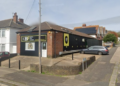
They turned down the latest application by Bahaaeldin Abdelalim, 43, owner of the Station Grill, in Queen’s Road, for a late-night refreshment licence.
If Brighton and Hove City Council had approved the licence to trade from 11pm to 5am daily, the business would be able to stay open for 24 hours a day.
Mr Abdelalim, known as Bahaa, was previously refused a late-night refreshment licence – allowing the sale of food and drink but not alcohol – last October and in June this year.
He appealed against the first refusal – to trade until 2am on weekdays and 3am at weekends – and his appeal is due to be heard in the magistrates’ court.
The council said that Queen’s Road is in a busy area that is “saturated” with drink-led venues and late-night takeaways.
Applicants for new licences are required to show “exceptional circumstances” that would not add to existing drink-related crime and disorder in the area.
At a council licensing panel hearing on Monday 18 August, Sussex Police said that another overnight food business would provide somewhere else for people to go after drinking. And this could lead to disturbances or add to the volume of alcohol-related crime.
The panel were told that Mr Abdelalim disputed evidence in photographs showing his premises operating after 11pm on Saturday 28 June and on Saturday 26 July.
Sussex Police also said that officers had seen the restaurant operating at 11.35pm on Friday 1 August.
Mr Abdelalim presented date stamped photographs that he said were taken on Saturday 26 July at 11.26pm which he said came from an anonymous source.
But one was identified as the image used by the Local Democracy Reporting Service, taken at 1.52pm on Sunday 22 June.
The panel, consisting of three Labour councillors, Julie Cattell, John Hewitt and Alison Thomson, said that submitting an obvious fake was “not to the applicant’s credit”.
The 41 letters of support were checked, the council said, but only four people came forward to verify their addresses and two of those were from Worthing and Luton.
The panel asked Mr Abdelalim if he had sent out pre-written letters for people to sign. He denied this but the councillors found that his evidence lacked credibility because the representations were almost identical.
People who had signed representations attended the virtual hearing but did not speak when asked and one person who had agreed to speak on behalf of supporters left the meeting before he was called.
The decision letter from the council said: “Overall, the panel shares the police’s concerns that the applicant lacks understanding of the licensing regime and his responsibilities.
“Of concern was the issue around the photograph and the representations. We believe that the applicant was instrumental in creating these and that his answers on the point of his involvement were not credible.
“The panel is unable to identify conditions that would justify a licence … and lacks confidence in the applicant’s approach.
“Ultimately, the panel does not consider the applicant has shown any exceptional circumstances to enable departure from the (council’s licensing) policy.”






Personally I think he should have to pay for wasting council time on multiple applications. Isn’t it a crime to lie, fraud… Which is what he’s done here by making all these fake letters of support. Thought that was a crime in the UK…
I think that’s a negative on future applications, no doubt many more to come
Prewritten letters aren’t fraudulent though, Brighton College did the same thing for their applications.
I think on one of the previous rejections his lack of experience of operating a night establishment was cited as one of the reasons for the rejection of the application.
So he’s not done anything about gaining any such experiences such as even just observing what happens at other late night premises in the area.
And asking people to suport the application is fine but not preparing text and ‘say this’. Such campaigns are easily spotted by the officers who collate them for the report to the committee.