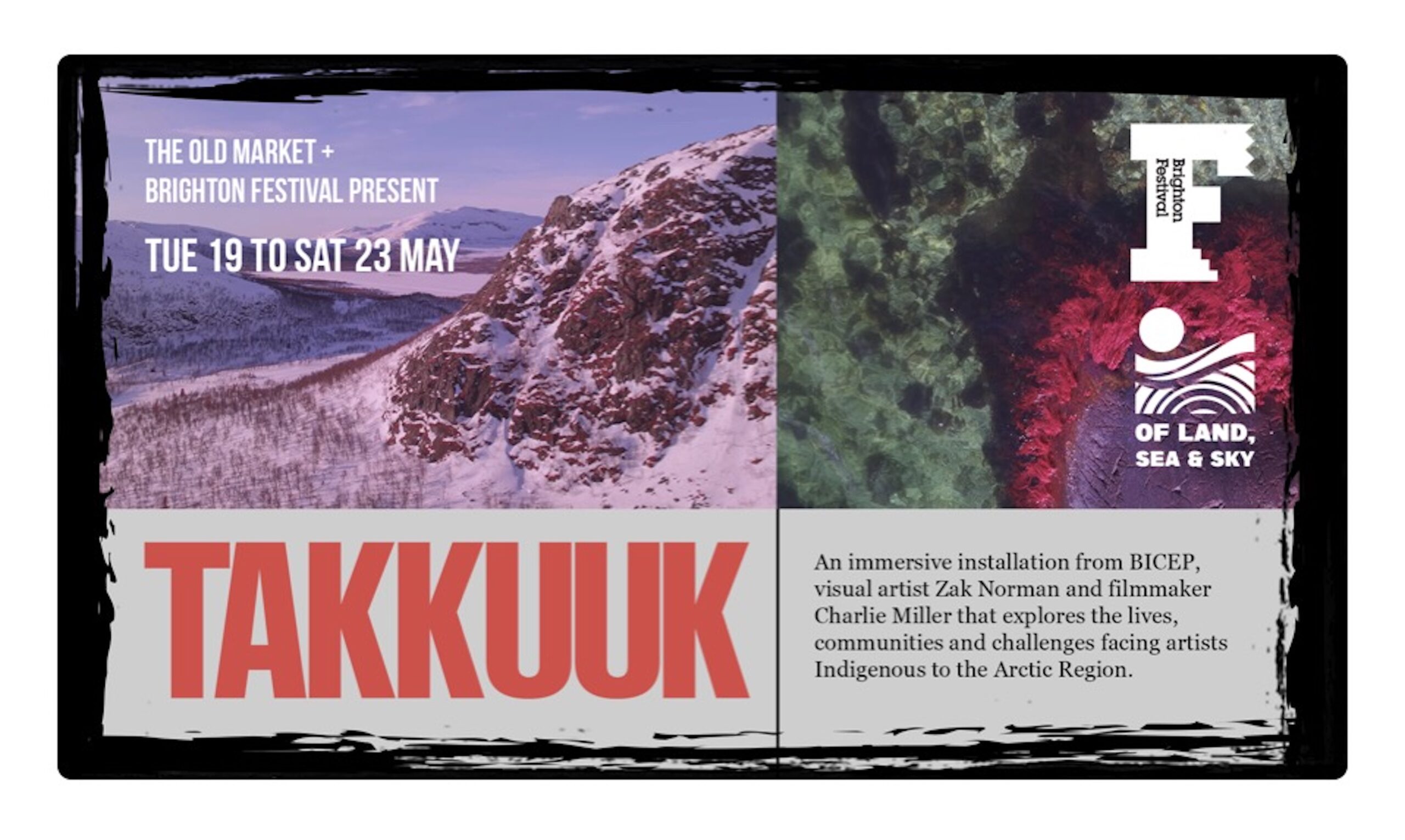
TAKKUUK, an Inuktitut word meaning ‘look’, is a powerful installation exploring Indigenous life and culture in the Arctic. Shown on four screens simultaneously, this 360-degree experience combines images, music and interviews from the Tundra.
It is a collaboration between visual artist Zak Norman and filmmaker Charlie Miller, Northern Irish musicians BICEP, and Indigenous musicians who are also interviewed in the film, including Greenlandic rapper TARAK, Inuktitut throat-singers SILLA, and Katarina Barruk.
The audience is seated in the centre of the room on beanbags, although regular chairs line the edges for those whose beanbag days are no more.
It takes a moment to settle, but the audience is soon drawn into this immersive installation, which mixes reflective interviews with expansive sequences where the senses are overtaken by striking imagery and a carefully constructed soundtrack.
Each track is produced by electronic act BICEP and was recorded at Reykjavik’s Airwaves Festival back in November 2023. The haunting sounds of the Indigenous musicians contrasts with BICEP’s rave-influenced beats, bleeps and stabs. Two very different cultures from very different backgrounds collide to create something hypnotic, beautiful and, above-all, makes you want to dance.
The four-screen format of The Box never feels gimmicky and is used with care. At times the room is flooded with shifting, other-worldly imagery; at others, it is more playful, as when a herd of reindeer circles the viewer, trapping us in their journey.
Visually, the filmmakers avoid familiar Arctic clichés. There are no polar bears or Arctic foxes in sight, instead focusing on abstracted imagery drawn from the region. We are not simply immersed in surface-level depictions of snow and ice, but move into the deeper, more layered textures of the landscape. The images drift across the screens like continually falling water.
The result is hypnotic and absorbing, punctuated by thoughtful and moving interview segments.
Each of the interviews are with young Indigenous musicians from Sami, Inuit and Inuktitut backgrounds. They are united not only by music but by a commitment to honouring their past and sustaining their cultures. Many have learned languages that were close to extinction and speak about passing them on to future generations.
They may be musicians and performers as-such, but there is nothing performative about this commitment. The embrace of the past and reclamation of something stolen feels like an act of resistance — an insistence on survival in the face of forces that attempted cultural erasure.
One interviewee speaks of an imaginary red thread held by each generation, describing how it was once dropped and is now being picked up again. Red and purple recur throughout the installation, captured through infrared imagery that renders the landscape — often framed as pristine and untouched — as bruised and bloodied. The red thread, the environmental damage, and the visual language of the work seep into one another across the screens.
The interviews are compelling, offering insight into lives rarely given space in this format. At times, they feel constrained by the structure of the installation, particularly when SILLA speaks about the shame carried by a culture that was nearly eradicated by forces that deemed it “evil”.
The Inuktitut duo also discuss pressures placed on the land through external interventions, including wind farms that have disrupted reindeer grazing routes. This ongoing misunderstanding of the relationship between culture and land is something I would have liked to hear explored further, though it remains a minor limitation in an otherwise thoughtful work.
The film begins with an explanation of tiny pockets of air trapped within layers of ice thousands of years old. These ancient gases hold information about the planet’s past and, potentially, its future survival.
The caretakers of this knowledge — Indigenous people who have lived in these environments for generations — have, like the ice itself, been worn down by external forces over time. Each layer of ice is in danger of disappearing, taking its secrets with it. A parallel emerges between the ice sheets and the generations of people who have lived there, gathering knowledge that may prove essential to our understanding of the world.
If these cultures are allowed to disappear, they risk taking that knowledge with them. TAKKUUK leaves us with the sense that what is at stake is not only cultural survival, but a body of understanding rooted in place, language and memory — knowledge we may yet discover we cannot afford to lose.
TAKKUUK is part of Of Land, Sea and Sky in partnership with The Old Market and runs until May 23rd.