Review: Kohlhaas at Brighton Corn Exchange
The city’s Corn Exchange was originally built as a riding school for George IV’s horses. Commissioned in 1803 and completed in 1808, it makes an apt venue for the world premiere of a play inspired by the novella Michael Kohlhaas—a story in which horses drive much of the action and which has been staged here with the space very much in mind.
It is an adaptation of a 200-year-old book which, although not widely known today, inspired novelists Franz Kafka and Thomas Mann and tells the story of a 15th-century horse trader. The play explores universal themes of corruption, power imbalances, and a man’s violent crusade for justice. The story is set 500 years ago, but this is a play for today’s world, and when Arinzé Kene, our charismatic narrator, desperately cries out – ‘what sort of world is this?’ – he could be shouting directly at 2026.
Kohlhaas is the name of our protagonist, a man who has everything he could ever wish for: a loving family, a successful business built over generations, and the respect of his friends and neighbours. And all is well in the house of Kohlhaas, until he is tricked out of his two beloved black stallions by an unscrupulous Baron.
The play charts the transformation of the family man to murderer, no amount of blood will quench his thirst for justice.
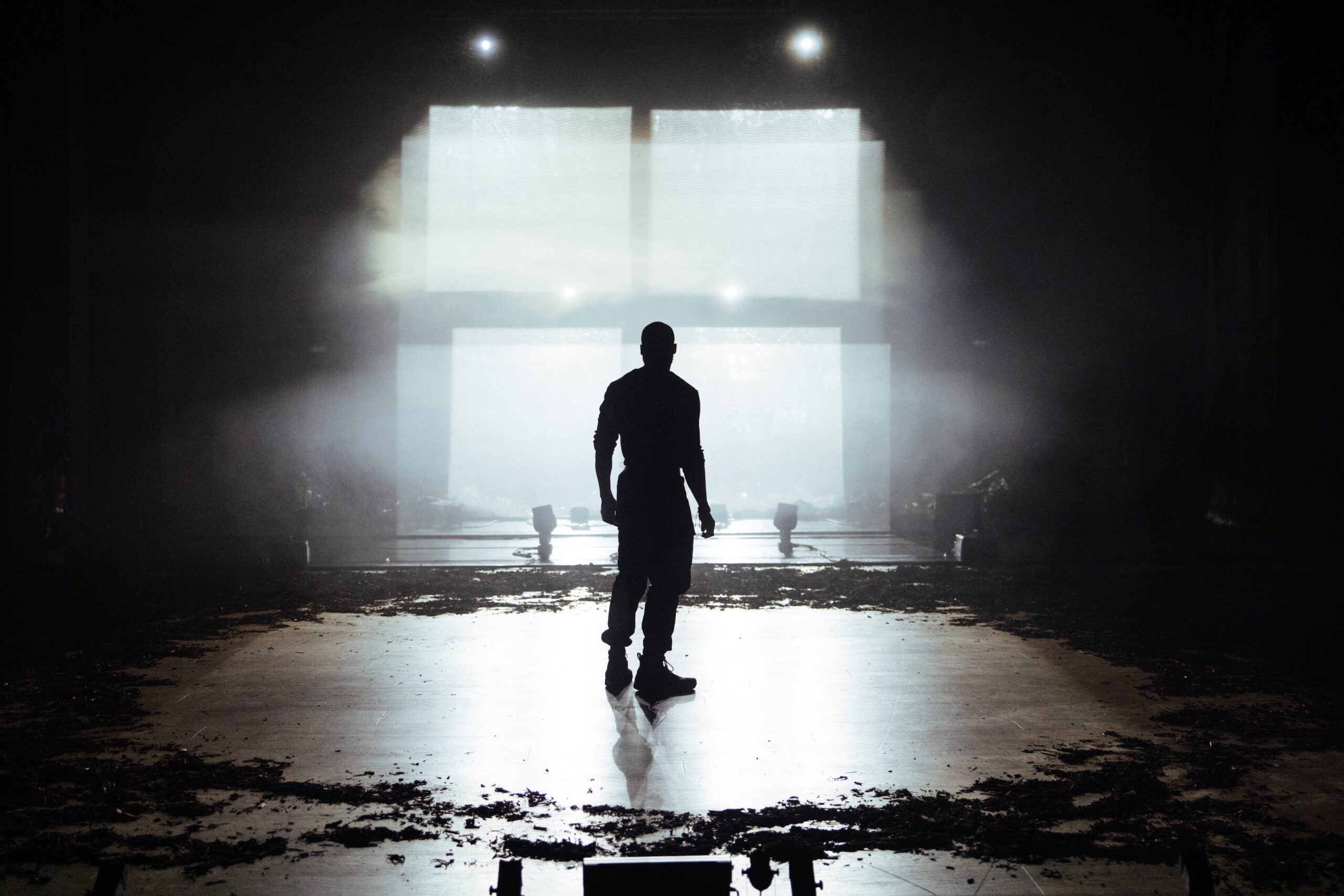
Production photography;
Cast: Arinze Kene;
Directed by Omar Elerian;
Lighting and Smoke Effects Design: Jackie Shemesh;
Installation and Costume Design: Ana Ines Jabares-Pita;
Composition and Sound Design: Matthew Herbert;
A Brighton Festival Production;
Brighton Dome Corn Exchange, Brighton, UK;
May 2026;
Photo: Helen Murray
www.helenmurrayphotos.com
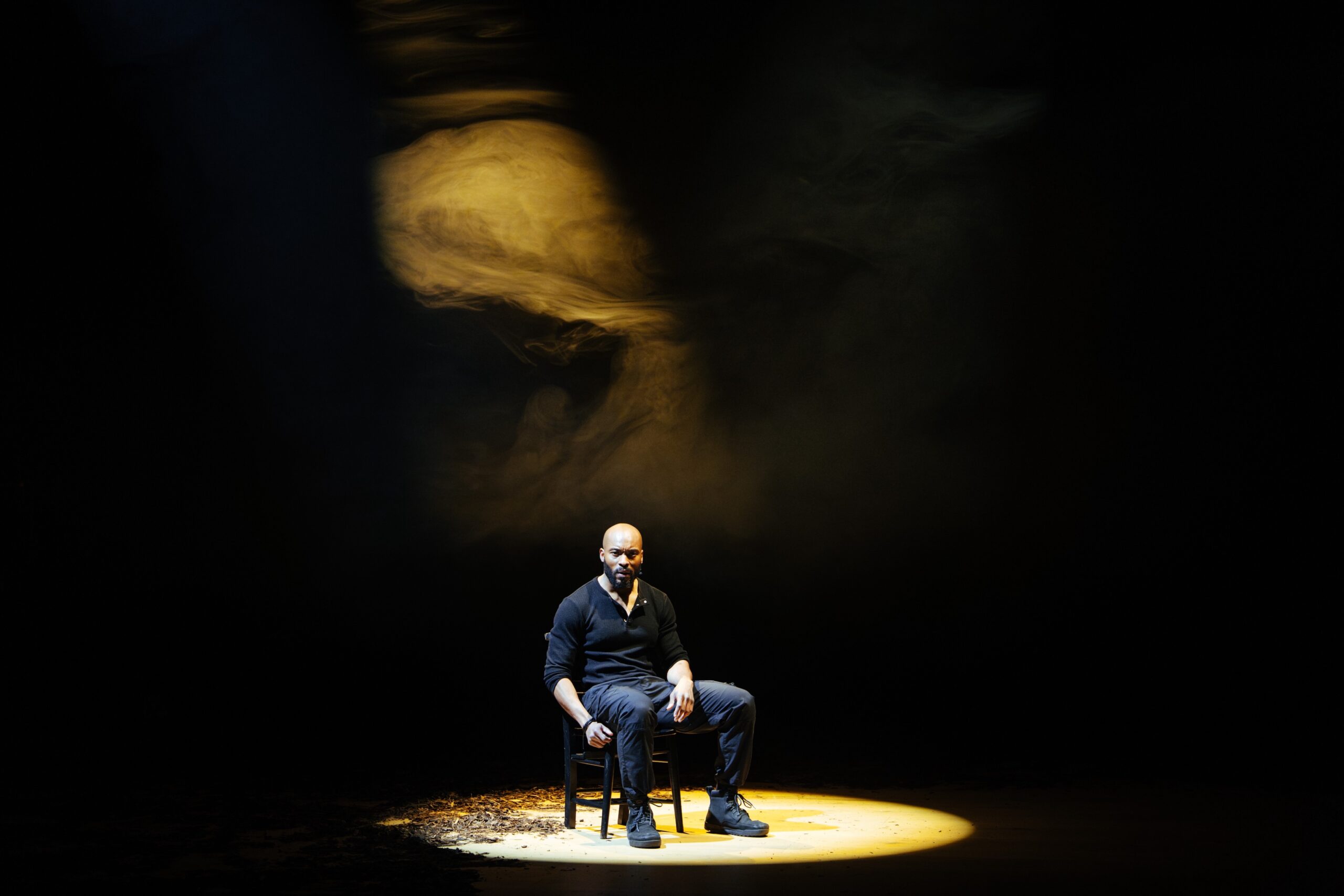
Kene’s performance is a triumph. The audience spends 90 minutes in the company of a master storyteller with a timeless story to tell.
With energy and empathy, he leads us through Kohlhaas’s growing confusion, his gradual realisation that his world is breaking apart, and the unremitting rage and frustration that follow. In Kene’s hands, this complicated character is neither a good guy nor a bad guy; he is a man responding to a world by which he is increasingly bemused and outraged.
Our narrator never judges, nor tries to manipulate the audience’s point of view, yet through his compelling storytelling we still root for the soul of Kohlhaas right to the bitter end.
This ambiguity is integral to the power of the production: we empathise with the wronged man even as we are confronted with his abhorrent actions. Even in his blind rage, Kohlhaas barely sees what is unfolding around him, his purpose overriding the rights of anyone who stands in his way.
This tension is never easily resolved; we are horrified by his actions, yet recognise his frustration at the system that has failed him.
Adapted by director Omar Elerian from an Italian version by Marco Baliani and Remo Rostagno, the script is well paced, never patronising nor reliant on emotional tricks to influence our view of Kohlhaas. Instead, the audience is left with space to reflect on justice, power, and personal responsibility.
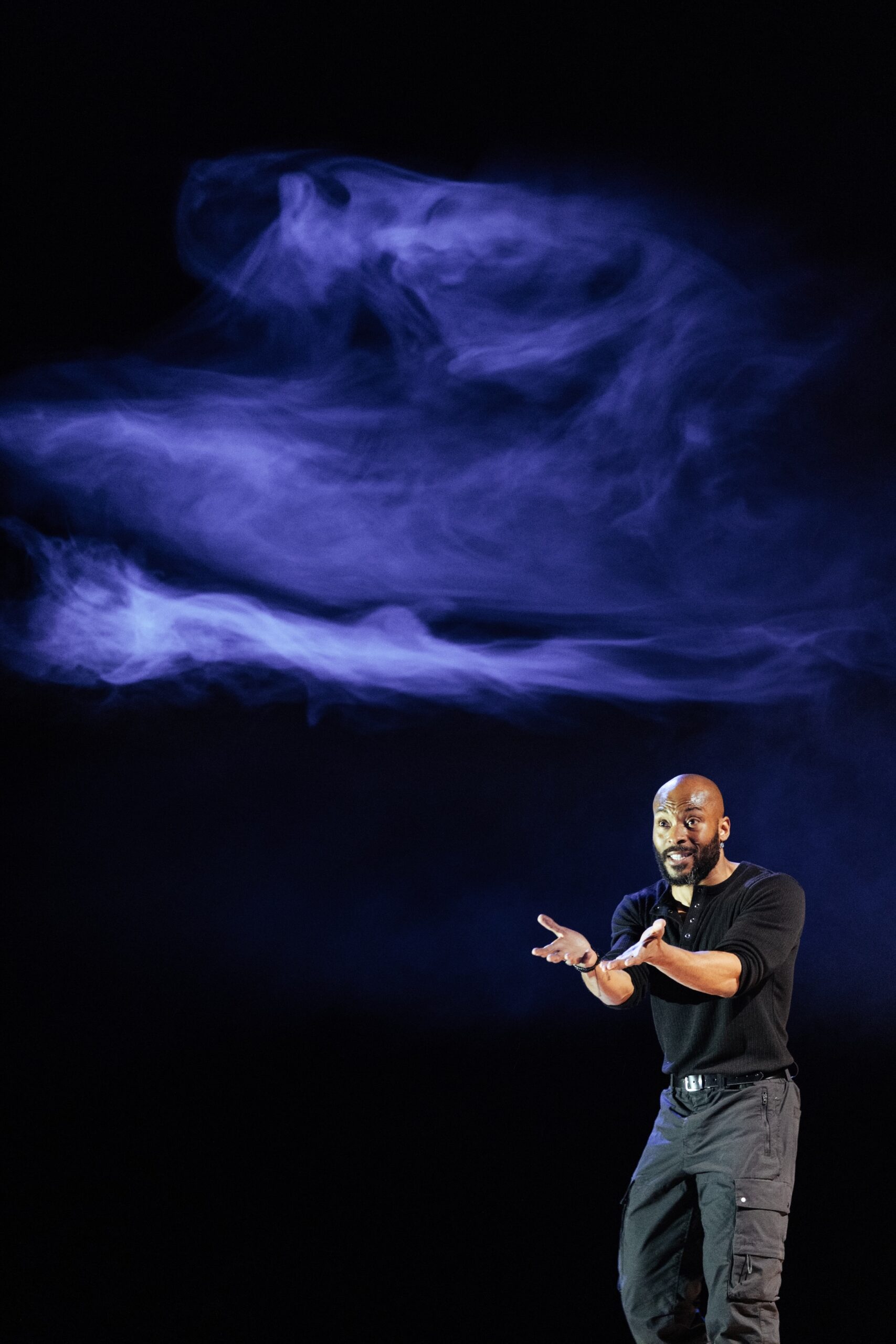
We are left asking why the man goes to extremes, why he cannot simply “let it go” as his friends urge him to. Perhaps it is ego, or a failure to acknowledge the impact his quest for justice has on those he loves – even when they implore him to forgive. What a shock it is for Kohlhaas – the Michael Kohlhaas – to be ripped off, humiliated, and rendered of lesser importance than his fellow German. And if it can happen to our illustrious family man, horse trader, upstanding citizen, then who can’t it happen to?
Kohlhaas’s world is skilfully created using smoke and light. Jackie Shemesh has transformed this historic space into a market square, an emperor’s palace, and a burning battlefield with what feels like the flick of a switch. It is sophisticated, skilful design, at times shocking in its inventive use of space and theme. A malignant mist hangs in the air as the narrator spends much of the show inside a circle of light – representing his safety, his world – which shifts as the story unfolds, until the end when he finds himself in another circle, one that finally gives him what he seeks.
Complimenting this atmospheric staging is the accomplished sound design by composer Matthew Herbert and Dan Pollard. Unobtrusive but hugely important to the ‘feel’ of the play, offering a subtle malevolence hinting at something supernatural and occasionally punctuated by the earthly sounds of horses galloping, or a simple folk tune.
Elerian has put together a masterful team to create a world where all is light inside Kohlhaas’s circle and, what was once so strong, is easily weakened, and ultimately destroyed, by the darkness of the world beyond.
Kohlhaas is not a passive experience. The audience is drawn deeply into this story by a compelling narrator, a thought-provoking script, and a world sculpted in smoke and light. We feel both empathy and horror for our protagonist. This is not a straightforward story of good and bad; it is a story of humans and what we are capable of.
It is the first Brighton Festival production and what a intelligent, confident start, I cannot wait to see how they follow it.