
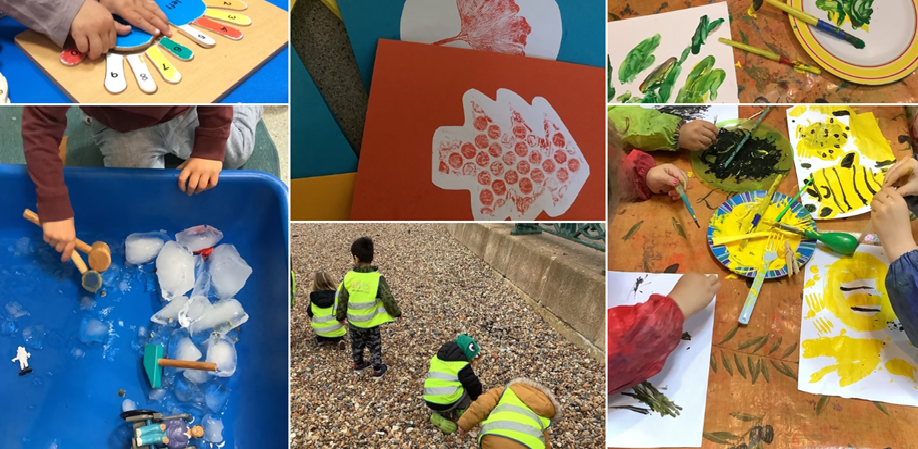
A multicultural nursery in Hove has been given a glowing report by the government’s official watchdog Ofsted.
Amigos Multicultural Preschool, which is based at the Cornerstone Community Centre, at St John’s Church, in Church Road, Hove, was rated as strong across the board.
The rating is the second highest of five and the report, published today (Friday 7 August), follows an inspection on Thursday 9 July 2026.
The inspector, Sophia Malcolm, assessed the nursery as strong in all six areas – achievement; behaviour, attitudes and establishing routines; children’s welfare and wellbeing; curriculum and teaching; inclusion; and leadership and governance.
The report said: “Children achieve extremely well across all areas of learning and are well prepared for the next stage in their education, including school.
“All children, including those with special educational needs and/or disabilities, those who are disadvantaged and those who speak English as an additional language, make rapid progress from their starting points.
“Children who arrive with little or no English quickly learn single words to communicate their needs while others confidently build on their vocabulary and express their ideas in full sentences.
“Children become curious, confident learners who enjoy exploring the world around them. They develop excellent personal and social skills, learning to share, take turns and play kindly with others.
“Children understand simple rules. They show responsibility and independence as they tidy away resources, pour their drinks at snack time and hang up their belongings, for example. These essential skills give children a solid foundation for future learning.
“Leaders create a calm, respectful environment where expectations are clear and consistently understood.
“They promote attendance very well, working closely with families to ensure children arrive on time and benefit fully from routines that help them start the day positively.”
The report also said: “Consistent high-quality interactions support children’s communication and language incredibly well.
“Staff use effective strategies, such as signing and visual prompts, to support all children, including those with barriers to their learning, to fully understand routines and access the curriculum confidently.
“Leaders organise bilingual assistants to strengthen children’s understanding and communication in their home language and their learning of English.
“They use their excellent expertise to provide timely, targeted support for children, including those with special educational needs and/or disabilities, disadvantaged children and those who speak English as an additional language (EAL).
“For example, they arrange one-to-one support and carefully plan adapted routines and small-group sessions.
“This helps children to fully access the curriculum and feel calm and settled, and prepares them very well for the next stage in their learning or transition to school.
“Where children need additional support, leaders and staff work incredibly well with outside agencies, such as local authority inclusion services, social services, psychologists and health visitors, to shape children’s support.
“Staff complete training to meet children’s individual needs, such as speech and language training to support children, including those who speak EAL, with their communication and language.
“Funding is used thoughtfully to meet children’s specific needs and interests, making a difference to their experiences and progress.
“Staff continually follow a cycle of assess, plan, do and review, ensuring strategies remain effective and responsive to children’s needs.
“The staff team is well established, with a very low turnover. Staff speak highly of leaders, describing them as approachable, flexible and committed to their wellbeing.
“Workload is managed sensitively, and leaders create a culture where staff feel valued, listened to and supported.
“This positive environment means that staff work incredibly well as a team, sharing their high levels of expertise to support less experienced staff and to enhance children’s education and care.
“Relationships with parents and carers and the wider community are excellent. For example, leaders invest time in getting to know parents well, building trust and ensuring parents feel welcomed and involved.
“They work with the local church, shops and community groups to broaden children’s experiences of the world around them.
“They also work incredibly well with the local authority and community services to ensure disadvantaged children and those with additional needs receive timely and effective support.”
Ofsted said that 24 attend the nursery which is open from Monday to Friday from 9am to 3pm.
The next steps, according to the report, are: “Leaders should continue strengthening the setting’s already successful work to remove barriers for children who need extra support, ensuring that this has a transformational and sustained impact on all children’s learning, achievement and wellbeing.”
To read the report in full, click here.