
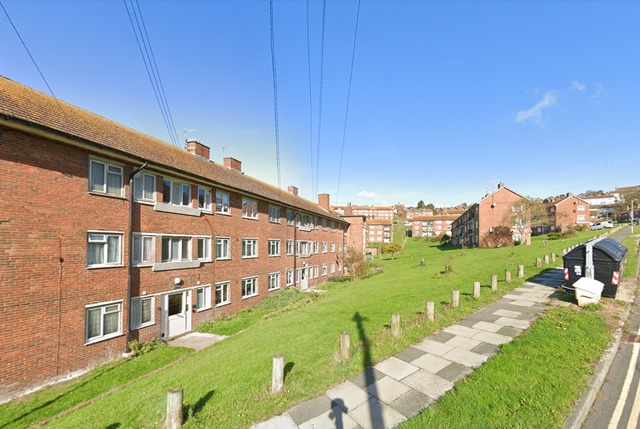
High-rise blocks of council flats could have live-in caretakers as part of a drive to tackle the scourge of nightmare neighbours.
The proposal is one of 16 ideas aimed at dealing with anti-social behaviour, along with better communication, improved information sharing with the police and more use of security cameras and other technology.
One of the councillors involved in drawing up the proposals said that she and her colleagues had “heard powerful and deeply troubling accounts of racism-related anti-social behaviour”.
They also heard about problems arising from drink and drug misuse, family conflicts, mental and physical health issues and poor social skills.
The problems and the proposals are outlined in a report by a “task and finish group” to Brighton and Hove City Council’s People Overview and Scrutiny Committee.
Their findings follow a year-long project looking into anti-social behaviour in social housing, including council housing, and the report is due to be debated by the committee next week.
The task and finish group was “cross-party” and included a representative from the Older People’s Council. It held eight evidence-gathering sessions.
The group met senior housing officials, anti-social behaviour specialists from other councils, housing associations, charities, Sussex Police and four anonymous residents during its fact-finding mission.
Sixteen recommendations are due to be put to the committee next Tuesday (14 July), with a view to asking the council’s cabinet to consider the proposals. They are
- A review of the allocations policy
- Improving communications with complaints
- Improving expectation management
- Publicising work to deal with anti-social behaviour
- Improve process for sharing information about tenant anti-social behaviour across all relevant departments including the police
- Increased investment and improved training
- Introduction of live-in caretakers / concierge in high-rise blocks
- Review of deployment and use of CCTV in council-owned housing blocks
- Lobbying for the introduction of a specialised housing court
- Exploring the use of technology to record evidence and report anti-social behaviour
- Exploring the use of expert witness services
- Ensure local housing associations are aware of the information required for noise diaries to avoid duplication
- Strengthening the response to racism-related anti-social behaviour in housing
- The council should adopt and communicate a clear, proactive and zero-tolerance approach to discrimination within anti-social behaviour casework
- A review of the “Client of Concern Register”
- Improving the use of language in complaints communications
- The task and finish group was formed in response to a growing number of long-running complaints about anti-social behaviour on several estates across Brighton and Hove.
In the report, Labour councillor Julie Cattell – who took over as chair of the Anti-social Behaviour in Social Housing Task and Finish Group from former councillor Jackie O’Quinn – said that no single intervention would end anti-social behaviour.
Councillor Cattell said: “What quickly became clear is that while anti-social behaviour presents complex challenges, many of the frustrations experienced by residents stem not only from the behaviour itself but from how cases are communicated, progressed and resolved.
“Recurrent themes across our evidence included the importance of clear and regular communication, effective expectation setting, timely use of enforcement tools and better partnership working between agencies.
“We also heard powerful and deeply troubling accounts of racism-related anti-social behaviour, underscoring the need for a clearer, more proactive and explicitly zero-tolerance approach to racially motivated harassment within housing environments.”
The report said that the most serious cases of anti-social behaviour in social housing were linked to family issues and parenting, alcohol and drug misuse, mental and physical health issues and a lack of social skills.
And some tenants were not concerned about how their anti-social behaviour or criminal activities affected their neighbours, the report said, because they were aware of their rights and knew that eviction would be a last resort.
The report said that neighbours often felt that they were not heard and that their welfare was not prioritised.
The council’s complex case team had adopted a “victim first” approach but the report noted that making a change was often a “time and labour-intensive process”.
The council’s People Overview and Scrutiny Committee is due to meet at Hove Town Hall at 4pm next Tuesday (14 July). The meeting is scheduled to be webcast.







Prioritise eviction higher up the list of remedies with added clauses that diminishes the housing rights of the culprits and abusers, once they learn it’s costing them and not the other tenants they’ll soon change their ways, yes they have rights, become a problem then reduce those “rights”. No reason why the rest of society should tolerate their crap.
The thing I always read and hear when it comes to antisocial behaviour is the time it takes to address ASB, with the worst cases lasting years. Early formal interventions needs to play a strong role here, because that’s also the foundational work that enable legal routes like Closure Orders or Evictions to take place successfully in the courts. And like Stan, I also think if you’ve abused the social housing system, you should be deprioritised on the housing list for those who can be a good neighbour.
The client of concern register is used to punish those victims of ASB who speak out
The complex case team make victims of ASB lives hell by portraying them as bullies and perpetrators whilst protecting the actual perpetrators and rewarding them with better flats etc . They are the problem not the solution
What an absolute joke this is ! Have a problem they ask you to keep a diary and do nothing when presented video evidence!! We’ve drug dealers,foreign mechanic who uses the free spaces to repair his mates taxis at the weekend all reported and videoed over 2yrs now !
Councils To frightened of being accused of discrimination rather than dealing with problem tenants !
It’s just brushed under the carpet, it is easier to let perpetrators make others lives a misery than the council deal with them
What an absolute joke this is ! Have a problem they ask you to keep a diary and do nothing when presented video evidence!! We’ve drug dealers,foreign mechanic who uses the free spaces to repair his mates taxis at the weekend all reported and videoed over 2yrs now !
Councils To frightened of being accused of discrimination rather than dealing with problem tenants !
What about more council checks to check if the legitimate tenants are still living in each council house/block? A lot of illegal sub let tenants could be given their marching orders to make way for those on the council housing list. Plus their tenant landlords who have abused council housing.
I support more checks on council properties. That’s starting with the new Neighbourhood Officers for each area.
“History repeats itself”
Tony, nothing was done with our local bully (that seemed as nice as pie to everyone else).
Numerous things happened. I emailed someone at the council and our PCSO about the elderly, vulnerable relative being stalked on 1 occasion, but they wouldn’t do anything about it, unless my the actual elderly victim complained. It appears this fiend has now gone on to do a similar thing to another vulnerable, elderly person, who won’t report them.
It happened exactly the same here . The council just don’t care about the victims