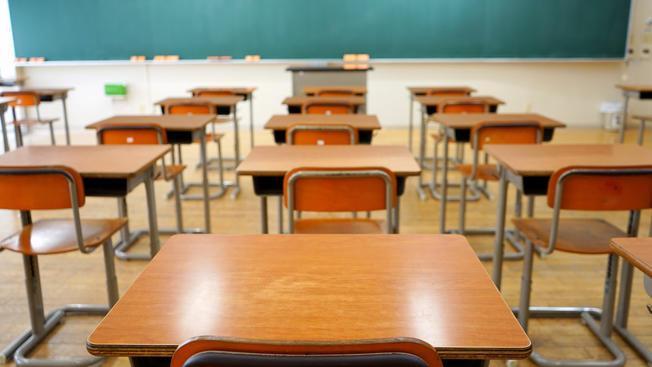
Changes to secondary school admission rules came under fire from parents before a vote at a meeting of Brighton and Hove City Council last night (Thursday 29 January).
Labour and Green councillors backed the removal of a restriction that required children to live in a catchment area to qualify for a “sibling link” place at a school attended by an older brother or sister.
After repeated consultations on school admission rule changes – for seven years in a row – Labour councillors accepted a Green proposal to set up a working group.
The group is expected to scrutinise the effects of previous rule changes – and to work with schools, parents and others to help propose future changes as pupil numbers continue to fall.
The most recent set of proposals – for September 2027 admissions – have proved unpopular with some parents. At the meeting of the full council yesterday, Conservatives abstained from the vote.
Earlier in the meeting at Hove Town Hall, Brighton resident Adam Dennett, a professor of urban analytics at University College London, said that the council had misrepresented the consultation responses.
Professor Dennett said: “Anyone who has taken an undergraduate class on statistics would be able to explain why it is both wrong and misleading.
“If one of my students handed something like this in for an assessment, they would fail, so why do the council officers think it is permissible to mislead full council again with more adulterated consultation outputs?”
The Labour deputy leader of the council Jacob Taylor said that councillors could read the report, which he described as “clear as day”, with figures from the consultation and a petition counted separately – and counted together.
Councillor Taylor said that complaints about previous changes to secondary school admissions were considered by the schools adjudicator and the Local Government Ombudsman who found no fault with the council’s processes.
Mother-of-two Alison Woolfenden asked about the modelling for catchment-level figures.
She said that 12 days after the consultation had ended earlier this month, data showed 15 per cent of children living in the Patcham High catchment would not be given a place at the school. The figure for the Dorothy Stringer and Varndean catchment was higher.
She said: “The council’s own modelling shows how some of these children will not get a catchment place. This could lead to better-off children applying from out of catchment, displacing a child in Whitehawk on free school meals.”
Councillor Taylor said that the criteria applied when the schools were over-subscribed.
He said: “The schools adjudicator said it is not the function of admission arrangements to give certainty about whether a child will be admitted to a specific school.
“The requirement is that admission arrangements must clearly explain how places are allocated.”
James Baird, from Equity in Education, a group formed of parents in the Moulsecoomb and Bevendean area, urged councillors to back the proposals.
He said: “Denying families the security of knowing that siblings will be able to get a place in the same school acts as a barrier to taking up the opportunities presented by the open admission and free school meals priorities.
“Currently, if a child gets an out-of-catchment place on one of these priorities but their younger sibling does not, the parents are faced with a logistical nightmare when it comes to getting their children to school every day.”
Matthew Boote spoke for a group of parents who objected to the proposals, saying that the Varndean and Dorothy Stringer catchment area already had a higher than average percentage of pupils eligible for free school meals.
Mr Boote said: “The result is predictable: more children unable to attend a school they can easily travel to, more separation from primary school friendship groups, more random allocation, more uncertainty for families, more appeals.”
Since last September, pupils eligible for free school meals had a better chance of a place at an out-of-catchment school after a consultation in 2023.
The “open admissions” criteria will allow up to 5 per cent of children in a single school catchment area to apply for a place at a secondary school outside their catchment for September 2026.
Councillors agreed the changes and also voted to reduce the published admission number at Downs Junior School from 128 to 96 – in line with Downs Infant School – and at Rudyard Kipling Primary School from 45 to 30 for September 2027.







BHCC?
Misleading residents?
..Well I never
Why do many Labour and Green Councillors persist in voting AGAINST the clear wishes of the constituents who elected them on these issues? Sometimes even after telling people they will.object and then doing the opposite. Do they not think people will notice?!
Either way, it won’t end well for them at the next election.
Professor Adam denett does not know what is a consultation… different to a vote!