

Photo credit – Nicola Benge
Meet Fred – 7th February 2026
There are few venues in Brighton & Hove better suited to smart, politically alive theatre than The Old Market. Intimate yet spacious, generous to experimental work, and always up for trying new ideas, TOM proved the perfect home for Meet Fred, which played for one night only as part of its 10th anniversary tour this weekend.
Created by inclusive theatre company Hijinx, in collaboration with award-winning puppeteers Blind Summit, Meet Fred is both a love letter to puppetry and a sharp-edged indictment of the UK benefits system. At its centre is Fred: a simple two-foot-tall cloth puppet trying, with stubborn optimism, to live an ‘ordinary’ life — to work, to love, to belong — while navigating a system designed to trip him up at every turn.
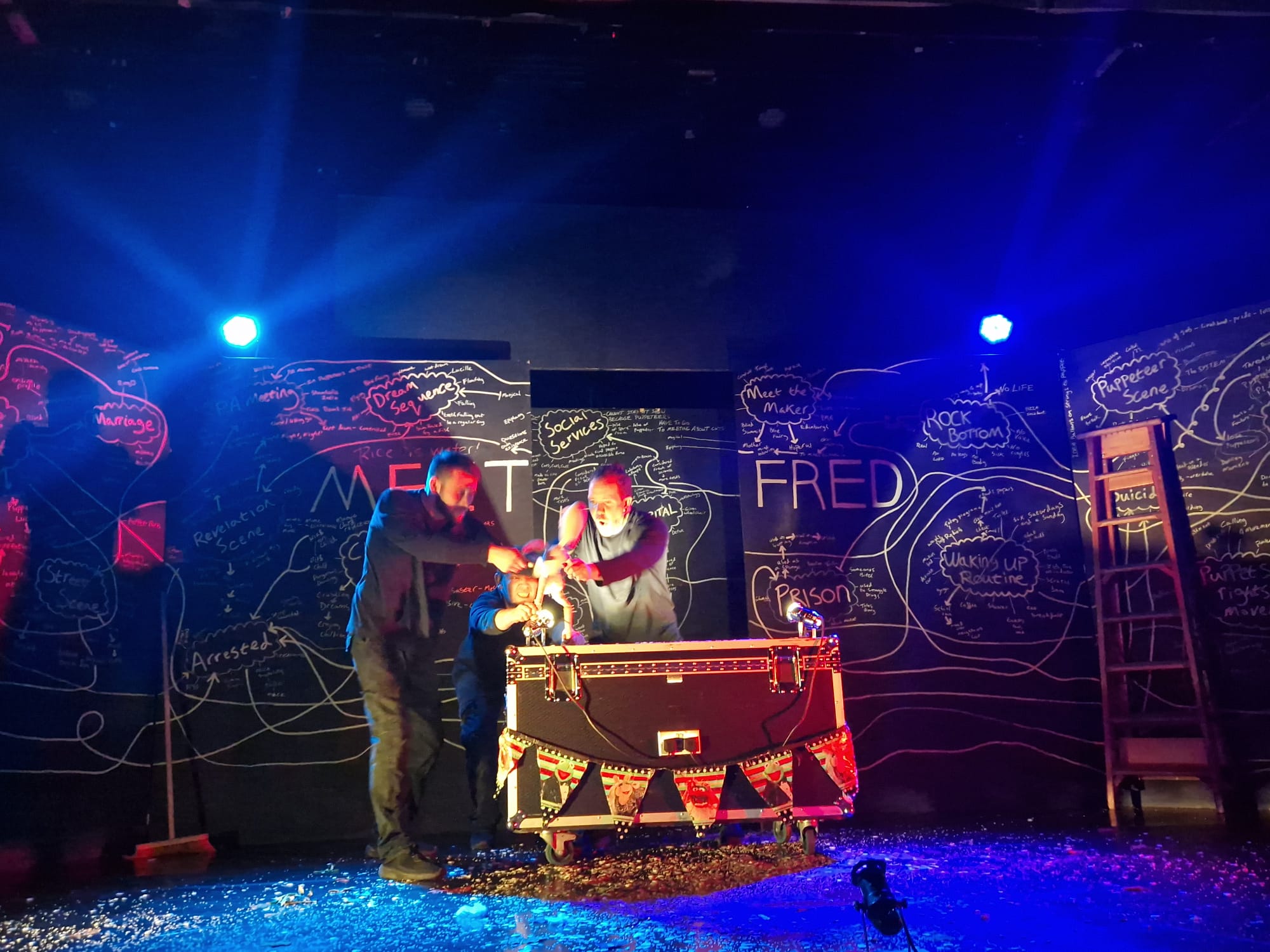
Photo credit – Nicola Benge
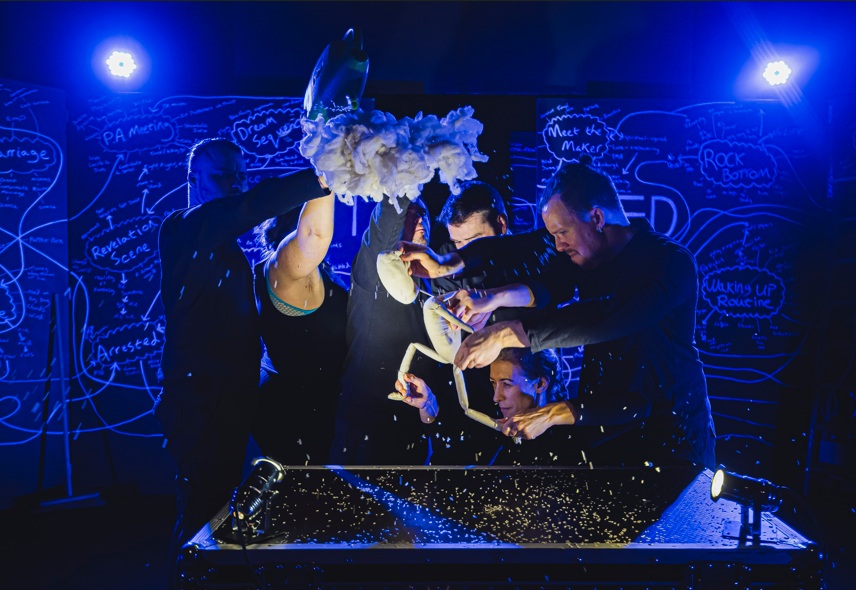
From the outset, the show wears its theatricality proudly. A large illustrated mural fills the back wall, doubling as a set, storyboard, and visual brain dump: flowcharts, diagrams, and mind maps sketching out Fred’s journey, the plot’s detours, and the bureaucratic logic (or lack of it) governing his life. It’s a clever, economical device, and one that mirrors how people are so often reduced to boxes, arrows, and assessments on paper.

Photo credit – Nicola Benge
One of the production’s great pleasures is its meta-theatrical playfulness. The director drifts in and out of the action, sometimes offstage, sometimes very much present, while the mechanics of puppetry are never hidden. Puppeteers are acknowledged, referenced, and occasionally gently mocked. Sometimes the audience becomes part of the show, and at other times, ceases to exist. This self-awareness becomes part of the joke — a reminder that all systems pull strings, whether theatrical or governmental.
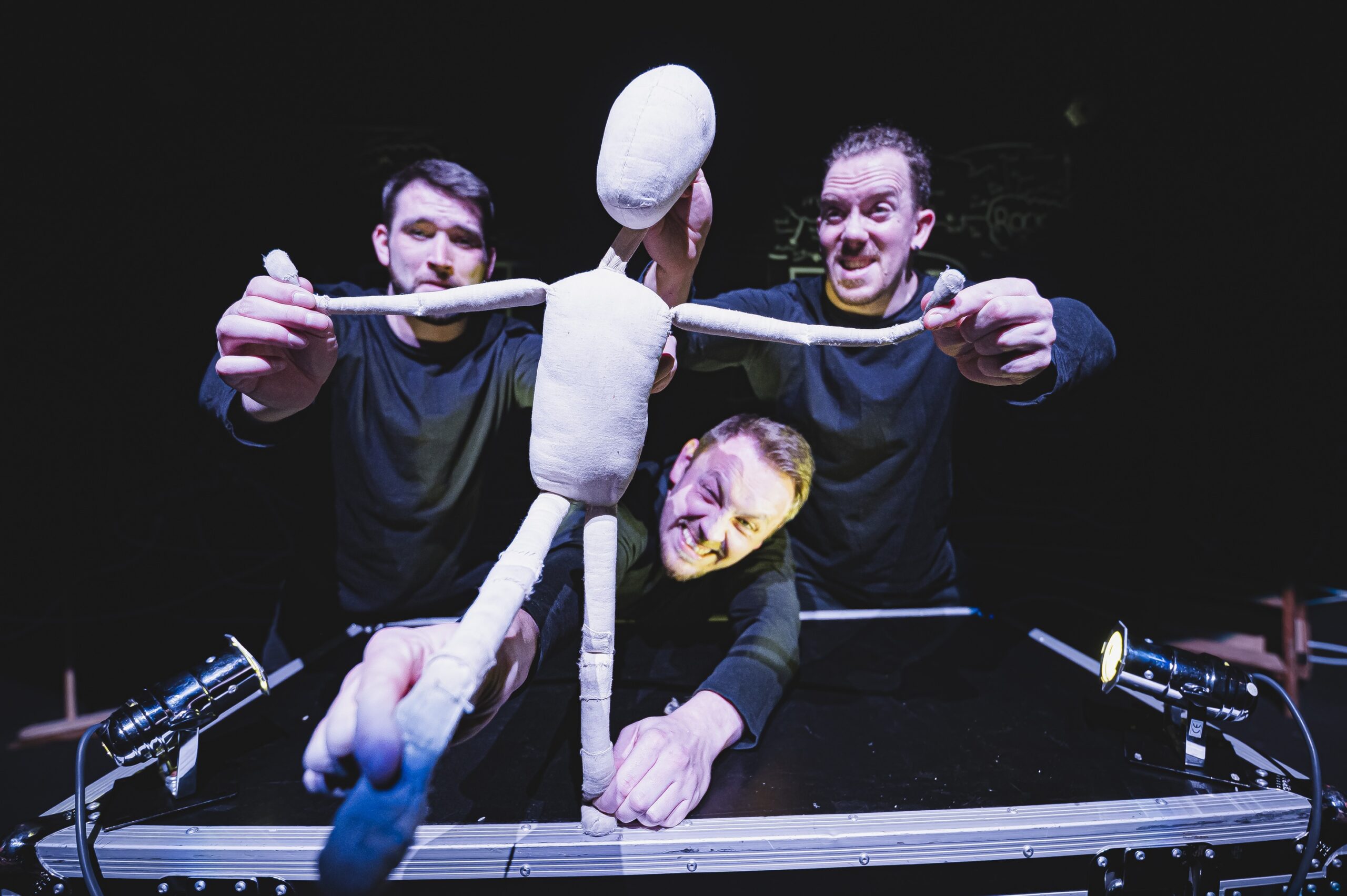
What’s most striking is how much is achieved with so little. The set is minimal, the means modest, yet the effect is joyful, anarchic and oddly tender. Meet Fred is peak playful puppetry: quirky, self-reflexive, politically alert and unafraid to be silly in the service of something serious.
Alongside its political bite, Meet Fred finds surprising emotional weight in Fred’s romantic longings. Watching a puppet navigate intimacy — flirting, yearning, vulnerability — is both funny and oddly moving. The show plays knowingly with the awkwardness of a cloth body craving connection, using humour to disarm before landing something more tender: the universal desire to be seen, wanted and loved, regardless of how the protagonist might be stereotyped.

There are big laughs throughout. Puppet-based gags land with satisfying regularity, particularly those skewering the DWP (Department of Work and Puppetry), and the absurdities of the ‘Puppetry Living Allowance’. The humour is sharp and satirical, without being didactic. It is a performance that trusts its audience to understand, and appreciate the multi-layered approach to the whimsy in the performance. Performers with and without learning disabilities ground Fred’s story in lived experience, ensuring the politics don’t feel abstract. The cast brings depth and authenticity that lifts the show into a full-bodied performance.
There is also a quietly unsettling existential thread running through the production, as Fred becomes increasingly aware of those who quite literally manipulate him. Encounters with his puppeteers and creator blur the boundaries between autonomy and control, raising uncomfortable questions about authorship, agency and consent. Who is responsible for Fred’s choices — and who benefits from them?

Structurally, the show is not without its wobbles. With no interval, the latter part of the performance occasionally feels as though it loses focus, drifting away from the opening narrative drive around the challenges of managing diagnosis and self-fulfilment within a system that doesn’t allow for good days and bad days. There is a sense that the creators of this show have a lot they want to say — about the UK benefits system, autonomy, love, labour and control — but not quite enough space to say it all. That said, the later scenes do regain momentum through sheer inventiveness and charm, with the skills of the performers, and also Fred himself.
One of the show’s sharpest sequences sees Fred pushed into inappropriate work as a children’s entertainer — a role he neither wants nor fits — in a desperate bid to remain employable. The humour here is laced with discomfort, exposing how easily disabled performers are funnelled into limiting, infantilising roles in order to survive. When the threat of DWP cuts puts one of Fred’s own puppeteers at risk, the stakes rise further.
Ten years on, the show Meet Fred still pulls the right strings. It tackles serious topics in comedic and surreal ways that provoke laughter and also awareness of the labyrinthine nature of being enmeshed in the world of benefits. In a moment where disabled people’s independence is once again under threat, Fred’s struggle feels not just relevant, but necessary. At its best, Meet Fred delivers puppetry with a political pulse — provocative puppetry that pulls no punches, yet never loses its warmth, wit or sense of play.