Parents applying for secondary school places for this September say they were not told about changes to the admissions process made while applications were still being made.
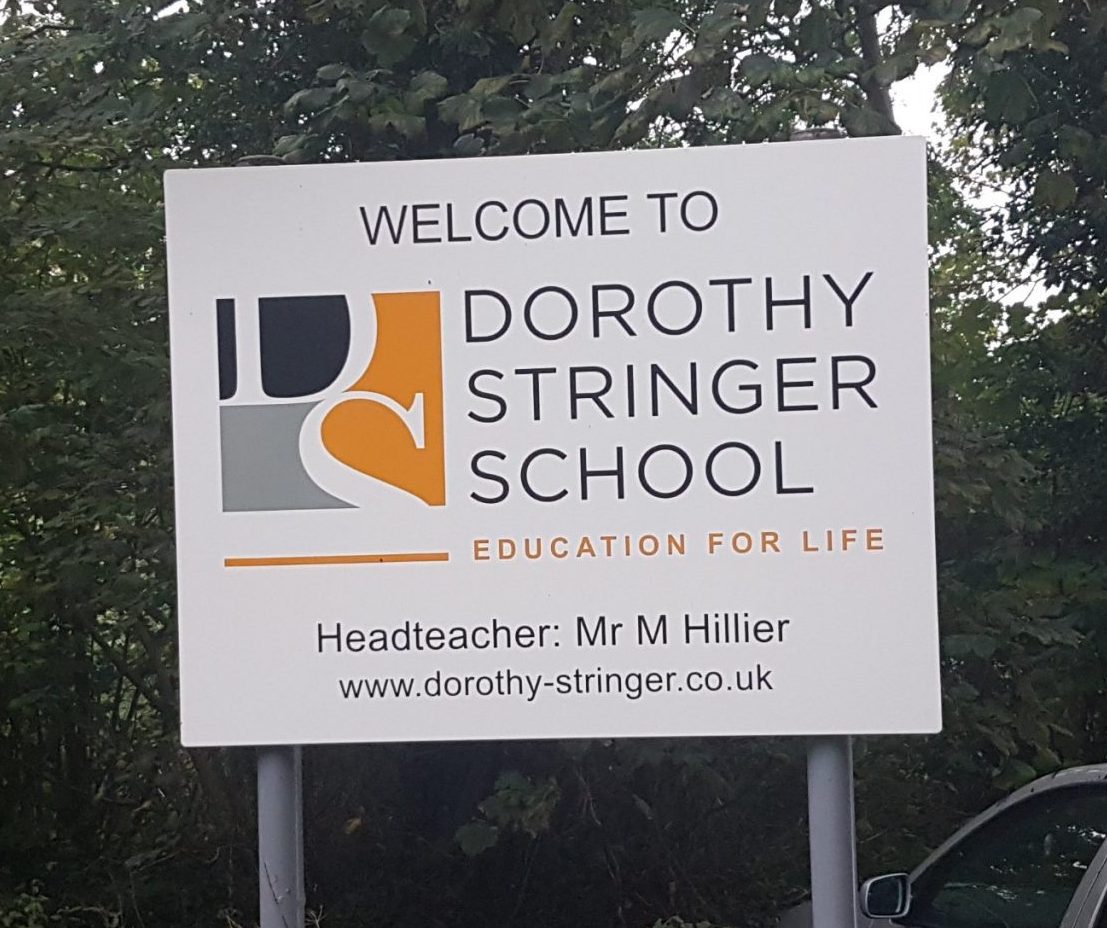
As a result of a challenge by campaign groups to a wider reworking of admissions criteria, Brighton and Hove City Council’s plan to reduce the number of spaces at two oversubscribed schools were blocked.
But despite the council saying it had emailed the hundreds of families affected by the change, many parents say they did not hear anything.
Mum Natasha Priest contacted the Local Democracy Reporting Service as she does not know a single parents who received an email from the council about the Office of the School Adjudicator’s decision to block the changes at Dorothy Stringer and Blatchington Mill.
She was one of more than a dozen who posted on the Facebook Group Brighton and Hove School Catchments, saying they had heard nothing since the email confirmation she’d applied on 19 October.
Mrs Priest said: “From asking a large group of parents from current year six, I cannot yet find a single one who got the email.
“The council also does not appear to have asked schools to communicate the outcome to parents.
“To be honest, the communication from the council throughout the process was minimal – which I thought was shocking given how complex the new arrangements were.
“At a minimum, the council needs to check that their communications with parents are actually getting through.”
Another mother, Jane Setchell, applied for her son’s secondary school place in September 2025.
Mrs Setchell said: “We noted in accompanying information the promise we’d be told of any changes imposed by the schools adjudicator, to allow us to amend our four choices if we wanted.
“We received no email, nor did anyone else I know.
“Our children learn on 2 March which school has been allocated – I would be extremely disappointed if some of my son’s friends miss out on a place at Dorothy Stringer or Blatchington Mill as a result of the council’s mistake.
“I am sure they will appeal if that happens. It’s a pretty monumental error.
“I really don’t understand how on earth it happened, it’s become a bit of a shit show to be honest.”
Brighton and Hove City Council approved the changes to the September 2026 admissions rules to community secondary schools by 38 votes to 11 at a special council meeting in February 2025.
The changes included giving wider choice for children in catchment areas with a single school. Children eligible for free school meals were also given a greater priority.
On Monday, 20 October the Office of the Schools Adjudicator released its ruling backing the changes to admissions but blocked the council’s plans to reduce the number of year seven pupils starting at Dorothy Stringer and Blatchington Mill schools this coming September.
A council press release quoted the deputy leader councillor Jacob Taylor as saying: “We will contact all parents and carers that have already submitted secondary school applications for 2026/27 to explain these changes.”
Council leader Bella Sankey’s October Update video also said parents would be written to about the decision. www.facebook.com/reel/25670142309255732
A freedom of information request on the What Do They Know website from Jim Blackwood found that 1,156 families had applied for a secondary school place before Sunday 19 October last year, out of a total of 2,437 by the deadline 11 days later.
The council said it sent out 1,156 emails about the decision and included an image showing hundreds of redacted email addresses on blind carbon copy (BCC) on the email explaining the situation.
The council confirmed the email went out to all primary and junior schools with year six pupils.
A spokesperson for Brighton and Hove City Council said: “A communication was sent to parents following the school adjudicator’s decision, but we do take seriously reports that some families did not receive it.
“This does not, however, impact the overall admissions process. Parents were invited to use their four preferences and the criteria used to prioritise applications did not change as a result of the adjudicator’s decision.”









What a bizarre quote from the council:
‘This does not impact the overall admissions process’
How can the council possibly know this? People applied before the adjudicator decision based on PANs that then changed after they applied – so clearly it could have an impact.
Have they asked parents impacted by this missing email if it made a difference to their 4 choices?
“Shit show” nails it really. What an awful experience this has been for parents. So incredibly stressful and confusing.
Shit show sums it up perfectly. Perhaps Jacob Taylor could take a day off from point scoring and spend a few hours talking to children who are affected by his daft plans.
When can we vote them out?
With the multitude of recent issues related to school admissions in the city, one has to ask where our Cabinet Member for Children, Families and Youth Services has been for the past two years.
Council papers make clear that their remit includes Local Authority education. Yet, in practice, responsibility appears, at least in part, to have been assumed by the Cabinet Member for Finance and City Regeneration.
If that is not the case, it would be helpful to see a clear account of who has been leading on school admissions, and why this issue has been so visibly fronted by a different portfolio.
Youre very lucky to get your first choice these days unless you go out of town.
It’s shocking how little accountability this council has. Not just on this issue, but many others.
They simply don’t want to listen.
Just wait until there is an issue with any of the academies, because they literally won’t have any accountability!
Sounds like they are driving schools into becoming academies to be honest.
I rather suspect the local authorities ineptitude in handling the appalling attendance levels across its schools will come way before any issues with an academy. Its been so preoccupied with admissions policy that its taken its eye off the ball on attendance. Schools still await the meeting of the attendance leads, officers only now arrange meetings with leadership, any issues are met with ‘are you following the guidelines’. Its all so low level. If you do have any sway with the council or are in fact a councillor perhaps you can get them to focus.
So what it comes to is regardless of non communication and errors the Council is always correct and that their policies will stand. Not very impressive if your one of the families involved.
Communication comes up a lot when it comes to departments.
Whilst I agree with the Council’s comment that “Parents were invited to use their four preferences and the criteria used to prioritise applications did not change as a result of the adjudicator’s decision,” and your assertion that “their policies will stand,” that does not mean parents are prevented from pursuing appeals or complaints.
The two positions are not mutually exclusive.
I do, however, strongly disagree with the Council’s suggestion that “This does not, however, impact the overall admissions process.” That statement is plainly unsustainable.
A parent who received the promised email may reasonably have reconsidered their preferences, particularly if they believed their child’s prospects of securing a place at one of the affected schools had materially improved. Given the increased Published Admission Numbers (PANs), that would have been true for some applicants.
It is worth remembering that 60 additional children will now receive places at those two schools next month who would not have done so under the Council’s original proposals. That represents two full classes of pupils who would otherwise have been allocated elsewhere. It is difficult to characterise that as having no impact on the admissions process.
The Council publicly promised on four occasions to send that email. The article refers to two instances, but there were at least two further references — including on 10 September 2025 and within the published application booklet on the Council’s website, which parents would reasonably have relied upon when making their preferences.
This was not an incidental commitment. It was framed as an explicit reassurance to parents navigating a significant change and a complex system. It is entirely reasonable for families to expect the Council to fulfil a promise made so clearly and repeatedly. On the basis of what has been reported, that did not occur.
Taken together, the sequence of commitments, omissions and subsequent minimisation risks creating the impression of an administrative omnishamble — not a single isolated oversight, but a cascading series of failures with tangible consequences for families.
This raises the question of potential maladministration. The issue appears systemic rather than isolated. Affected parents could end up considering multiple avenues, including:
* An admission appeal, particularly where a child did not list one of the two schools in reliance on the promised notification;
* A formal complaint to the Council; and/or
* A complaint to the Local Government and Social Care Ombudsman.
Given the scale of the consequences, the reputational implications for the authority are significant. It would be prudent for the Council to acknowledge any failings promptly and transparently rather than maintain a position that the process was unaffected.
There were already warning signs in the wider handling of these changes, including concerns that schools were excluded from key discussions. That does little to foster constructive working relationships, particularly when schools are expected to implement and manage the operational consequences of decisions in which they had limited involvement.
Whether the longer-term impact includes increased interest in foundation or academy conversion remains to be seen. However, governance confidence is built on trust, and trust depends on reliability and openness.