The father of a transgender teenager should be allowed to challenge the policy of a Hove-based health partnership which he claims allowed for “negligent and unlawful” gender hormone treatment, the High Court has been told.
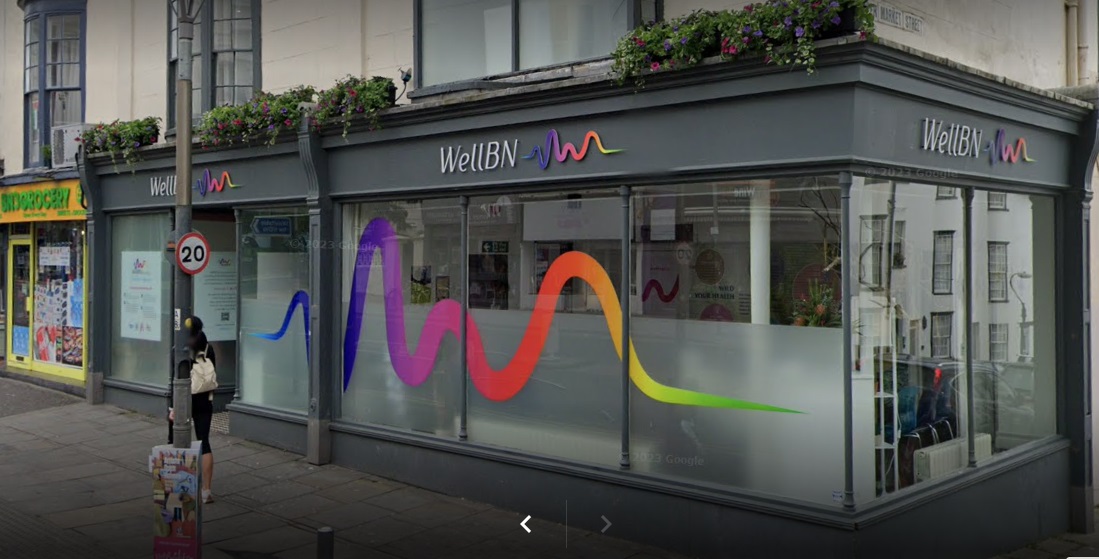
The father, known only as ATN, is seeking to proceed with legal action against the Wellbn Partnership, a private partnership which provides NHS services, including transgender healthcare, to around 25,000 patients across Sussex and the UK, with two surgeries in Hove and one in Portslade.
Lawyers for ATN told a hearing on Wednesday his child, known only as ATT, was provided with hormone treatment “without his parents’ consent and in a manner wholly inconsistent with current NHS guidelines”.
ATT is no longer treated by the partnership, but ATN is still seeking to challenge its policy of prescribing gender hormone replacement therapy (HRT), also known as gender affirming hormones (GAH), to under-18s.
Vikram Sachdeva KC, for ATN, claimed the policy went against medical guidance and therefore put it in breach of its contract to provide medical services.
While the partnership stopped prescribing HRT to under-18s in April last year, the barrister said legal challenge should proceed as the partnership has not “accepted that their prescribing practice was unlawful”.
The partnership is resisting the claim, with its lawyers telling the hearing in London that the claim should be thrown out as “academic” as it has already stopped providing gender treatment.
In the 2024 Cass Review, Baroness Hilary Cass recommended “extreme caution” in providing HRT and said there must be a “clear clinical rationale for providing hormones at this stage rather than waiting until an individual reaches 18”.
In March this year, the NHS paused gender-affirming hormone treatment for 16 and 17-year-olds after a separate review found evidence did not support its continued use.
But in written submissions on Wednesday, Mr Sachdeva said that the partnership had described the block on hormone replacement therapy as a “temporary pause” on its website, and that it would otherwise prescribe the treatment to under-18s after a “baseline blood test, a single 40-minute appointment, and signing a consent form”.
He continued that the partnership’s position was “contrary to every other medical body which has set out its view” on the treatment, and that NHS England had told the partnership that it had “no lawful basis for providing NHS-funded treatment of this kind”.
The barrister told the court that it was in the public interest for the claim to proceed as the partnership’s model “results in inevitably negligent and unlawful practice” and that it was “impossible for the defendant to plausibly argue” that it had regarded NHS guidance.
Nicola Newbegin KC, for the partnership, said in written submissions that there was “no public interest in the claim proceeding”.
She said: “The defendant is no longer providing the treatment complained of (and) no longer applying the ‘policy’ complained of, and has no intention of not complying with the instructions of NHS England and/or the Sussex Integrated Care Board.”
She continued: “The question of whether and in what circumstances under-18s should be prescribed GAH is subject to ongoing debate, both within the medical profession and more broadly, in which policies and guidance are continually developing.”
In court, the barrister said that the claim was “unsustainable” and had a “total lack of merit”, and added that there were some “historic positions” on the partnership’s website.
She added that the debate on whether such treatment should be given to under-18s was “not something the court can, let alone should, seek to resolve”, and that ATT themselves were “noticeably not bringing this claim”.
Mr Justice MacDonald will hand down his ruling in writing at a later date.