

REVIEW: Ballet Central 2026, The Dance Space, Brighton
Dance Space, Brighton – 5th June 2026
Following a critically acclaimed 2025 tour, Ballet Central returns with a brand-new company of dancers blending classical ballet with bold contemporary choreography. Ballet Central performed at Brighton’s Dance Space on Friday 5 June 2026 with a vibrant and ambitious programme showcasing the talents of the 2026 graduating company from London’s Central School of Ballet. The Ballet Central experience also provides young dancers with an understanding of all aspects of creating performance, including the staging of repertoire, costume design, and technical aspects of sound and lighting.
The 2026 programme showcases four contrasting works, from the dreamlike emotional world of Kenneth MacMillan’s Solitaire to contemporary new commissions from Monique Jonas and Cameron McMillan, alongside the Broadway glamour of Times Square Ballet. Ballet Central provides the opportunity to see dance from highly-acclaimed and emerging choreographers who collaborate with students to produce newly commissioned works and much-loved revivals.
Founded in 1984 as the touring company of Central School of Ballet, Ballet Central was established to provide graduating students with invaluable professional performance experience before they embark on careers with dance companies around the world. This year’s programme, curated by Artistic Director Kate Coyne, offered a rich and varied evening that allowed the dancers to display an impressive range of technical and artistic skills.
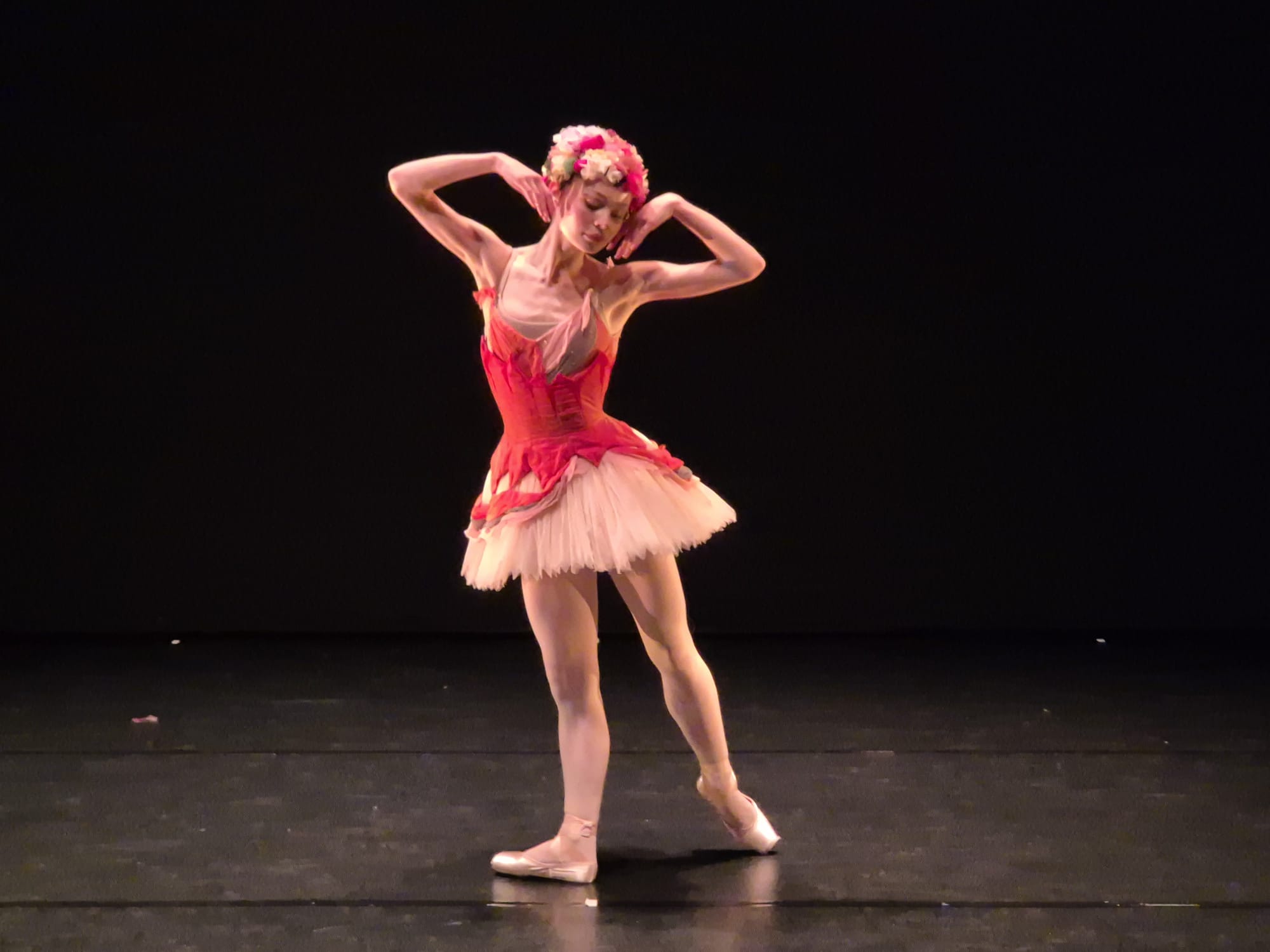
The evening opened with Kenneth MacMillan’s Solitaire, revived by Lynn Wallis OBE. First performed by Sadler’s Wells Theatre Ballet in 1956, the work marks its 70th anniversary and remains one of MacMillan’s most intriguing early creations. Set to Malcolm Arnold’s score Eight English Dancers, Solitaire is subtitled A Kind of Game for One and centres on a solitary female figure known simply as The Girl. Adding an extra layer of significance to the performance, Malcolm Arnold’s daughter was in the audience to witness her father’s music brought to life on stage.
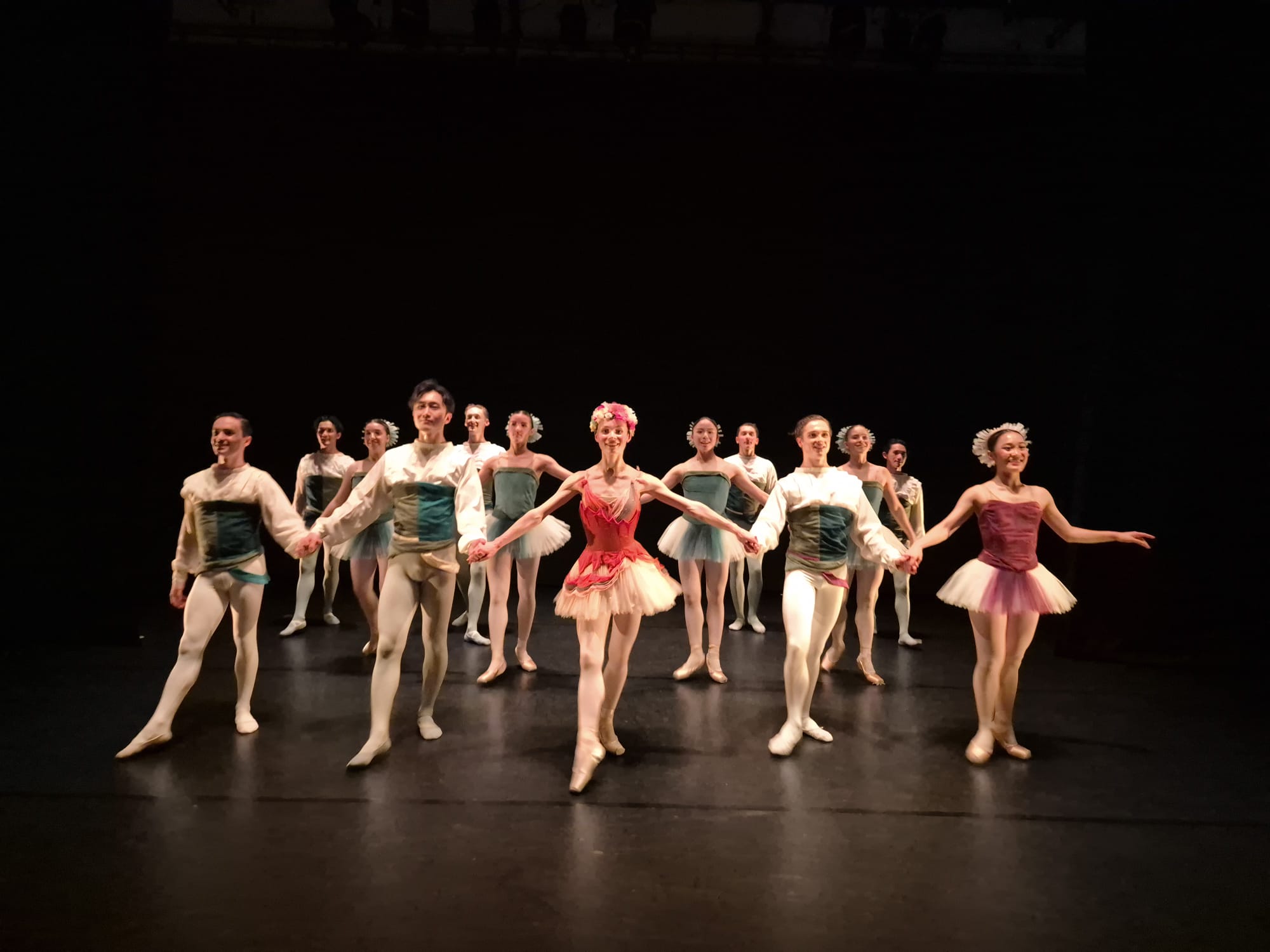
The main role was performed by principal dancer, Australian Ella Brownlow-Ziirsen, who was magical in this piece, bedecked in a floral headpiece, and with expressive hands, there was something of a 1950s Audrey Hepburn film about her light, lithe and polished performance. This is not an easy ballet; there are fleeting Pas de Deux, fast footwork, interchanging partners and group dances. It was a fast-moving, glorious staging with modernist costumes reminiscent of Alice in Wonderland’s characters in the Croquet game. I adored this, and found my eye drawn back to this principal dancer in the character of The Girl, as she executed challenging and strenuous steps en pointe, yet she made the most challenging passages appear effortless. The work blurs the line between reality and imagination in a bold step in post-war British ballet.
Although created seventy years ago, Solitaire felt remarkably fresh and modern. MacMillan’s willingness to blur the boundaries between narrative and abstraction still feels innovative, creating a ballet that is emotionally resonant without ever becoming overly literal.
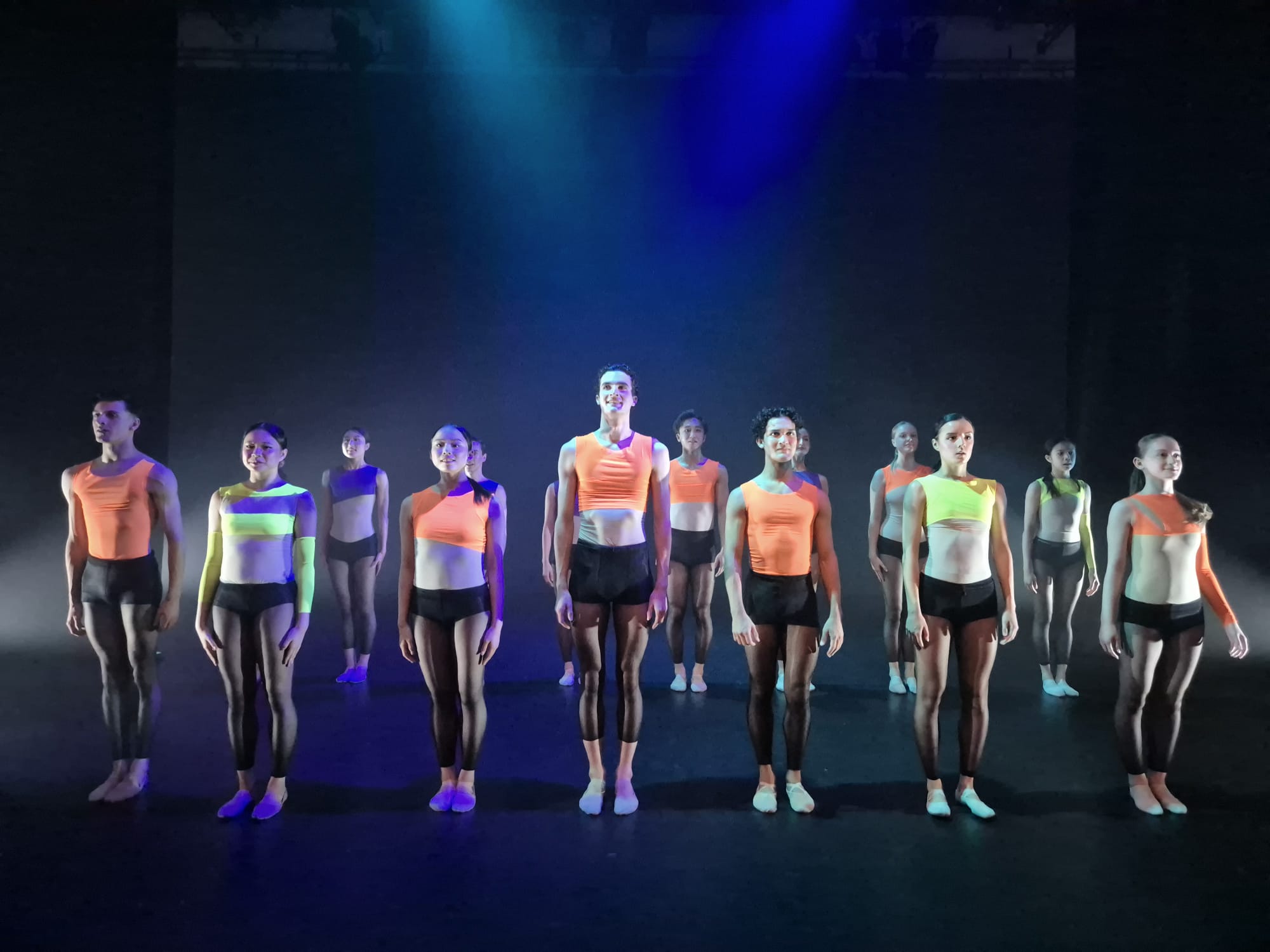
The shift in tone for the second work, BOLERO 18, was immediate and dramatic. This piece, set to the music of Ravel’s Boléro and choreographed by Cameron Mcmillan (no relation to Kenneth Macmillan), was a fast-paced, contemporary ensemble piece that did not stop moving. In complete contrast to Solitaire, it brought in bright, unisex UV leotards that showed the clean athletic lines of the performers with both men dancing with men and women with women as well as interchanging sprints onto the stage before being replaced with flurries of other dancers.
I very much liked this performance. New Zealand-born and raised, Cameron McMillan is a London-based choreographer, dance artist and movement director with an extensive international performance and creative career spanning contemporary dance, ballet, opera, film, fashion and commercial fields. Inspired by the 18 cycles of the insistent, looping crescendo of Maurice Ravel’s Boléro this work re-imagines the iconic 1928 score through a contemporary lens. The work takes this music and reimagines it through a contemporary lens in an energetic, athletic and forward-moving way. Particularly impressive was the way the company maintained clarity and precision despite the speed and complexity of the choreography.
After the interval came REPLICA, choreographed by Monique Jonas of Jona Dance and set to an original score by Phillip Feeney. For this reviewer, REPLICA was perhaps the most visually inventive work of the evening. JONA DANCE is a project-based contemporary dance company situated in London founded in 2019 by Artistic Director Monique Jonas.
This piece was notable for its clever use of a moving mirror and lights to effect a contemporary performance – dancers wearing modern free-flowing pieces that could have been modelled on any catwalk. Dancers appeared, disappeared and reappeared as reflections merged with reality, creating a constantly shifting visual landscape. This looked deceptively simple but was incredibly intricate, with fast-paced steps, clean performer lines, and interchanging dancers. This was a beautifully crafted approach to showing the skills of this class of 2026 dancers in the intimate setting of The Dance Space in Brighton. I loved this performance, and it looked like the dancers really enjoyed performing this too.

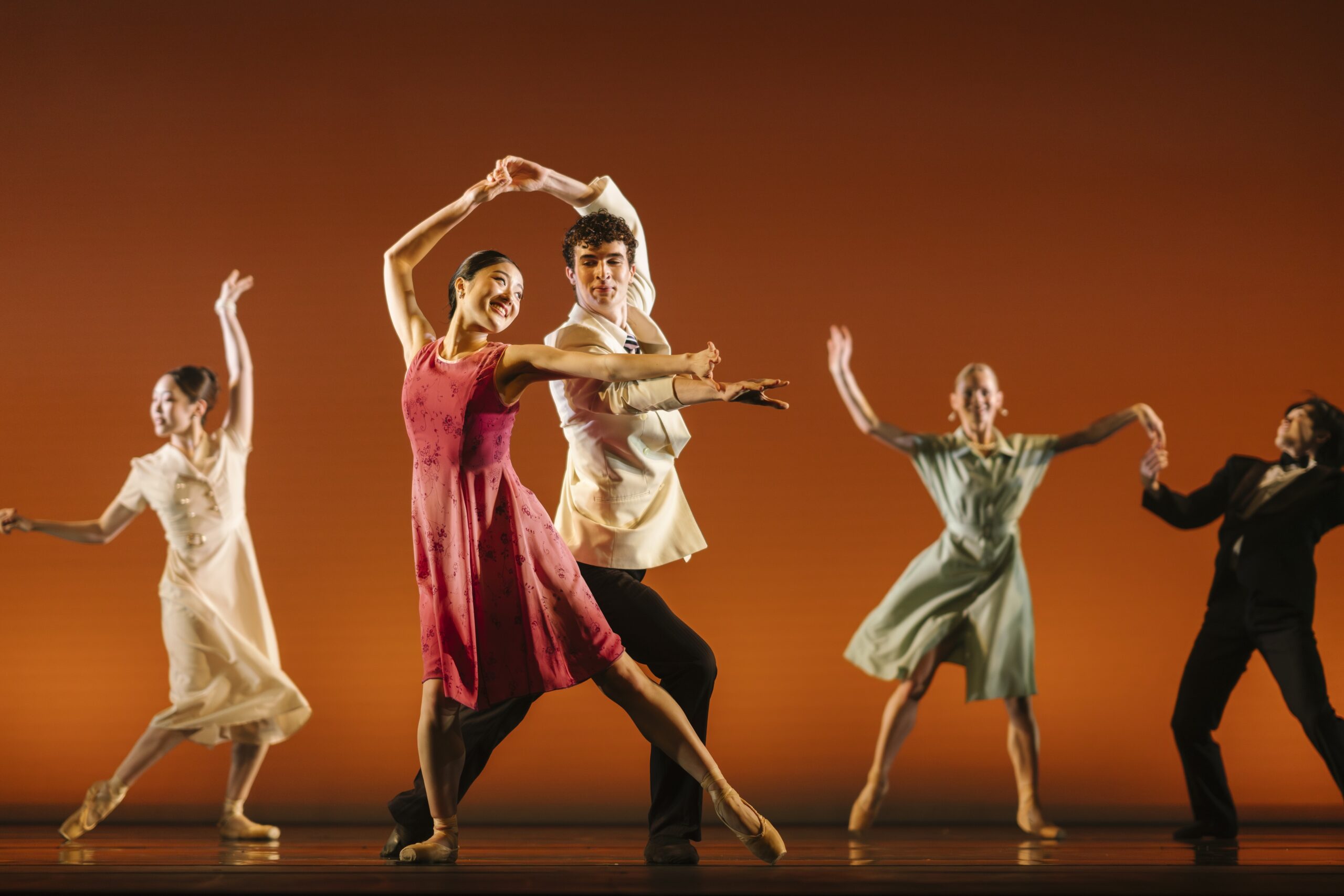
The programme concluded with Times Square Ballet, choreographed by Ashley Page OBE and set to Leonard Bernstein’s glorious music from the musical On The Town. A complete contrast to the cerebral qualities of REPLICA, this final work embraced colour, humour and theatricality.
It reflects the hustle and bustle of the famous Broadway theatre district during the 1940s, featuring a cross-section of New York society. Characters gather in Times Square for their hectic night of fun, searching for romance against the backdrop of New York City. A brightly coloured, fun, World War II-era costumed dance with echoes of the MGM film of the same name starring Gene Kelly and Frank Sinatra. This performance comprised 10 couples dancing in different characters and brought a smile to the audience, and ended the evening with a lightness and joy, not just for the performances of the evening, but in the knowledge that this next generation of dancers is a capable, talented and versatile one ready to join dance companies around the world.
Ballet Central’s mission is to prepare young dancers for professional careers while bringing high-quality dance to audiences across the country. The evening demonstrated not only the versatility of this year’s company but also why Ballet Central remains such an important stepping stone between dance training and professional careers. I wish them all much luck!
Find more arts and culture reviews at Brighton & Hove News – Follow @BHCitywhatson and @bhcitynews on Instagram.
.







Excellent review!