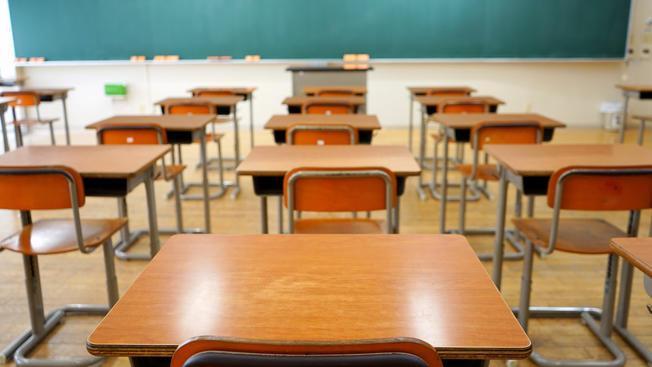
Relatively few children are excluded from school for racist, sexist or homophobic abuse in Brighton and Hove compared with other parts of the country.
But schools still excluded 178 pupils for discrimination over five years in Brighton and Hove, with 33 of those from primary schools and 142 from secondary schools.
The figures come from the Department for Education (DfE) which recorded a rise in the number of school exclusions linked to racist, homophobic, sexist, gender-related and disability-linked abuse across England and Wales.
Brighton and Hove was ranked 129th out of 153 education authorities in England for such exclusions from autumn term 2020 to the end of the spring term last year.
According to a BBC Shared Data Unit report, increased issues with these forms of bullying are linked with cuts to anti-bullying projects in schools.
DfE data from September 2020 to March 2025 includes 70,000 mentions of racist, homophobic, transphobic or disability-related abuse leading to permanent exclusion or suspension. Of these, 11 per cent, or about 8,000, were in primary schools.
Schools can record up to three reasons for each suspension. But recording incidents and details of bullying is not a requirement for schools despite recommendations from the Equality and Human Rights Commission (EHRC).
Brighton and Hove was ranked 140th in England for exclusions linked to racism, 64th for sexuality and gender identity – and joint bottom nationally for disability discrimination.
Schools recorded a total of 10,212 exclusions in Brighton and Hove over the five years, ranking 123rd for temporary exclusions nationally and 152nd for permanent exclusions, the second-lowest figure, with 18 children permanently excluded.
Of the 18, fewer than five were linked with racism and none to disability or gender identity or sexuality.
In neighbouring East Sussex, schools excluded 573 children for discrimination. Of these, 434 were for racism, eight linked to disability abuse and 131 for sexist or gender-related abuse.
Over the past five years, children in East Sussex have been excluded temporarily – or suspended – on 44,354 occasions and permanently excluded – or expelled – 422 times.
In West Sussex, 1,036 exclusions were linked to discrimination. Of these, 802 were for racism, 22 were linked to disability abuse and 212 were for sexist or gender-related abuse.
In the same five years, West Sussex suspended pupils 46,049 times and expelled pupils on 662 occasions.
Essex had the most exclusions for discrimination, with 2,391, followed by Kent, with 2,225, and Hampshire, with 1,913.
Rutland had the fewest, with just 46 suspensions linked to discrimination, followed by Hartlepool, with 73 and Reading, with 91.
Labour councillor Emma Daniel, Brighton and Hove City Council’s cabinet member for children, families and youth services, said: “Every child should be able to enjoy an education free from discrimination.
“We’re proud of the work being done in this area throughout our schools – and proud of our young people who continue to prove themselves as people who promote inclusivity and compassion for others.
“Our school community shares this council’s values in respect of inclusion and equality and that is reflected in this data.
“As well as having schools and staff with the right values, teaching staff benefit from regular training and support and are provided with practical guidance to prevent and manage any issues which do arise.
“Targeted support is also provided where needed, with schools and the council working directly with families and our local communities.
“While it is positive to see our ongoing work reflected in the data released this week, we recognise there is still more to do.
“Together with our schools, we are committed to continuing our proactive approach to creating safe, inclusive environments where all pupils can thrive.”
A union boss said that some politicians and public figures set a poor example with divisive rhetoric and inflammatory social media posts.
Pepe Di’lasio, the general secretary of the Association of School and College Leaders (ASCL), said that schools only excluded pupils as a “last resort” but would not tolerate discriminatory behaviour.
But with “divisive rhetoric from some politicians and commentators”, Mr Di’lasio added: “The problems we are seeing are huge societal issues which cannot be solved solely in the classroom.
“It feels as though we are living in an increasingly abrasive era.”





It would be interesting to know what data the council has about the percentage of children excluded have SEND issues. From conversations I have had it does sound like some children waiting for EHCPs, alternative school placements, or the council agreeing to additional support, are more often being excluded and there have been studies which show children with additional needs experience exclusions much more. With the government’s SEND review aiming to push more children with additional needs into mainstream schools, they need to back it up with clear funding commitments so schools have the resources they need to manage. So far, there’s been no clear guarantee that the government will provide the resources needed, so it feels like they are channeling children towards mainstream schools by default as a cheaper option, without adequate support.