

A councillor has asked for assurances that a new “accessible city strategy” will improve customer service for those who struggle online, including the elderly, the disabled and the poor.
Conservative leader Alistair McNair spoke out about those who needed to call or meet council staff in person during a meeting of senior councillors on Friday (4 August).
Councillor McNair said: “We know that many residents have difficulty accessing council services online – the dyslexic, the elderly.
“We also heard very recently how much more expensive it is to have in-person customer service. It’s only available Monday to Friday 9am to 4.30pm. Some (council) phone lines are only open until 1pm.
“Does this strategy mean we’re looking to increase customer service until late in the evening and the weekends despite the cost and extending customer phone lines to later in the day?”
Brighton and Hove City Council’s head of communities, equality and third sector Emma McDermott said that the council was not looking at extending telephone line times but focusing on how staff responded to people’s communication needs.
She said: “What we are finding is that we’re not consistently asking customers what their access requirements and communications requirements are beyond just the telephone, understanding how we are providing information, contacting them and so on.
“What we’re looking at is doing a survey across our services – who is doing what, how they’re using that information and what does that mean for best practice across the council and looking at how we’ll change services in response to that.”
Labour leader Bella Sankey said that her colleague, Councillor Jilly Stevens, was looking into customer services, having taken on the role in the new administration.
Councillor Sankey said: “She is currently undertaking a vast amount of work visiting our customer service centres.
“She is doing work across the council to understand how we currently engage with our residents and how that can be improved.”
About one in five Brighton and Hove residents – or almost 52,000 people – are defined as disabled under the Equality Act.
The council’s “accessible city strategy” is intended to help them by going above and beyond the bare minimum required by the Equality Act.
Officials drew up the new strategy with input from disabled people after an open invitation to participate last year.
The strategy said: “Our vision is to be a council that is welcoming, inclusive and accessible, going beyond the legal minimum when providing barrier-free services that promote independence and equity of access, opportunity and representation for disabled people and their diverse identities.
“Our councillors and council staff truly understand the varied lived experiences and systemic barriers faced by disabled people who live, work and visit the city and we all do the necessary work year on year to embed accessibility and disability inclusion in how we think and act as a service provider and employer.
“We are a council that proactively uses its role as a civic leader to influence businesses, creatives, visitors and other public services to make accessibility part of the city’s culture and lead by example.
“The city and we, as the council, are a beacon of change to residents, organisations and local authorities nationwide.”
The strategy was approved at a special meeting of the council’s Strategy, Finance and City Regeneration Committee at Hove Town Hall.
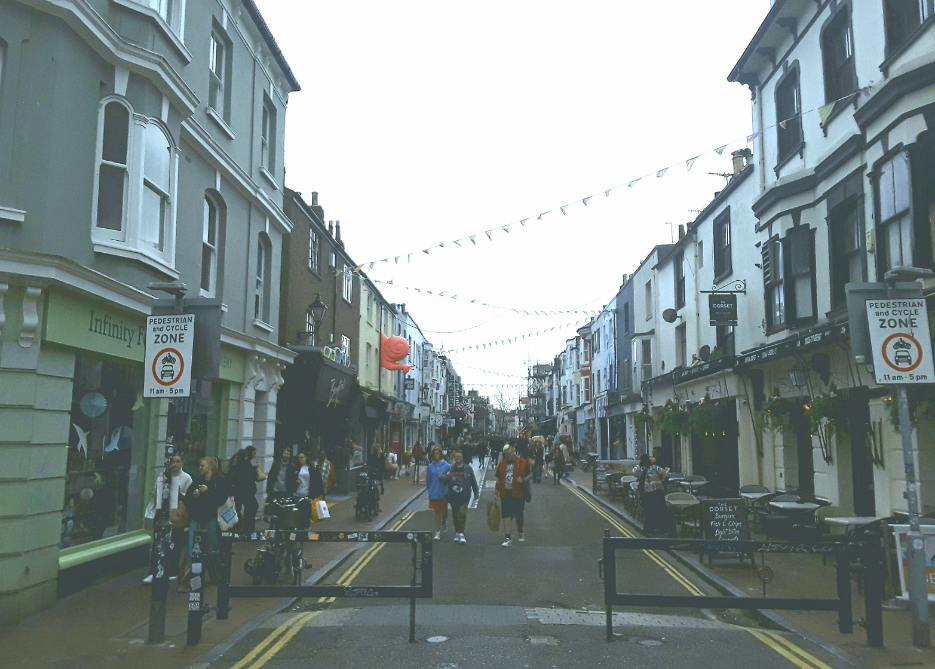
One early change looks likely to involve putting back a disabled parking bay in Gardner Street and reversing a decision to close it to traffic.
Since the street was shut to everyone except pedestrians and cyclists by the previous Green administration, a longstanding resident has been trapped in her home in the street.
Councillor Sankey said: “The full pedestrianisation of Gardner Street has left a disabled resident imprisoned in her home.
“We are now undertaking urgent work to end this imprisonment and to bring about changes that will allow our resident to enter and leave her property.”








I am a disabled elderly man living in Brighton who find it very difficult to communicate with the council Especially in social assistance services أ And the benefits such as rent, taxes and assisted living Living costs because I do not work due to my disability. Can I get help?
This needs much more attention that it gets. If you can’t access digitally or by mobile phone it can be really difficult to get services and get missed out, without anyone knowing about you. This affects all sorts of types of people really negatively and different services – not just council ones – banking for example has always been difficult but is becoming a nightmare if something goes wrong.
Digital exclusion is something the VCSE sector works towards combating quite a lot. Sometimes this can be as simple as a volunteer supporting a resident use a public computer.