Review: The Beekeeper of Aleppo, Theatre Royal Brighton
9th June 2026
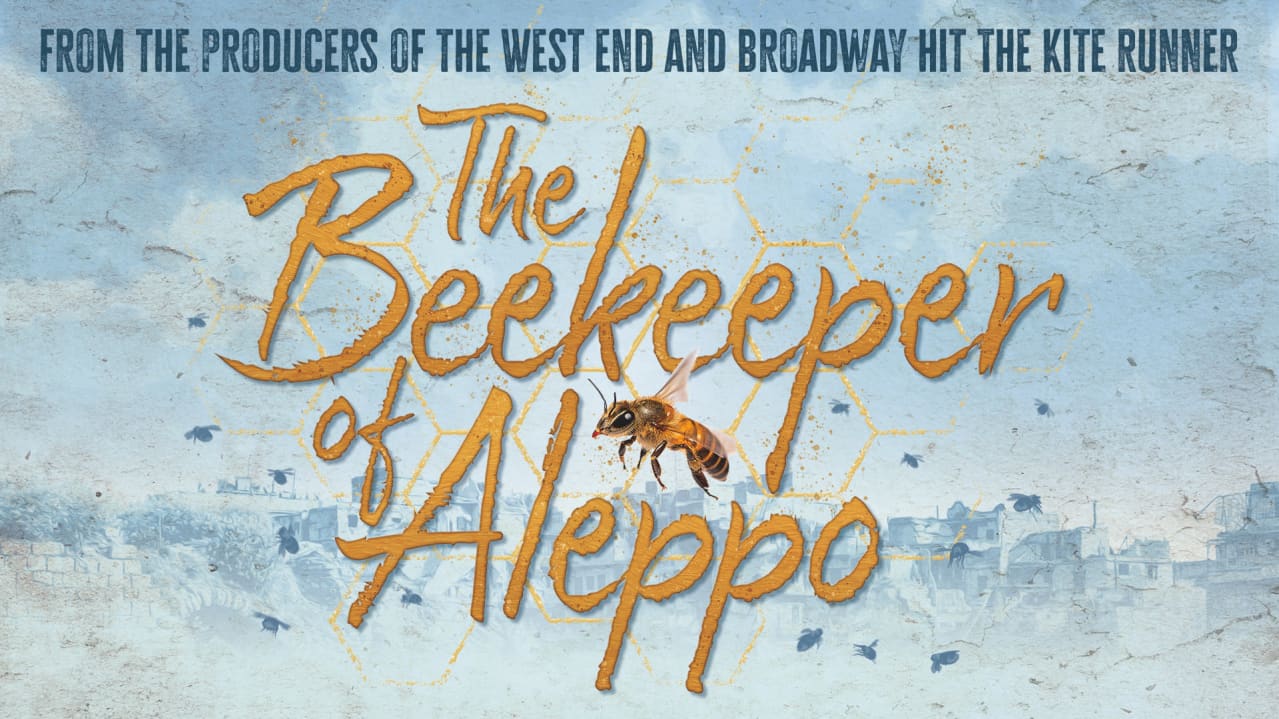
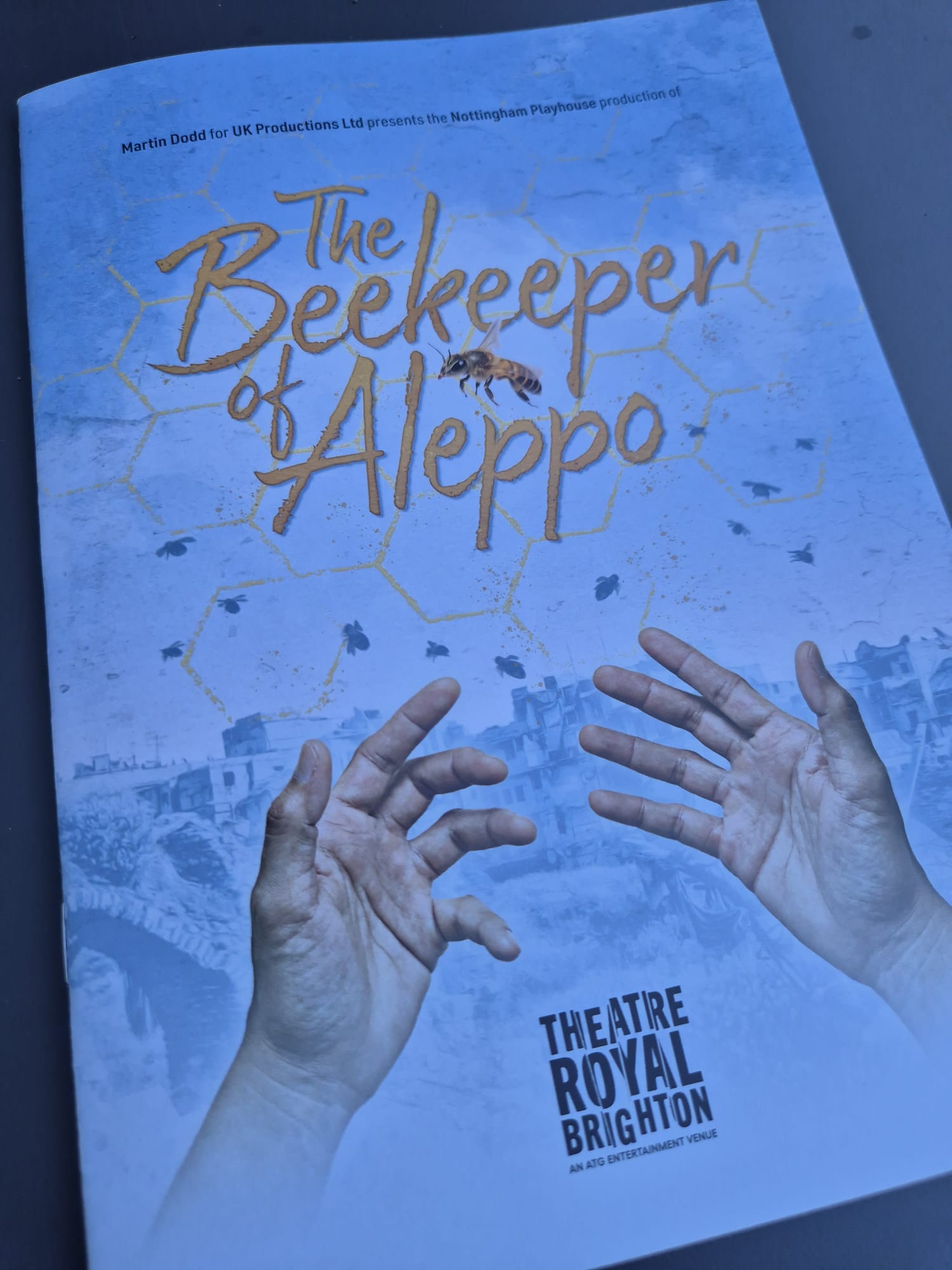
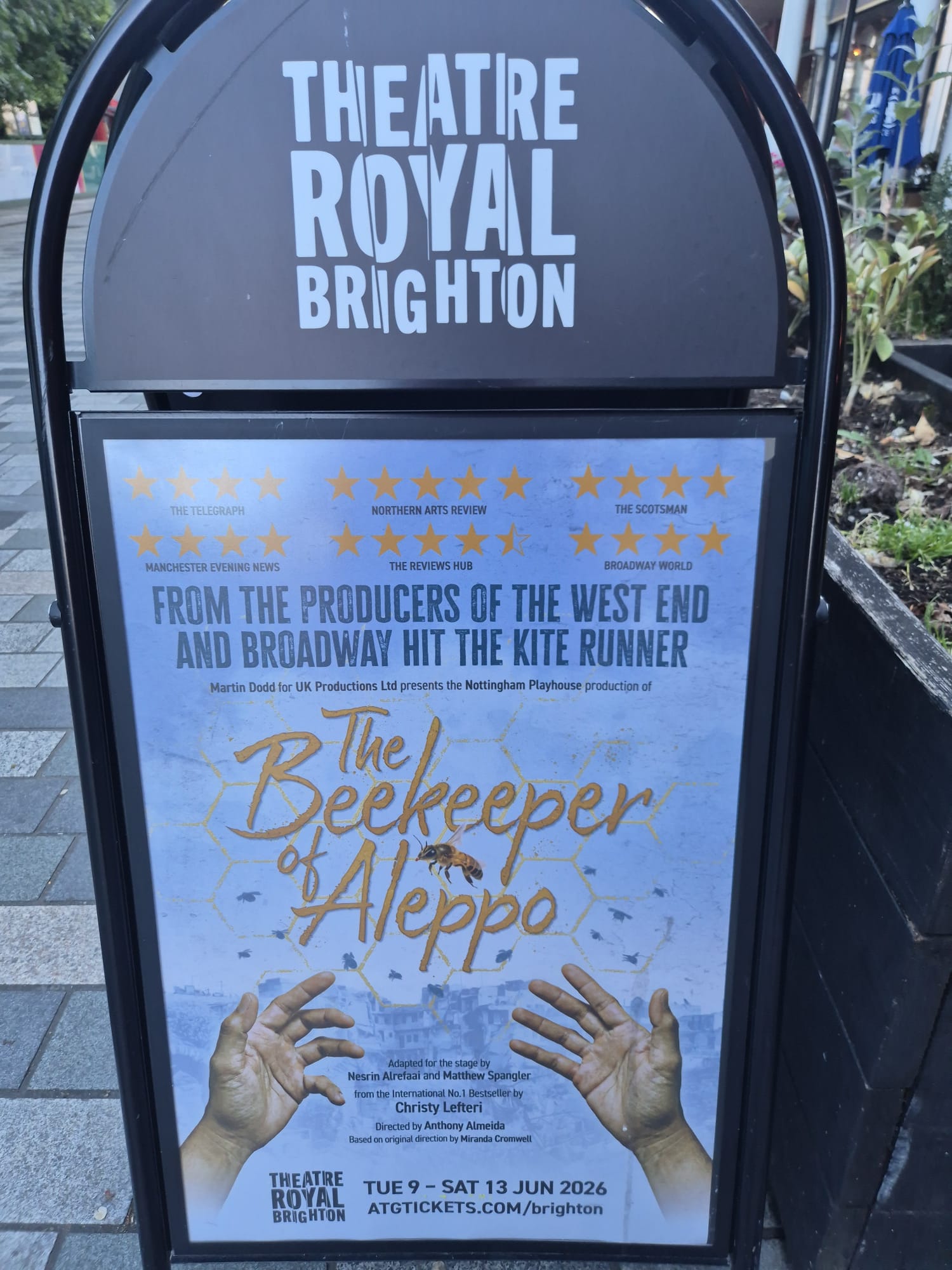
Adapted from Christy Lefteri’s international bestselling novel, The Beekeeper of Aleppo arrived last night at Theatre Royal Brighton as the final stop of its UK tour. The show is playing until 13th June. Adapted for the stage by Nesrin Alrefaai and Matthew Spangler and directed by Anthony Almeida, the production takes on the formidable task of bringing a significant novel about displacement and migration to the stage.
At its heart, this is really two stories woven together. The first is the story of Aleppo in Syria itself: a vibrant, cosmopolitan city full of family, friendship, work and community in 2010. The second is the story from 2015 onwards of what happens when war destroys those certainties and forces people to leave everything they know behind.
Nuri, played by Adam Sina, is a beekeeper by profession, and a devoted one, having refused to follow his father into the job of textiles in the souk. His wife Afra, played by Farah Saffari, is an artist. Together they anchor a large ensemble cast in a production that spans years, countries and emotional landscapes. The play moves between memories of pre-war Syria and the devastating realities of conflict, before following the couple on a perilous journey through Europe in search of safety.
This is not an easy watch. The themes are immense: War, grief, trauma, displacement, bereavement, family separation and survival. Along the way, the audience encounter smugglers, immigration officials, aid workers, asylum processes, fellow refugees and migrants, friends lost and found (and some who turn out not to be as originally perceived), and the countless bureaucratic and human encounters that shape the refugee experience both abroad and in the UK including the Home Office, and the NHS, as well as case workers involved in this complex, labyrinthine system.
The scale of the story is ambitious and occasionally almost too ambitious. There is a great deal of narrative to carry, and at times the production feels slightly overburdened by the amount it wants to say. Judicious trimming might have strengthened the pacing. There are moments where the accumulation of memories, encounters and explanations slows the momentum of the piece, especially in the second half.
Yet there is no doubting the commitment of the cast, who are tasked with navigating a huge emotional range while often playing multiple roles. Sina gives a particularly powerful performance as Nuri, carrying much of the production’s emotional weight. His portrayal captures not only grief and fear but also confusion, guilt and the disorientation of trauma which become more overt in the play’s second half. Saffari’s Afra provides a counterpoint, conveying both fragility and resilience, and sometimes frustrating stubbornness, as the couple struggle to maintain their connection through circumstances that would test anyone.
What is particularly impressive is the way the ensemble moves fluidly between dozens of characters and locations. The cast create a world populated by family members, strangers, officials and fellow travellers, helping to convey the complexity of a journey that is often reduced to headlines and political slogans, whilst playing multiple roles. I feel like there are some conversations to be had about the migrant experience and how to present refugees in a three-dimensional way, but the performers really gave their all in a long and challenging play exploring a multitude of emotions around loss, family, diaspora, challenges, and who delivered that really well.
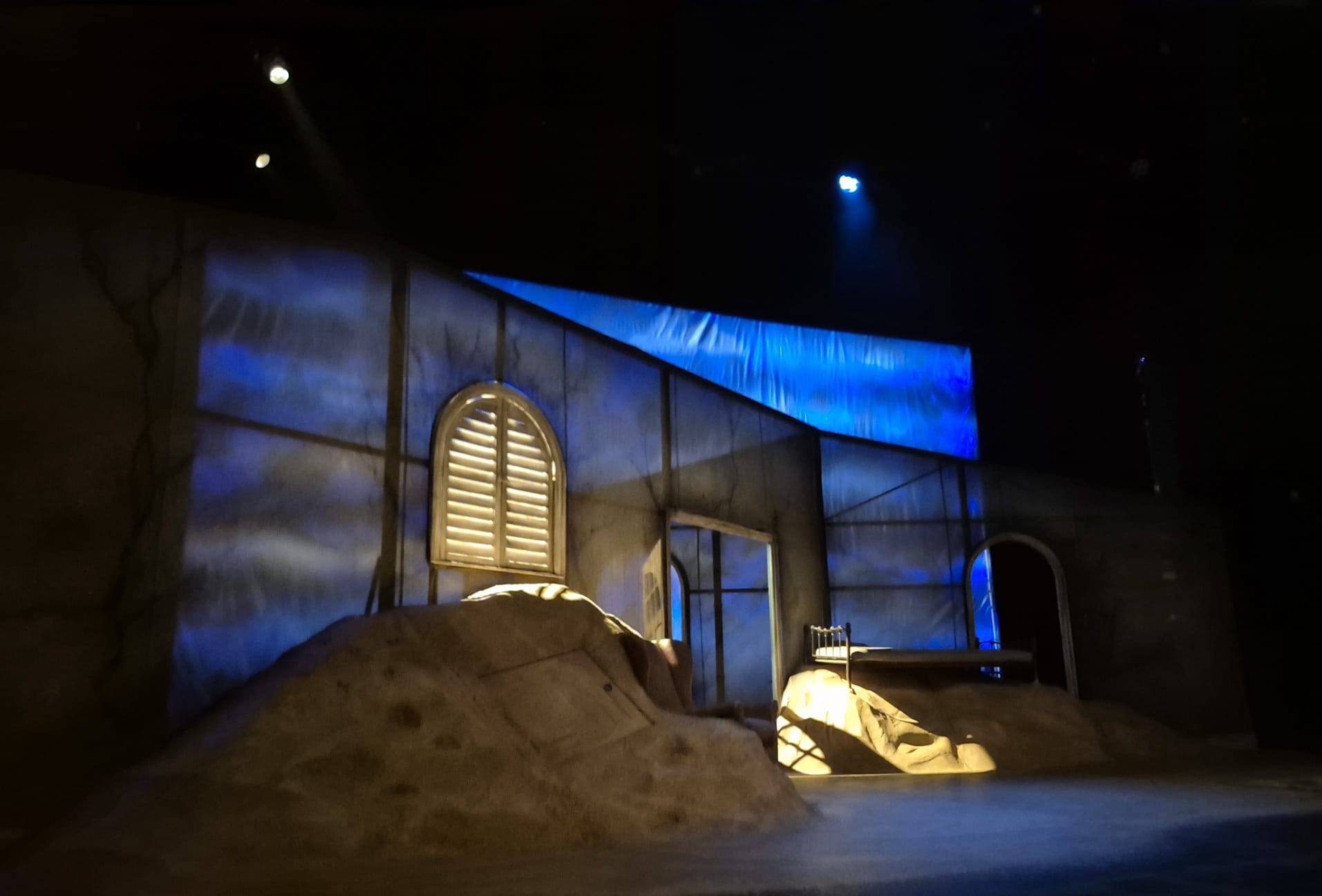
The production’s greatest achievement may be its design. Ruby Pugh’s set initially appears deceptively simple. At first glance it seems static, which can often be a cause for concern in a play that travels across continents. Instead, it becomes one of the show’s greatest strengths. Through the combined work of lighting designer Ben Ormerod and video designer Zsolt Balogh for Palma Studio, the set continually transforms before our eyes. With projections, animation, light and imagination, it becomes a truck, a refugee camp, a border crossing, a hiding place, a peaceful home in the city centre in happier times, a hospital, a Home Office meeting room and countless other locations. The effect is often striking and allows the audience to move seamlessly between memory, reality and dream.
There are moments of humour scattered throughout the darkness. These are welcome and carefully judged. One memorable scene involving the need to suppress an ill-timed fart during a dangerous situation provoked genuine laughter from the audience. Such moments remind us that even in the most desperate circumstances, people remain practically human.
The audience on the first night of this run in Brighton was clearly engaged, responding warmly to both the humour and the political observations embedded within the script. A joke referencing Nigel Farage drew knowing laughter, a reminder that the issues explored in the play remain highly relevant to contemporary Britain, where the displaced couple eventually land.
The Beekeeper of Aleppo also raises important questions about how refugee stories are told. There is always a challenge in presenting experiences of displacement in ways that avoid reducing people to symbols of suffering. While the play occasionally edges towards narratives of trauma, the performances help maintain the characters’ humanity and complexity.
My one significant reservation concerns the bees themselves. For a story called The Beekeeper of Aleppo, bees feel surprisingly absent from the visual language of the production. They are discussed, and there is a particularly moving account of the destruction of bee colonies during the war, but the symbolism never fully takes flight. Bees are not simply Nuri’s occupation; they represent home, collective care, continuity and renewal. In a story about the destruction of a city, the loss of a child and the scattering of a community, that symbolism could have provided an even stronger thread connecting the play’s many themes.
Bees offer such rich metaphorical possibilities: community, home, migration, resilience, collective endeavour and the fragile ecosystems upon which life depends. Given the sophistication of the projections and visual design elsewhere, it felt like a missed opportunity not to weave bee imagery more deeply through the production’s visual world. Their presence could have strengthened the thematic connections between home, belonging and displacement that sit at the heart of the story.
The emotional centre of the production lies in the relationship between Nuri and Afra, whose shared grief manifests in very different ways. The loss of their young son during the bombing of Aleppo hangs over every scene, shaping their decisions and their memories. Nuri carries a profound burden of guilt, while Afra’s blindness becomes one of the play’s most powerful and ambiguous elements.
The production offers little medical explanation for Afra’s loss of sight. Instead, it presents blindness almost as a physical manifestation of trauma itself. Whether understood literally, psychologically or symbolically, it becomes another expression of the devastation wrought by war and bereavement. Saffari’s performance captures both vulnerability and determination, while conveying the immense emotional weight her character carries.
Throughout the production, visual motifs and lighting effects are used to blur the boundaries between memory, reality and loss. Beams of light and laser-like effects punctuate key moments, creating an atmosphere that feels suspended between past and present. The result is a staging that often feels dreamlike, reflecting the fractured nature of memory and the lingering impact of grief.
Nevertheless, this is an ambitious, compassionate and often moving production that tackles difficult subject matter with sensitivity and conviction. It asks audiences to consider not only the realities of war and migration but also what it means to lose a home, a community and a future that once seemed certain.
In an era when refugees are so often discussed as political abstractions, The Beekeeper of Aleppo insists on returning us to individual lives, relationships and memories. That alone makes it a production worth seeing.
Find more arts and culture reviews at Brighton & Hove News – Follow @BHCitywhatson and @bhcitynews on Instagram.
Covering everything from fringe theatre to major tours across Brighton & Hove – tag us if you’re going