A democracy reveals its true values not when it protects popular opinions but when it protects unpopular ones.
That principle has been weighing on my mind as two stories have unfolded in recent weeks. One concerns the legal crackdown on Palestine Action and its supporters. The other concerns racist violence in Belfast that left migrant families terrified, homes attacked and communities traumatised.
For readers in Brighton and Sussex, this debate is not as distant as it may first appear. Brighton has long prided itself on being a city of protest, political engagement and solidarity movements. It is also a city that values diversity and has repeatedly stood against racism and discrimination.
Questions about where protest ends and extremism begins, and how the state responds to each, matter here as much as they do in Westminster or Belfast.
At first glance, these stories seem unrelated. On closer inspection, they raise the same uncomfortable question: how consistently do we apply our laws when politics enters the picture?
The government has taken the extraordinary step of proscribing Palestine Action under terrorism legislation, making support for the organisation a criminal matter.
Supporters of the decision argue that the group’s tactics, including damage to military-linked property, justify such a response. Critics argue that a protest movement engaged in direct action is being treated in a way traditionally reserved for organisations associated with terrorism.
At the same time, Belfast has witnessed scenes of racist violence directed at migrant communities. Families have reportedly been forced from their homes and neighbourhoods have been gripped by fear.
Whatever one’s views on immigration policy, there can be no justification for intimidation and violence directed at people because of their background or ethnicity.
The question is not whether Palestine Action has broken the law. Nor is it whether those responsible for racist violence should face prosecution. They should.
The question is why the language of terrorism appears to be applied so differently.
Many members of the public looking at organised attacks on minority communities would reasonably ask whether violence intended to intimidate people on racial grounds should be viewed through the same lens as other forms of politically motivated action.
Yet the public conversation often seems to draw distinctions that are not always obvious to ordinary citizens.
Reasonable people can disagree about whether Palestine Action should have been banned. They can disagree about whether direct action against military infrastructure is principled resistance or criminal vandalism.
What is harder to dismiss is the perception of inconsistency.
If terrorism legislation is reserved for threats to public safety and democratic order, then it should be applied consistently regardless of whether the perpetrators are left-wing activists, Islamist extremists, far-right agitators or racist mobs.
If the label becomes something that appears to apply more readily to some causes than others, public confidence in the law inevitably suffers.
The danger is not merely legal. It is democratic.
When citizens begin to believe that identical standards are not being applied equally, trust in institutions erodes. People cease to see the law as neutral and start to see it as political.
Whether that perception is fully justified is almost beside the point. Once established, it becomes difficult to reverse.
This matters in Brighton. Ours is a city where public protest is part of civic life. Demonstrations on issues ranging from climate change to Gaza regularly take place on our streets.
The right to protest peacefully is something many residents value deeply, regardless of where they stand on any particular cause. Equally, Brighton’s diverse communities expect protection from hatred, intimidation and racist violence.
Those expectations are not contradictory. They are the foundations of a healthy democracy.
The answer is not to weaken the response to racist violence. Nor is it necessarily to abandon action against groups that engage in unlawful direct action.
The answer is consistency. If terrorism means something, it must mean the same thing regardless of who is committing the act.
If it does not, then we should stop pretending that the law is blind and admit that politics is doing more of the work than we would like to acknowledge.
That is a conversation Britain needs to have – and Brighton should be part of it.
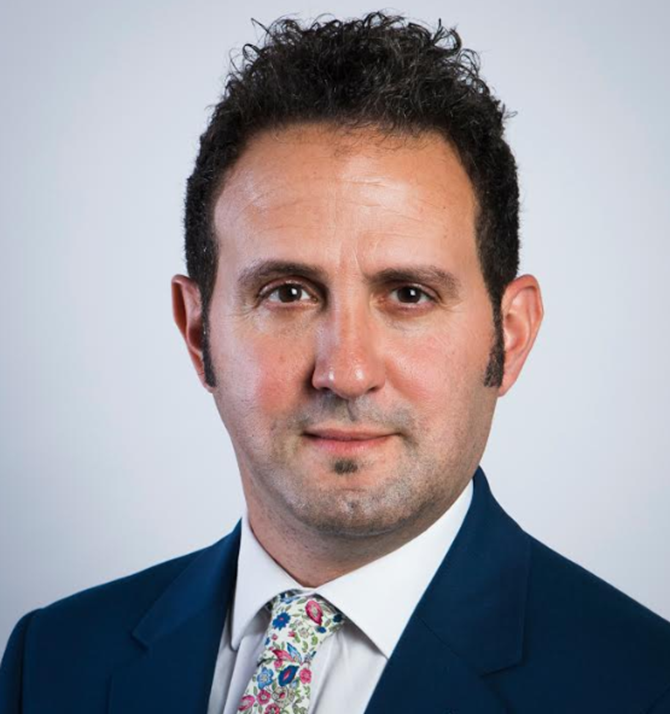
Councillor Samer Bagaeen, is an Independent member of Brighton and Hove City Council and represents Westdene and Hove Park.