• About
    • Ethics policy
    • Privacy Policy
    • Ownership, funding and corrections
    • Complaints procedure
    • Terms & Conditions
  • Contact
  • Support
  • Newsletter
Brighton and Hove News
17 April, 2026
  • News
    • Politics
    • Business
    • Opinion
    • Community
  • Arts and Culture
    • Music
    • Theatre
    • Food and Drink
  • Sport
    • Brighton and Hove Albion
    • Cricket
  • Newsletter
  • Public notices
  • Advertise
No Result
View All Result
  • News
    • Politics
    • Business
    • Opinion
    • Community
  • Arts and Culture
    • Music
    • Theatre
    • Food and Drink
  • Sport
    • Brighton and Hove Albion
    • Cricket
  • Newsletter
  • Public notices
  • Advertise
No Result
View All Result
Brighton and Hove News
No Result
View All Result
Home Brighton

Skin cancer rates soar – especially in men – Brighton study finds

by Frank le Duc
Monday 8 Feb, 2021 at 5:11PM
A A
0
South east put on level 3 heatwave alert

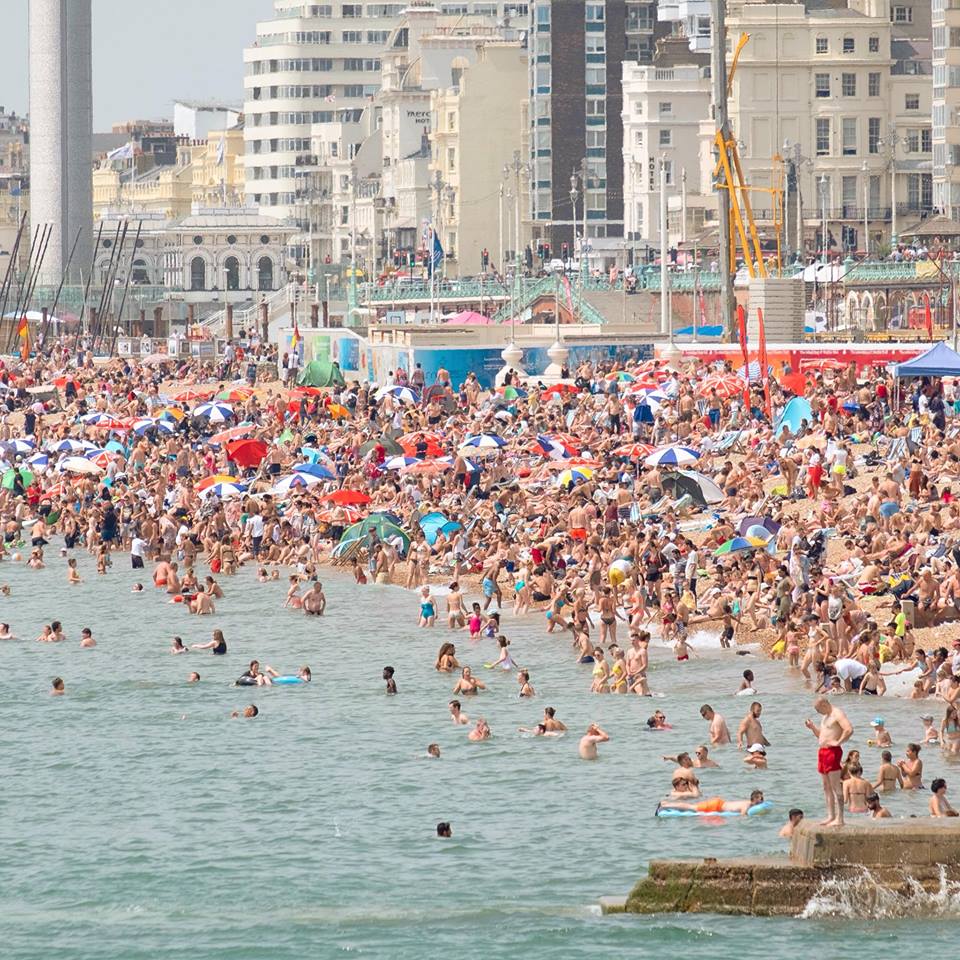
A packed Brighton Beach in 2018 - Picture by Solly Levi

Skin cancer rates have soared over the past 40 years, especially in men, according to a new study led by a Brighton expert.

Rates have risen more than 550 per cent in men and 250 per cent in women since the early 1980s in England, the study found.

Brighton and Sussex Medical School (BSMS) said that the study looked at data on more than 265,000 people who had skin cancer diagnosed in England from 1981 to 2018.

BSMS said: “Skin cancer is the fifth most common cancer in the UK, with about 16,200 new cases each year.

“Excessive exposure to UV (ultraviolet) radiation from the sun (or sunlight) is the main environmental risk factor for developing skin cancer.

“It is estimated that about 86 per cent of all skin cancers in the UK are attributable to excessive exposure to sunlight.

“Exposure to artificial sources of UV radiation from indoor tanning beds/lamps is the second most important cause of skin cancer.”

Anjum Memon, chair in epidemiology and public health medicine at BSMS and lead author of the study, said: “Our study shows that overall there has been a steady and significant increase in rates of skin cancer during the last four decades, which was essentially due to the continually increasing rates in middle (age 35-64 years) and old (65+ years) ages.

“We observed that the steepest increase was in males (more than two-fold that of females) and at old ages.

“The steeper increase in males is consistent with their relatively greater sun exposure and poor sun-protective behaviour.”

BSMS medical student Peter Bannister, a co-author of the study, said: “The study also showed, for the first time, that the rates of skin cancer in young people (aged 0-34 years) in England have stabilised (or levelled off) during the last two decades.

“This finding suggests that public health campaigns targeted at children, adolescents and parents may be favourably influencing skin cancer incidence.

“The stabilisation of incidence in young people is encouraging and emphasises the importance of continued and sustained primary prevention measures to further improve sun-protective behaviours – such as avoidance of excessive exposure to sunlight and indoor tanning, appropriate clothing and application of sunscreens.”

Anjum Memon

The site of skin cancer is most likely associated with the pattern of UV radiation exposure.

Professor Memon said: “All the available evidence suggests that the enormous increase in the rates of skin cancer of the trunk (+817 per cent in males, +613 per cent in females) and arms (+750 per cent in males, +518 per cent in females) since the 1980s in England can be mostly attributable to an increasing trend in intermittent high-intensity recreational UV radiation exposure due to lifestyle and societal changes.

“For example, sunbathing, holidaying in a place with strong sunlight, proliferation of indoor tanning studios, budget holiday industry and airlines, increasing trend in travel to sunnier locations and use of sunbeds.”

BSMS dean Malcolm Reed, a professor of surgical oncology, said: “Considering that the large majority (86 per cent) of skin cancers in the UK and other high-risk populations are preventable, this study has highlighted the potential benefits of effective primary and secondary prevention measures to substantially reduce the burden of the disease.”

Professor Reed added: “This could have significant benefits for individuals, populations and health services, making skin cancer one of the most preventable forms of cancer on a global scale.”

The study was published in The Lancet Regional Health – Europe. It was supported by BSMS.

Support quality, independent, local journalism that matters. Donate here.
ShareTweetShareSendSendShare

Leave a Reply Cancel reply

Your email address will not be published. Required fields are marked *

This site uses Akismet to reduce spam. Learn how your comment data is processed.

Most read

Chart-topping pop star turned vicar joins Brighton choir

Palmeira Square’s new look unveiled

Skin cancer rates soar – especially in men – Brighton study finds

Nick Cave & The Bad Seeds announce special guests for UK exclusive Brighton show

Shrinking school could close one of its two campuses

HMO shut down by fire service

Penthouse flat in former council offices on the market for £2.1m

Former school site could become council housing

Uni staff get seven days more holiday

Covered padel courts open

Newsletter

Arts and Culture

  • All
  • Music
  • Theatre
  • Food and Drink
Creeper bring the ‘Mistress Of Death’ to Brighton

Creeper bring the ‘Mistress Of Death’ to Brighton

16 April 2026
The Beekeeper of Aleppo comes to Theatre Royal Brighton for final tour stop

The Beekeeper of Aleppo comes to Theatre Royal Brighton for final tour stop

16 April 2026
The Courettes announce UK tour

The Courettes announce UK tour

16 April 2026

The Ballad Of Johnny & June – The Musical

16 April 2026
Load More

Sport

  • All
  • Brighton and Hove Albion
  • Cricket
Bruce on the Boundary – Robinson ready to take the next step

Sussex beat Warwickshire by five wickets at Hove

by Frank le Duc
13 April 2026
0

Sussex 204 (50.3 overs) and 331-5 (86 overs) Warwickshire 267 (79.4 overs) and 264 (80.3 overs) Sussex (19 points) beat...

Bruce on the Boundary – Robinson ready to take the next step

Sussex need 94 runs to beat Warwickshire with 5 wickets to spare

by Bruce Talbot - ECB Reporters Network supported by Rothesay
12 April 2026
1

Sussex 204 (50.3 overs) and 234-5 (61 overs) Warwickshire 267 (79.4 overs) and 264 (80.3 overs) Sussex need 94 runs...

More than 14,000 runners complete Brighton Marathon

More than 14,000 runners complete Brighton Marathon

by Frank le Duc
12 April 2026
1

More than 14,000 runners completed the Brighton Marathon and, earlier, more than 3,500 finished the Brighton and Hove 10K. It...

Record numbers take part in Brighton Half Marathon

Thousands to take part in Brighton Marathon this morning

by Frank le Duc
12 April 2026
0

Thousands of runners are due to take part in the annual Brighton Marathon this morning (Sunday 12 April). The marathon...

Load More
February 2021
M T W T F S S
1234567
891011121314
15161718192021
22232425262728
« Jan   Mar »

RSS From Sussex News

  • Number of Clare’s Law requests more than doubles 16 April 2026
  • Specialist team arrests 50 suspected drink and drug drivers 16 April 2026
  • Brighton local set to cover 295kms to raise money for charity 15 April 2026
  • Dishonest PC would have been sacked if he hadn’t quit 13 April 2026
  • Man pleads guilty to car park rape 13 April 2026
ADVERTISEMENT
  • About
  • Contact
  • Support
  • Newsletter
  • Privacy
  • Complaints
  • Ownership, funding and corrections
  • Ethics
  • T&C

© 2023 Brighton and Hove News

No Result
View All Result
  • News
    • Opinion
  • Arts and Culture
    • Music
    • Theatre
  • Sport
    • Cricket
  • Newsletter
  • Public notices
  • Advertise
  • About
  • Contact

© 2023 Brighton and Hove News