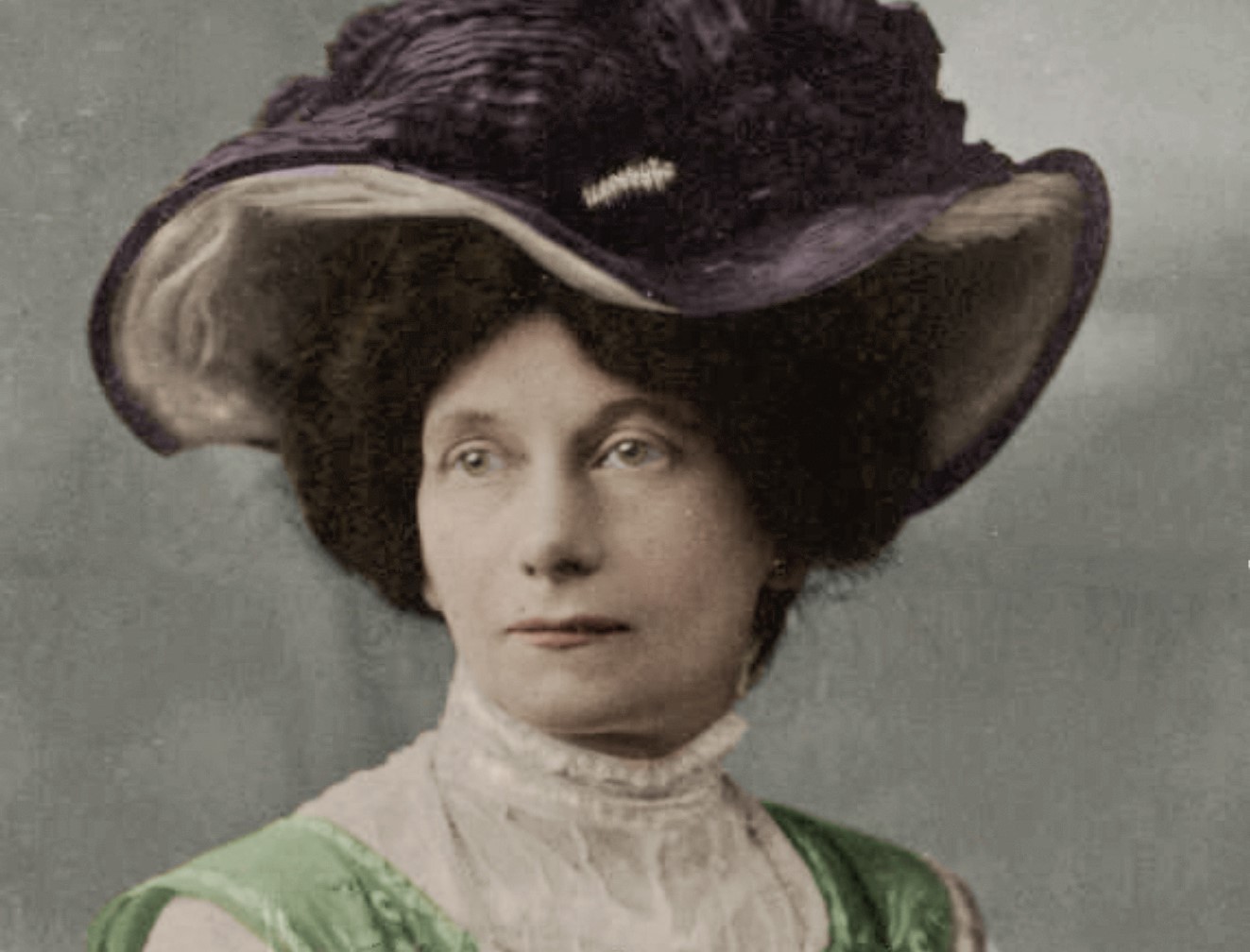
A charity is calling for people to help with a “final push” to fund a statue for Mary Clarke, the Brighton suffragette who led the women’s suffrage movement in the south east in 1909 and 1910.
She was jailed three times and, on Christmas Day 1910, became the first to die for women’s right to vote. There is no memorial to her anywhere in the country.
The Mary Clarke Statue Appeal, which has the all-party backing of Brighton and Hove City Council and widespread support in the community, is determined to get the statue in place.
The goal is for the statue to go up well before 2028, the centenary of the Equal Franchise Act 1928 which secured all women the vote.
The organisers hope that Brighton and Hove could even attract government funding and be designated a UK “suffragette city”.
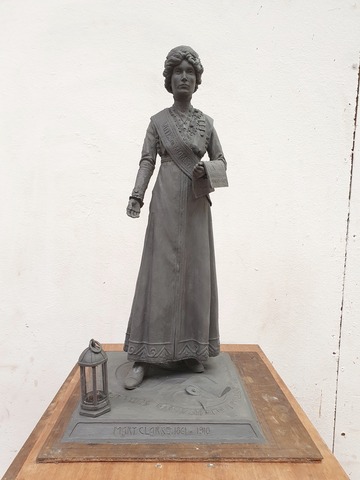
The Mary Clarke Statue Appeal has raised £25,000 towards the £60,000 needed for sculptor Denise Dutton to complete the statue which it intends will be erected in New Road opposite the Theatre Royal, near the Pavilion Gardens.
The charity previously commissioned Ms Dutton to make a bronze model of the planned statue. It is currently displayed in the foyer of the Jubilee Library, in Brighton.
Among other works, Ms Dutton created the statue of Mary Anning in Lyme Regis, Annie Kenney in Oldham and the Land Girl and Lumber Jill at the National Arboretum.
Mary Clarke was the sister of Emmeline Pankhurst and in 1906 helped her found the national Women’s Social and Political Union (WSPU).
She became the WSPU’s paid organiser in Brighton, living in Victoria Road and working from WSPU offices by the Clock Tower.
She was injured in the notorious violence of Black Friday on 18 November 1910 when 300 women were assaulted by police outside Parliament.
She was bedridden in Brighton for three days, then insisted on travelling back to London to protest about the police’s actions.
Imprisoned for one month, she went on hunger strike and reportedly endured forcible feeding.
She died of a brain haemorrhage on Christmas Day 1910, two days after her release from prison.
She had sent a message from court to her supporters in Brighton: “I am glad to pay the price for freedom.”
Mary sacrificed her life but was also a survivor. At a time when domestic violence was condoned and divorce almost impossible for women, Mary had escaped an abusive marriage.
In the years that followed she dedicated herself to the struggle for women’s suffrage.
She was deeply committed to non-violence and was much admired for her ability to respond to hostile crowds, aggressive opponents and even violent attack with grace, courtesy and great courage.
She was an inspiration to others, from the unknown young women she encouraged to take her place campaigning on Brighton seafront to famous suffragettes like Lady Constance Lytton and Emmeline Pethick Lawrence, who delivered Mary’s eulogy at her memorial meeting at the Royal Pavilion.
Isabella McKeown, another Brighton suffragette, also spoke at the meeting, saying those present should not “mourn in silence but take up the torch and light the darkness”.
This inspired the design of the statue which depicts Mary laying down a lamp for others to pick up.
Jean Calder, chair of the appeal, said: “Mary was growing in confidence, speaking in public several times a week, travelling across the south east. She had everything to live for.
“She was very ill after Black Friday and friends tried to stop her travelling back to London.
“She must have known she was risking her life but chose to face arrest and prison anyway. Her courage inspires people, especially survivors and young people.”
The appeal has recruited several youth ambassadors and volunteers who have been inspired by Mary’s life.
The first was River Isaac who was seven and at Balfour Primary School when she first became involved. River campaigned for lessons about Mary and for better sports equipment.

River said: “I had been wanting to write to our head teacher to campaign for better football facilities for girls but had been too scared.
“But then I thought how Mary Clarke had done all these things, even though she must have been scared and decided it was no reason for not doing something.”
Later, with the support of teachers, she and a group of friends set up the “Mary’s Lamp” girls’ group. They have spoken at school assemblies about Mary, fundraised, asked councillors questions about women’s rights and highlighted discrimination against girls in Afghanistan.
The charity intends to dedicate the statue to the memory of Mary Clarke and all women and girls who have died as a result of domestic, sexual or state violence.
Jean Calder said: “We hope it will also be a way for people to commemorate other local women and girls who have died by violence. They should be remembered and honoured. We are sure Mary would have wanted that.”
For more information or to donate, contact maryclarkestatue.com.








At least it’s not the same sculptor as the Max Miller statue which looks nothing like him and does not reflect that he was actually a tall man with a broad frame and not some shrunken cartoon-like figure.
Get a cheaper staute maker