
Whitehawk is one of Brighton and Hove’s most health-challenged communities. With some of the city’s highest levels of health inequality, from reduced life expectancy to long-term illness, it is essential that local healthcare decisions affecting this area are made with the utmost care, transparency, and community engagement.
Recent developments surrounding the paused procurement of GP services in Whitehawk have raised significant public concern.
As chair of Brighton and Hove City Council’s Health Overview and Scrutiny Committee (HOSC), I convened a special meeting today (Friday 26 September) to examine the process and its implications.
Because let’s be clear: this is not a small issue.
An independent panel convened by NHS England identified multiple breaches of national procurement regulations by NHS Sussex during its attempt to re-procure the GP contract for the area. The procurement has now been paused and an external review is under way.
While it would not be appropriate for me to pre-judge the findings of that review or the explanations that we will hear today, it is appropriate to stress the importance of democratic scrutiny when public processes fall short of expected standards.
What happened in Whitehawk is not just a matter of contract management, it raises broader questions about how decisions in the NHS are made, how patient voices are taken into account and how oversight is exercised.
The procurement process in this case could have had consequences for the community and for Wellsbourne Healthcare CIC, a provider that has been delivering care locally since 2016, after stepping in when a previous private provider withdrew.
The community in Whitehawk isn’t asking for special treatment. It’s asking for basic fairness. For the assurance that decisions about its healthcare won’t be made in distant boardrooms using opaque criteria. For the guarantee that the values of continuity, trust and social impact matter as much as spreadsheets and contract scores.
This is why the meeting today matters. It is the first opportunity for the public and local councillors to hear directly from NHS Sussex about the procurement and some of the issues.
Scrutiny is not about blame. It is about accountability, learning and ensuring that processes are open, fair and based on the needs of the communities they serve.
As a statutory body, HOSC exists to ensure that when mistakes occur, they are addressed publicly and transparently.
Because this isn’t about one contract – or one provider. It’s about a broader issue: the connectivity between health decision-makers and the communities they serve.
Whitehawk deserves better. Its residents deserve to know that their care won’t be subject to flawed processes or quiet re-runs. They deserve to know that local providers like Wellsbourne, with strong community ties, are not overlooked without due cause or consultation.
This meeting is not the end of the process but it’s a line in the sand. A moment to say that processes must be scrutinised. Not in private, but in public.
I encourage residents to follow the discussion, ask questions and remain involved. Because scrutiny is not just the responsibility of committees, it is the right of every member of the public.
The future of local healthcare in Whitehawk, and indeed across our city, depends on an NHS that is not just clinically excellent but democratically accountable.
Councillor Gary Wilkinson chairs Brighton and Hove City Council’s Health Overview and Scrutiny Committee (HOSC).



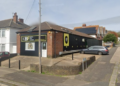


For me, there is a clear logic that is perverted here. This facility has provided an excellent service, something we can clearly see in metrics and KPIs. It is award-winning in its approach. We can see that public health has improved whilst it has been in situ. There’s the ability to award this contract directly back to Wellsbourne, if my knowledge of procurement is correct.
There’s a weakness in the process if it enables a disruption to a service that is objectively doing well.
“If it’s not broken, don’t fix it” – comes to mind.
As a separate thought, NHS England has typically always been proud to label any minimum viable product community consultation as robust. I’m going to go out on a limb here, before looking at the figures, but from experience, I imagine the number of people consulted will be <100.
And if that's the case, is that a reasonable and robust consultation?
Fifty-six. It was 56 people.